
Acxico 3Pcs Mini Micro N20 Gear Motor
4.6Editor score
3V to 6V operation range
Full metal gearbox design
Includes three motor units
Discover the top DC motors for robots in October 2026. This guide compares torque, speed, and reliability for DIY, educational, and professional robotic
Choosing the right DC motor is crucial for building reliable robots. Whether you need high torque for heavy lifting or precise speed for navigation, understanding motor specs helps you pick the perfect fit for your project.
We analyzed ten top-rated motors based on build quality, torque output, and ease of integration. Our comparison covers everything from tiny N20 motors to powerful geared units suitable for complex automation tasks.
Each pick highlights key strengths and ideal use cases for hobbyists and engineers. Note that product availability and pricing may change over time, so verify details before purchasing your next robotic component.
4.6Editor score

4.7Editor score

4.6Editor score
This table offers a quick side-by-side look at key specifications for every motor listed. Use it to compare voltage requirements, gear ratios, and shaft dimensions before making your final decision.



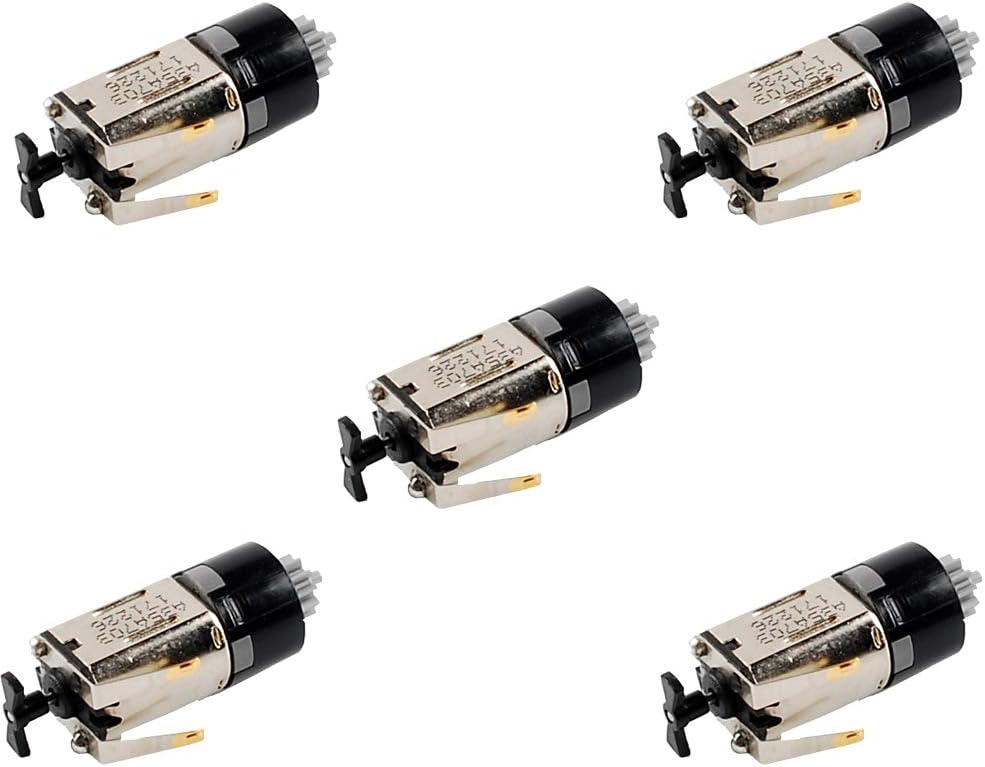

The Acxico N20 Gear Motor set delivers reliable performance for small-scale robotics at a budget-friendly price. Rated at 4.6 stars, it combines a full metal gearbox with a slow-speed design ideal for DIY robot cars.
We may earn a commission when you buy through this link, at no additional cost to you.
Operating between 3V and 6V, this motor provides steady movement without drawing excessive current. The metal gears ensure longevity compared to plastic alternatives, while the D-type shaft offers secure wheel attachment.
While it lacks advanced features like encoders, the simplicity makes it perfect for beginners. The main trade-off is lower torque, so it works best for light chassis and educational prototypes.
Budget builders and students will find this pack invaluable. With three motors included, you can build multiple robots or spare parts, making it a practical choice for classroom or hobby use.
Getting three motors in one package reduces the per-unit cost significantly compared to buying singles.
Metal gearboxes resist wear and tear better than plastic, extending the motor's lifespan under load.
We may earn a commission when you buy through this link, at no additional cost to you.
This planetary gear motor stands out with its exceptional 90kg.cm torque, making it suitable for demanding applications like rotating tables or heavy automation tasks. Users rate it highly for its strength and versatility.
We may earn a commission when you buy through this link, at no additional cost to you.
It operates across a wide voltage range of 6V to 22V, allowing flexibility in power supply choices. The reversible wiring feature enables easy direction control without complex electronics.
While its size and power needs make it less ideal for small robots, it excels in larger projects. The sturdy metal construction ensures it can handle continuous operation in industrial environments.
Engineers working on gate systems, locks, or heavy machinery will appreciate this motor. Its high torque ensures reliable performance even under significant mechanical stress.
With 90kg.cm torque, this motor moves heavy loads effortlessly, ideal for industrial or automation projects.
The broad voltage range allows integration with various power systems, from standard adapters to industrial supplies.
We may earn a commission when you buy through this link, at no additional cost to you.
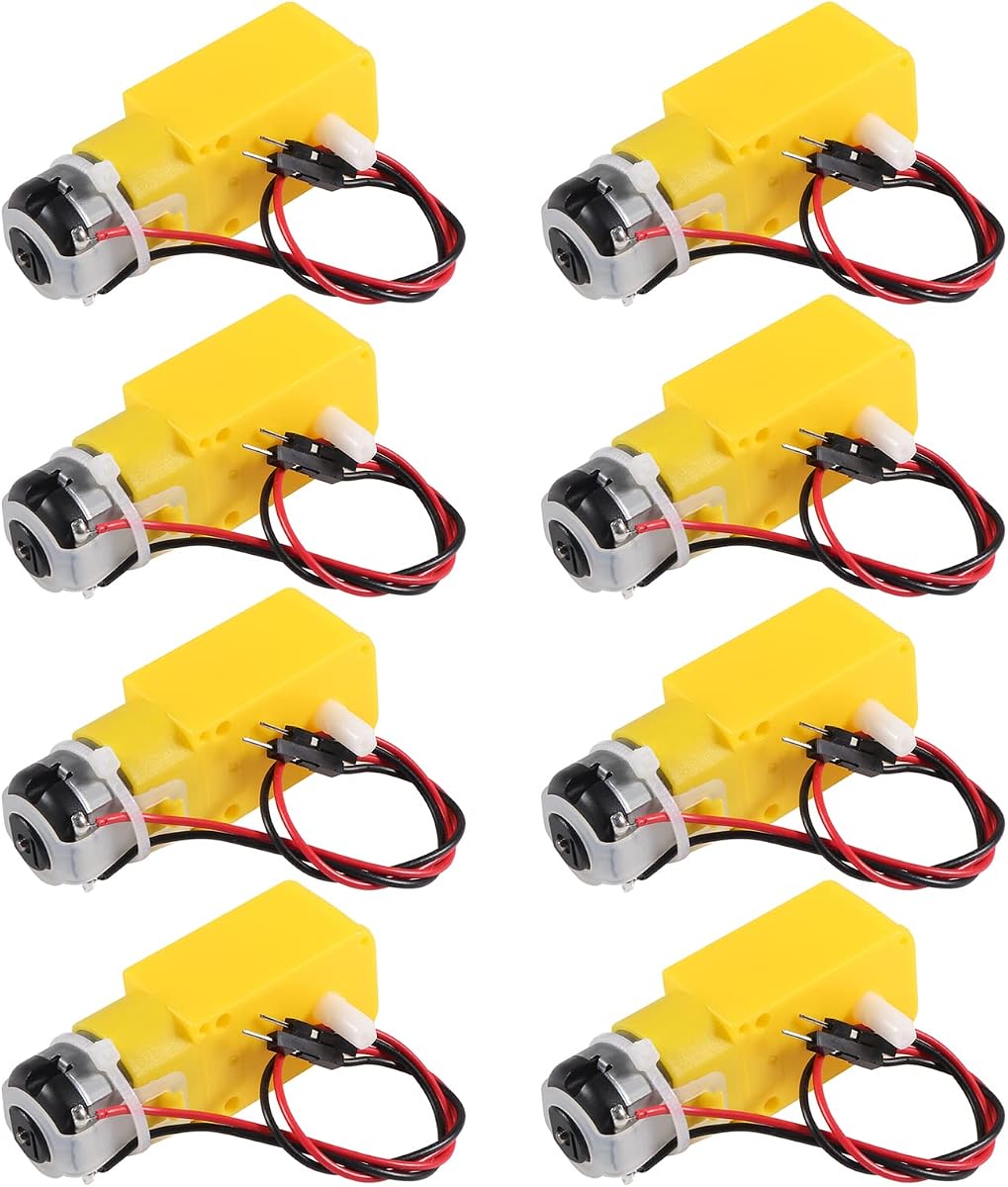
The 8-pack of TT motors offers excellent value for educators and teams building multiple robot chassis. With a 1:48 gear ratio, these motors provide balanced speed and torque for standard smart car projects.
We may earn a commission when you buy through this link, at no additional cost to you.
They come with 2.54mm wires that plug directly into breadboards, simplifying circuit setup. The compact size and standard voltage range make them compatible with most microcontroller systems like Arduino.
While not designed for high torque, they perform well in lightweight applications. The lack of encoders means you cannot measure speed directly, but adding external sensors is straightforward.
Schools and hobby clubs benefit most from this bulk pack. It allows for class-wide experiments without breaking the budget, ensuring everyone gets the motors needed for their projects.
Eight units in one package make it ideal for classrooms where every student needs their own robot build.
Pre-attached wires with standard connectors eliminate the need for soldering, speeding up assembly time.
We may earn a commission when you buy through this link, at no additional cost to you.
This encoder gear motor provides a complete solution for builders needing precise speed control. The included mounting bracket and rubber tire wheels simplify the assembly process significantly for smart car models.
We may earn a commission when you buy through this link, at no additional cost to you.
Operating at 12V with a 500 RPM output, it delivers smooth motion. The magnetic shoe design ensures efficiency, while the metal gears reduce noise and extend operational life under continuous use.
The encoder allows for better motion feedback, which is essential for autonomous navigation. However, users must ensure their power supply matches the 12V requirement strictly.
DIYers creating self-balancing robots or line followers will find this kit comprehensive. Having wheels and mounting hardware included saves time and ensures compatibility with the motor.
Encoders enable accurate speed control, crucial for robots needing to move in straight lines or maintain balance.
Including brackets and tires reduces parts hunting, allowing you to start building the robot immediately.
We may earn a commission when you buy through this link, at no additional cost to you.
The 2Pack TT Motor with Encoder offers superior performance for advanced robotics projects. Rated at 4.7 stars, it combines a robust all-metal gearbox with an integrated Hall encoder for precise motion control.
We may earn a commission when you buy through this link, at no additional cost to you.
Its 1:90 reduction ratio delivers high torque suitable for heavy loads, while the 12 PPR encoder ensures accurate speed monitoring. The anti-reverse connector prevents wiring mistakes during setup.
While more expensive than basic motors, the quality justifies the cost. Users benefit from a durable shaft and a wide voltage range that accommodates various power systems without adapters.
Hobbyists building complex robots or smart cars should prioritize this model. The combination of torque, precision, and durability makes it a reliable choice for long-term projects.
Metal gears and shafts resist wear better than plastic, ensuring longevity even under heavy mechanical loads.
The integrated Hall encoder allows for real-time speed and position adjustments, essential for autonomous behaviors.
We may earn a commission when you buy through this link, at no additional cost to you.
This CQRobot gearmotor is a premium choice for serious robotics engineers needing high torque. It offers a 70:1 metal reduction ratio, resulting in a massive 27 kg.cm stall torque at 12V.
We may earn a commission when you buy through this link, at no additional cost to you.
The metal mounting bracket ensures stable installation, while the D-shaped shaft prevents wheel slippage. Rated at 4.6 stars, it is a favorite for projects requiring consistent and powerful movement.
Although the price is higher than standard motors, the build quality ensures reliability. It performs well in smart balance cars and custom servo applications where precision and strength are key.
For professionals or advanced hobbyists, this motor provides a professional-grade foundation. The inclusion of mounting hardware saves time and ensures the motor is securely integrated into the chassis.
With 27 kg.cm stall torque, this motor can handle demanding tasks like lifting mechanisms or heavy terrain traversal.
The provided bracket simplifies assembly, ensuring the motor stays firmly in place during dynamic movement.
We may earn a commission when you buy through this link, at no additional cost to you.
With a perfect 5.0-star rating, this motor set is highly praised for its quiet and powerful operation. It delivers high torque at 350 RPM, making it ideal for RC cars and heavy-duty DIY toys.
We may earn a commission when you buy through this link, at no additional cost to you.
The all-metal gears ensure durability, while the double-shaft design offers flexibility in mechanical assemblies. The pure copper rotor increases conductivity, providing stable power during extended use.
Its compact dimensions make it versatile for small builds, though the lower RPM means it is better for torque than speed. Users appreciate the secure D-shaped shaft that prevents wheel slipping.
This motor is perfect for RC enthusiasts and craft projects requiring reliability. The high rating reflects user satisfaction with its consistent performance and quiet operation.
Users report minimal noise levels, making it suitable for indoor use or noise-sensitive projects.
Two shaft ends allow connecting components on both sides, increasing mechanical versatility.
We may earn a commission when you buy through this link, at no additional cost to you.
These Type 130 motors are best for projects needing high speed rather than torque. At 16000 RPM, they are excellent for fans, mini drills, or high-speed wheels in lightweight robots.
We may earn a commission when you buy through this link, at no additional cost to you.
Operating on as little as 1.5V, they are energy-efficient. Each comes with 6-inch wires for quick connection. While rated at 4.2 stars, they are favored for simple hobby electronics.
Without a gearbox, the output is direct and fast. This makes them less suitable for heavy lifting but ideal for applications where speed and small form factor are priorities.
Hobbyists working on battery-powered projects will find these motors efficient. Their simplicity and high speed make them a standard choice for basic mechanical tasks.
At 16000 RPM, these motors deliver rapid motion suitable for fans, propellers, or lightweight high-speed drives.
Their small size allows fitting into tight spaces, ideal for miniature robots or portable devices.
We may earn a commission when you buy through this link, at no additional cost to you.
These micro planetary motors provide surprisingly high torque for their tiny size. Rated at 4.4 stars, they are ideal for compact robots where space and power efficiency are critical.
We may earn a commission when you buy through this link, at no additional cost to you.
With speeds around 110 rpm and low current draw, they conserve battery life. The planetary reducer ensures smooth operation, making them better than standard brushed motors for precision tasks.
While the slow speed limits racing applications, it excels in controlled movements. Users should note the minimum 3V requirement for optimal performance.
Small robotics builds and wearable tech benefit most from these motors. Their efficiency and compact footprint allow integration into designs where larger motors would not fit.
Despite small dimensions, the planetary gear system provides torque sufficient for moving small robotic parts.
Drawing minimal current helps extend battery life, which is crucial for portable or remote robot designs.
We may earn a commission when you buy through this link, at no additional cost to you.
This small electric motor is designed for hobbyists needing a reliable 12V replacement. It runs at 12000 RPM and works well in RC cars, toys, and small power tools.
We may earn a commission when you buy through this link, at no additional cost to you.
The 2.3mm shaft is standard for many hobby gears, making upgrades easy. At 4.4 stars, it offers consistent performance for light-duty tasks without breaking the budget.
While not suited for heavy robotics, it serves well for simple automation or repair projects. Its versatility makes it a useful addition to any workshop parts kit.
DIYers looking for a generic motor for various small projects will find it practical. It is a straightforward solution for restoring old models or building simple motorized mechanisms.
Its compatibility with standard RC parts makes it easy to swap in existing vehicles or tools.
The high RPM allows for rapid movement in lightweight applications where torque is less critical.
We may earn a commission when you buy through this link, at no additional cost to you.
Selecting the right motor involves balancing torque, speed, and power requirements. This guide outlines the critical factors to ensure your robot performs reliably.
Torque determines the motor's ability to move heavy loads or climb inclines. High torque is essential for industrial automation or large chassis, while small bots need less.
Always calculate the required torque based on weight and friction. Underestimating this will lead to motor failure or poor performance.
Check that the motor's voltage range matches your power source. Using a 12V motor on a 5V supply will result in weak performance or stalling.
Ensure your battery or adapter provides the necessary voltage consistently throughout discharge to avoid inconsistent speed.
A higher gear ratio increases torque while reducing speed. This is vital for lifting mechanisms or precise control in robotics.
Select a ratio that aligns with your speed goals. High ratios like 1:90 are great for precision but may be overkill for fast racers.
Encoders allow precise speed and position control. They are crucial for autonomous robots needing to move in straight lines.
If your project requires feedback, choose an encoder motor. Otherwise, standard motors save cost and complexity.
Metal gears offer durability and can handle higher loads than plastic. They resist wear under continuous operation.
For heavy-duty robotics, metal gears are mandatory. Plastic gears may suffice for light hobby use but risk failure.
Check if the motor includes a mounting bracket or has screw holes. Secure mounting prevents vibrations and misalignment.
A motor without mounting hardware can be challenging to secure. Verify compatibility with your chassis design.
The shaft diameter must match your wheels or couplers. A mismatch requires adapters or machining, adding complexity.
Measure existing parts before buying. D-shaped shafts prevent slipping and are preferred for reliability.
Buying in packs is often more cost-effective. It also provides spares, which is useful since motors may fail under load.
Consider building multiple robots or keeping backups. Bulk packs ensure you have enough motors for your entire project.
Always match the voltage rating of your motor with your power supply to prevent damage. Over-volting can burn out coils, while under-volting reduces efficiency.
Secure the motor firmly to your chassis using the provided bracket or screws. Vibrations during movement can loosen connections if not stabilized properly.
Regularly inspect the gears and shaft for signs of wear. Clean debris and ensure lubrication is present to extend the life of your components.
Most hobby robots use 6V to 12V motors because these match standard LiPo batteries. Higher voltages offer more power but require better control electronics to prevent overheating.
Geared motors offer higher torque at lower speeds, making them ideal for moving heavy robots. Standard motors are faster but lack the force needed for climbing or lifting tasks.
Encoders are necessary if your robot needs precise speed control or autonomous navigation. For simple remote-controlled projects, they are often unnecessary complexity.
No, these motors require direct current (DC). You must use a DC adapter or battery pack to power them safely and effectively without damaging the internal components.
N20 motors are smaller and used in compact builds, while TT motors are slightly larger and more durable. TT motors are standard for educational robotics projects and smart cars.
Multiply the weight of the robot by the wheel radius and a safety factor. This gives the minimum torque required to move the robot under expected load conditions.
We reviewed ten top motors ranging from budget N20s to heavy-duty planetary units. The Acxico 3-pack offers great value for beginners while the TT motor with Encoder stands out for precision.
Prioritize torque and voltage compatibility first to ensure your robot performs as expected. For complex tasks, invest in models with encoders and metal gears for reliability.
Always check current availability before purchasing as stock fluctuates. Selecting the right motor lays the foundation for a successful robotic build.