
SNAP CIRCUITS Beginner SCB-20 STEM Electronics Toy
4.7Editor score
Designed for ages five and up
Twenty one beginner projects included
Includes color changing fan module
Simple snap to grid system
This guide compares the top circuit boards for kids in 2026, evaluating safety, project variety, and educational value to help parents choose the best STEM kit.
Circuit boards for kids offer a hands-on way to learn electronics without soldering. These kits use snap-together components to build real working projects safely at home or in classrooms.
We evaluated ten leading STEM kits based on project count, ease of use, and educational depth. Our analysis considers age appropriateness, component quality, and the variety of experiments each set supports.
Each pick highlights unique features like voice control, QR codes, or extensive manuals. Note that stock levels and retail prices fluctuate regularly so check current listings before purchasing today.
4.7Editor score

4.8Editor score

4.4Editor score
This side-by-side comparison lists every kit reviewed in this guide. Each entry includes key specifications like project count and target age to help you quickly find the right fit for your young engineer.




This kit holds the top spot for its balance of ease and education. With a rating near perfect it offers 100 projects using snap components that require no tools.
We may earn a commission when you buy through this link, at no additional cost to you.
Kids build working electronics like flying saucers and alarms quickly. The color coded grid makes connections intuitive so frustration is minimal during initial setup.
The main limitation is the lack of advanced modules like voice or sensors. However for beginners this focus on core circuitry principles is often more valuable.
Recommend this for any child starting in electronics aged eight or older. It provides a reliable foundation for future STEM learning without expensive or complex parts.
Children can start building immediately as pieces snap onto the grid without tools or soldering.
Recognized by multiple educational awards this kit ensures safe and engaging learning experiences.
We may earn a commission when you buy through this link, at no additional cost to you.
This kit stands out for its massive library of over 500 guided projects. It encourages exploration through QR codes that expand beyond the printed manual.
We may earn a commission when you buy through this link, at no additional cost to you.
Five interactive modules including a projector and music add variety to standard circuits. Kids can build dynamic toys that move and emit sound easily.
While the rating is lower than Snap Circuits the variety is impressive. Some users find the QR aspect dependent on device access which can interrupt flow.
Ideal for kids who want endless variety and modern tech integration. Just ensure you have a device ready to scan codes when needed.
QR codes unlock random challenges and guided projects to keep engagement high.
Modules like fans and projectors bring motion and visual effects to circuits.
We may earn a commission when you buy through this link, at no additional cost to you.
With over 1200 projects this kit offers unmatched variety for the price. The wide age range allows younger siblings to participate with help.
We may earn a commission when you buy through this link, at no additional cost to you.
It includes 66 parts and a full color manual that guides building from start to finish. The grid provides a stable base for complex circuits.
The sheer volume of parts can be overwhelming for very young children without supervision. Sorting and organizing components is a necessary step before building.
Great for households wanting long term use and high versatility. Just plan time for setup to keep the experience smooth and enjoyable.
Access to 1200 projects means hours of learning and discovery for years.
The color manual details steps clearly to support independent learning.
We may earn a commission when you buy through this link, at no additional cost to you.
This kit introduces advanced concepts like levitation and audio output. These features make it more engaging than basic light and sound circuits.
We may earn a commission when you buy through this link, at no additional cost to you.
The plug-in design ensures secure connections without tools. A 67-page manual covers everything from basic connections to advanced challenges.
Levitation and Bluetooth features can be finicky to balance for first time users. But the learning payoff for understanding modern tech is significant.
Perfect for older kids ready for complex engineering. Ensure batteries are on hand to unlock the full potential of these advanced modules.
Modules like Bluetooth speakers bring real world tech into home experiments.
A comprehensive manual supports growth from basic to advanced builds.
We may earn a commission when you buy through this link, at no additional cost to you.
Designed for younger children this kit simplifies the learning curve. Safety features like childproofing make it suitable for ages five and up.
We may earn a commission when you buy through this link, at no additional cost to you.
Projects are streamlined to build confidence quickly. A color changing fan provides instant visual feedback which delights kids during testing.
While project count is lower it teaches core basics effectively. The focused nature prevents overwhelming little engineers with too many parts.
A cost-effective entry point into STEM. It is perfect for introducing the fun of circuits before moving to larger sets.
Built for smaller hands with features that prevent frustration.
Simple projects provide quick wins to encourage continued play.
We may earn a commission when you buy through this link, at no additional cost to you.
This arcade themed kit turns circuit building into game design. Kids construct playable games with sounds and lights that respond to inputs.
We may earn a commission when you buy through this link, at no additional cost to you.
Over 200 projects include LED message displays which allow custom text. This creative freedom is a major draw for older children.
The price is higher than basic kits but the engagement level is significant. Building functional games feels like a real engineering challenge.
Ideal for kids interested in gaming or electronics. It bridges the gap between play and learning through interactive circuit projects.
Kids design their own games rather than just passively following instructions.
LED displays allow personalization of messages which adds creative flair.
We may earn a commission when you buy through this link, at no additional cost to you.
Trusted by parents this kit offers a reliable entry into electronics. It features over 120 projects ranging from simple lights to complex audio systems.
We may earn a commission when you buy through this link, at no additional cost to you.
Video instructions via QR codes help visualize steps not always clear in print. Components are designed for safety with low voltage and secure connections.
It uses wires which may feel slightly less convenient than snap grids. But the connections are secure and teach traditional circuit concepts effectively.
Good for families who value brand reliability. The video support is a strong plus for kids who prefer visual learning.
Video guides ensure kids understand how to connect parts correctly.
Components are low voltage and designed to protect young users.
We may earn a commission when you buy through this link, at no additional cost to you.
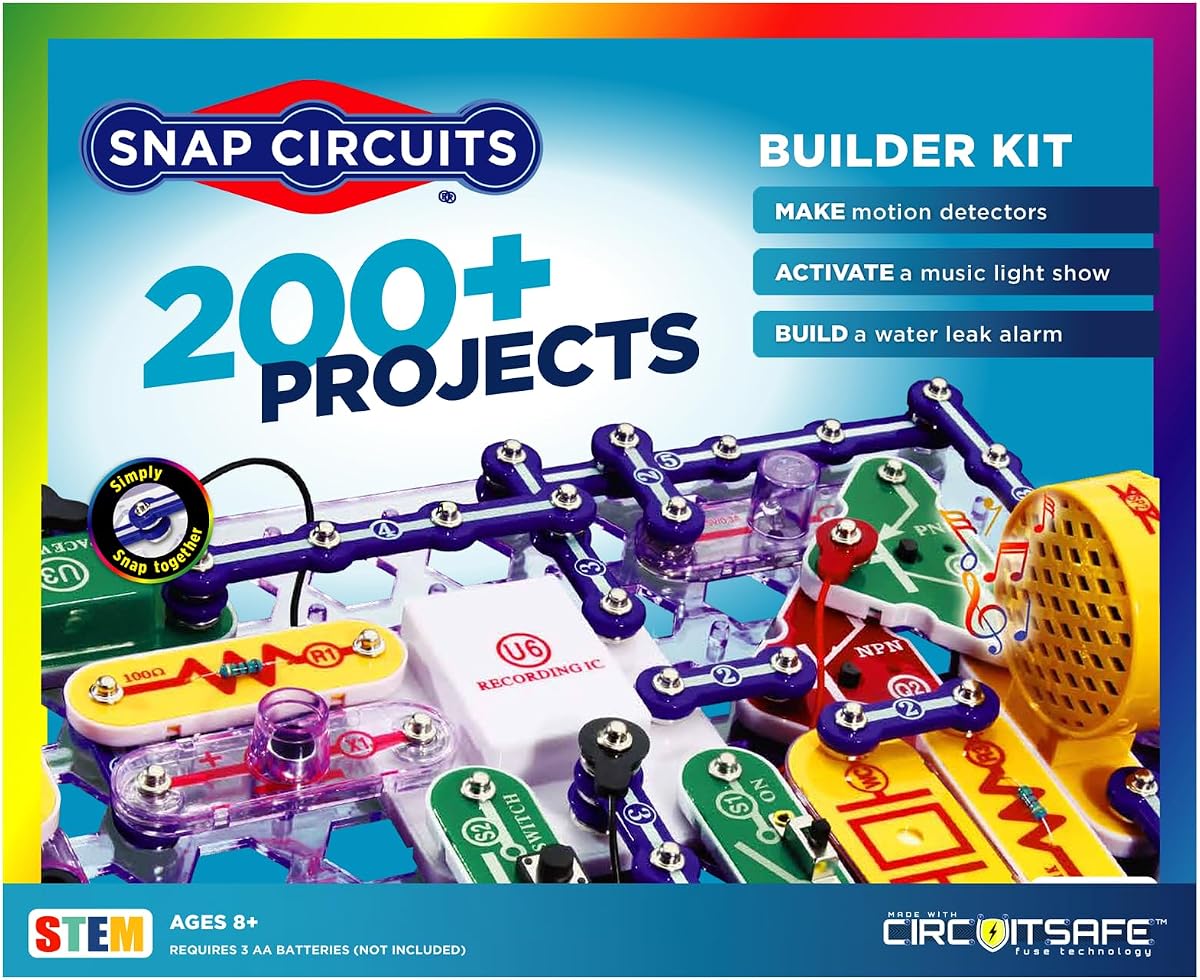
This version of the classic Snap Circuits offers robust build potential with 200 projects. It includes 40 pieces for alarms and electronics projects.
We may earn a commission when you buy through this link, at no additional cost to you.
The grid system is stable and parts are durable enough for repeated use. It provides a straightforward experience without extra tech features.
Because it is Amazon exclusive parts may be harder to find elsewhere. But for most users the included set is complete enough to start.
A solid choice for those who prefer established systems. It focuses on pure electronics education without distracting add-ons.
The plastic grid layout has been refined over years of use.
Components are made to withstand regular handling and snapping.
We may earn a commission when you buy through this link, at no additional cost to you.
This kit introduces voice commands to control circuits which is a unique feature. It allows kids to run motors and lights using verbal prompts.
We may earn a commission when you buy through this link, at no additional cost to you.
The manual supports both guided and free play. Low voltage parts ensure safety while exploring sound and light outputs.
Voice control can be temperamental in noisy rooms. But it is a standout feature that brings modern tech interaction into physical building.
Great for kids interested in smart devices. It demonstrates how voice recognition connects to physical hardware in fun ways.
Voice commands bring circuits to life in a hands-free way.
Hands on building combined with voice commands keeps kids engaged.
We may earn a commission when you buy through this link, at no additional cost to you.
This kit focuses on sensory feedback with radio and magnetic controls. It includes over 25 experiments that test touch and sound.
We may earn a commission when you buy through this link, at no additional cost to you.
A 64-page manual guides assembly and learning. Kids can build a radio which is a rare feature in basic kits.
Wire based connections are more traditional and can be fiddly. But the radio and magnet experiments provide deep educational value.
Best for kids who want to build real devices like radios. It offers a tangible connection to how household electronics work.
Building a radio gives a sense of accomplishment and utility.
Multiple control types like touch and sound engage all senses.
We may earn a commission when you buy through this link, at no additional cost to you.
Selecting the right circuit board kit depends on age skill level and desired learning outcomes. Use these factors to narrow down the best option for your child.
Age ranges on kits help match complexity to developmental readiness. Younger children need simpler projects with larger pieces while older kids can handle complex wiring.
Always check the minimum age rating to ensure the kit is safe and engaging.
More projects mean longer engagement and broader learning. Kits range from 20 to over 1200 projects so consider how long you want the toy to last.
A higher project count usually supports sustained interest over months.
Snap boards are easier for beginners while wired kits teach traditional soldering concepts. Decide if you want a tool free start or traditional connections.
Snap systems reduce frustration for younger kids building first time.
Clear manuals or video guides are essential for independent learning. Look for color diagrams and step by step instructions.
Good instructions ensure the child can build without constant adult help.
Low voltage and insulated parts are vital for young users. Avoid kits with sharp edges or high voltage components.
Safety is paramount when choosing electronics for children.
Some kits allow adding more parts later for complex builds. Check if the brand offers compatible upgrades.
Expandability extends the life of the initial purchase significantly.
Prices vary widely based on features like voice control or project count. Decide your max budget before comparing models.
Higher cost often correlates with more advanced features.
Some kits focus on games while others on engineering principles. Choose based on what skills you want to teach.
Align the kit with your child interests to maximize engagement.
Start by reading the manual and organizing all pieces on a clean workspace to prevent loss.
Always disconnect power before swapping components to avoid short circuits or broken connections.
Store parts in the included case to keep them organized and ready for future projects.
Yes most kits are designed with low voltage and safe materials. Always supervise young kids to prevent accidental battery ingestion or small part handling.
No most of these kits use snap or plug in connections. Soldering is generally avoided to keep the process safe and easy for kids.
Most kits require batteries but do not include them. Check the product details before purchasing to ensure you have AA batteries ready.
Yes parts are reusable. After each project you can disassemble components and use them to build different circuits again.
Ages 8 and up are standard but some beginner kits start at age 5. Always match the complexity to the child's skill level.
Absolutely they teach core concepts like circuits and current flow. Many align with STEM standards to support school learning goals.
We reviewed ten top circuit boards for kids ranging from beginner sets to advanced kits. Our top picks offer a balance of safety, project variety, and educational depth.
Prioritize kits that match your child's age and interest level. Look for snap grids and clear instructions to ensure a smooth start.
Remember to check current prices and stock before buying. Prices fluctuate often so compare offers to get the best deal on your chosen kit.