
Rokinon 35mm T1.5 Cine DS Lens
4.6Editor score
Affordable price point
Unified gear positions
Full frame coverage
This guide compares the top 10 Cine Lens options for filmmakers in October 2026, analyzing optical performance, build quality, and mount compatibility for
Selecting the right Cine Lens is crucial for any filmmaker aiming to produce high-quality video content. These specialized lenses offer precise manual control, consistent color matching, and optimized optical designs tailored specifically for cinematic storytelling rather than still photography.
We evaluated ten distinct Cine Lens models based on optical sharpness, aperture performance, build durability, and mount versatility. Our comparison considers real-world usability for indie filmmakers and professionals seeking reliable glass for various camera systems and shooting conditions.
Each pick highlights specific strengths such as low-light capability, focal range, or multi-mount support. Please note that product availability and pricing fluctuate frequently, so verify current details before making your final purchasing decision for your next project.
4.6Editor score
5.0Editor score

5.0Editor score
The following table provides a side-by-side overview of key specifications for each Cine Lens model to help you quickly identify the best fit for your specific camera system and production requirements.


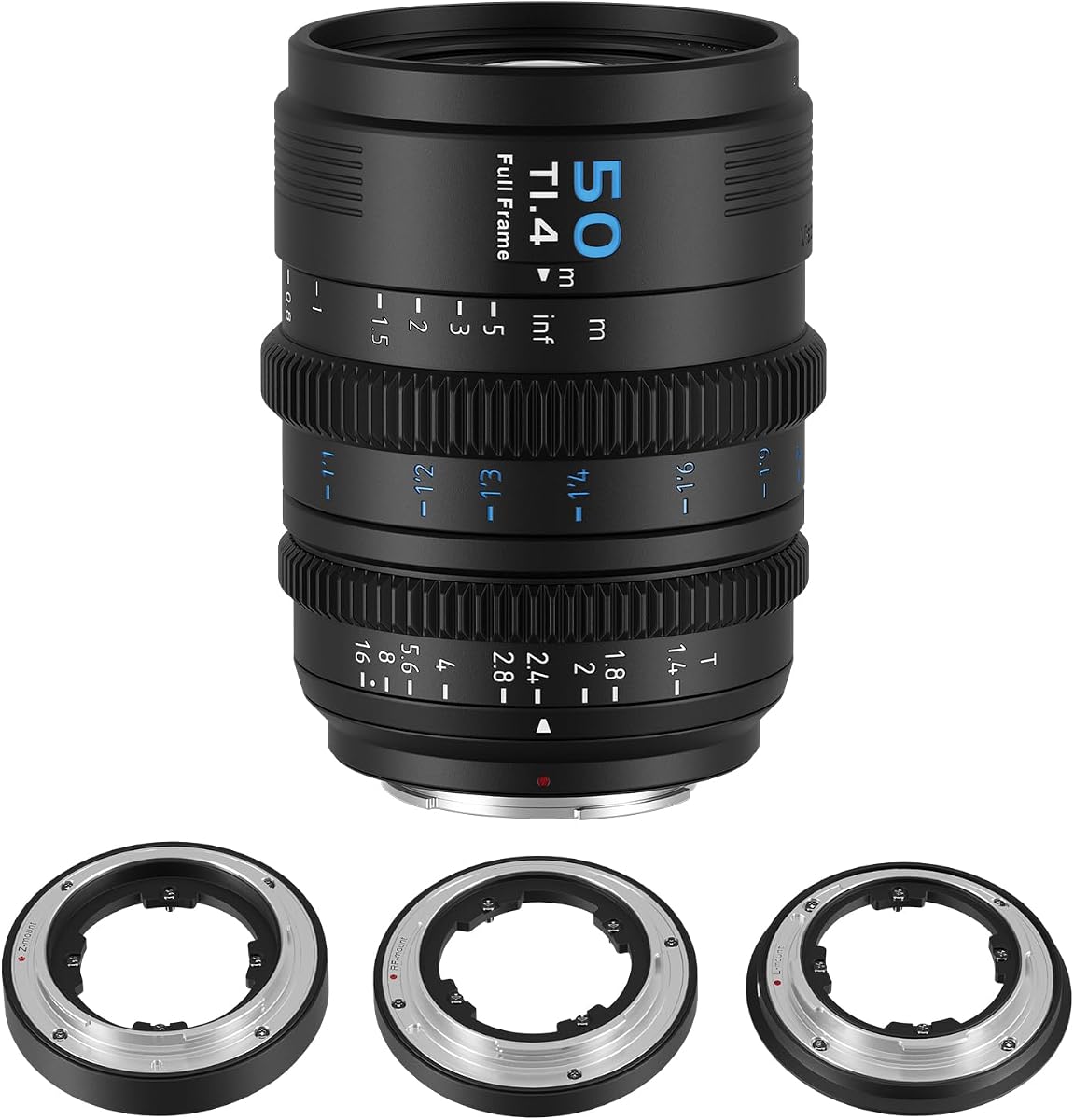


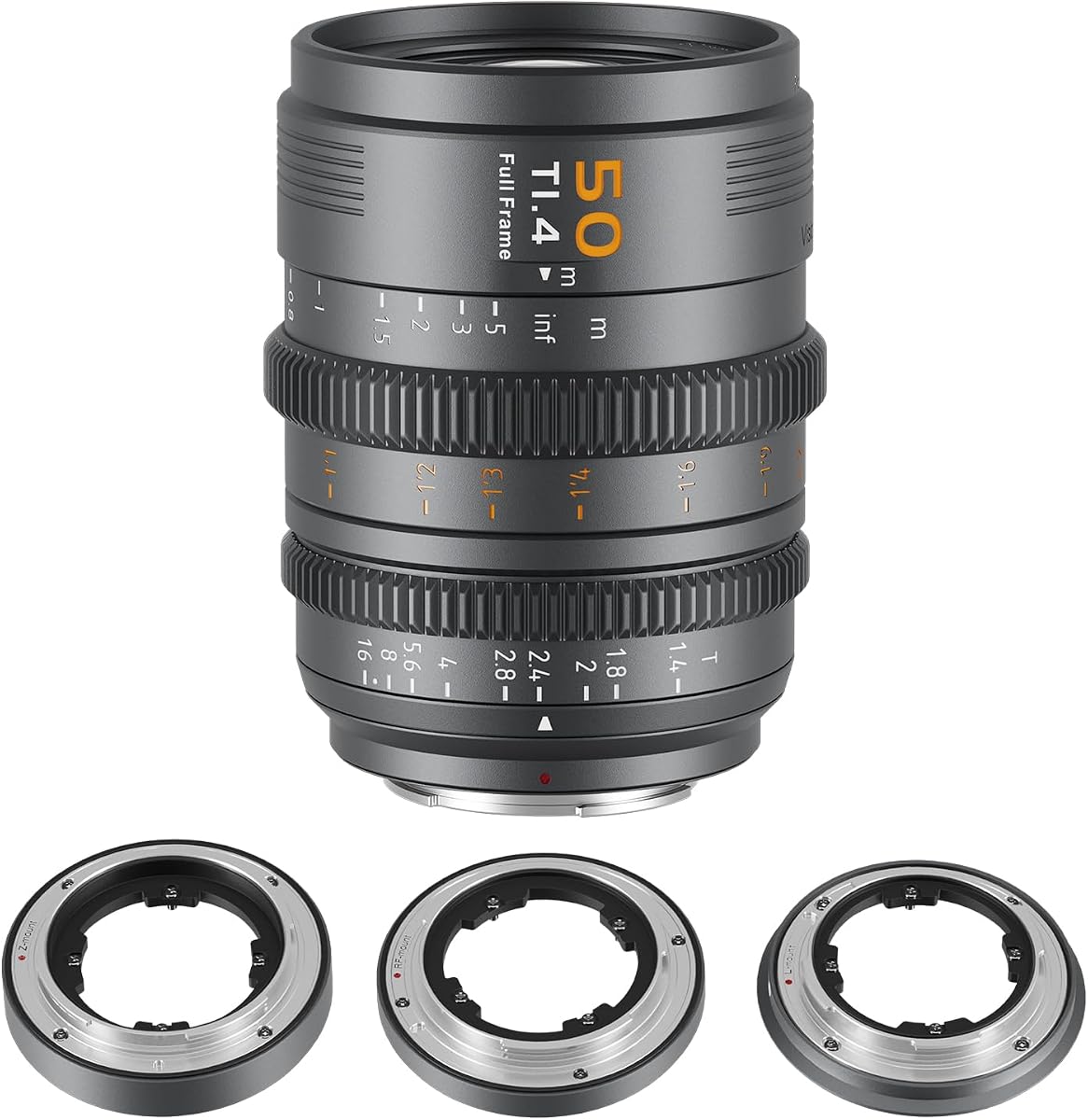
The SIRUI VP-1 Vision Prime 1 50mm T1.4 stands out as the top choice for filmmakers seeking versatility and high optical quality. With a perfect rating from users and advanced glass elements, it delivers edge-to-edge sharpness essential for modern 8K storytelling.
We may earn a commission when you buy through this link, at no additional cost to you.
Its standout feature is the interchangeable mount system allowing seamless switching between Sony E, Canon RF, Nikon Z, and L mounts. The T1.4 aperture provides excellent low light capability and dreamy bokeh without requiring high ISO settings during production.
While the lens offers premium performance, its compact size and lightweight aluminum body may feel less robust compared to heavier cinema primes. However, the consistent design across the VP-1 series ensures uniform gear positions and color tones for efficient production workflows.
This lens is ideal for independent creators and documentarians who need high-quality glass without the bulk of larger cinema lenses. Its combination of optical excellence and mount flexibility makes it a strong recommendation for versatile filmmaking.
The interchangeable mount system allows photographers and videographers to use one lens across multiple camera systems, reducing overall gear costs and weight.
Engineered with aspherical and ED glass elements, this lens minimizes chromatic aberrations and distortion to ensure clean images on 8K sensors.
We may earn a commission when you buy through this link, at no additional cost to you.
The Rokinon 35mm T1.5 Cine DS offers an exceptional entry point into the world of cine lenses without breaking the bank. It provides a standard field of view ideal for environmental shots and is praised for its reliable mechanical performance.
We may earn a commission when you buy through this link, at no additional cost to you.
Its DS line designation ensures color matching and unified gear positions with other Rokinon DS lenses, which is critical for maintaining visual consistency across multiple lenses in a production. The T1.5 aperture allows for decent low light shooting.
While the build relies more on plastic compared to all-metal lenses, it remains sturdy enough for regular use. Users should note that some color balancing might be needed when mixing with other brands due to slight shifts in color temperature.
This lens is perfect for budget-conscious filmmakers who need professional features like gear rings and T-stops without the premium price tag. It delivers reliable performance for narrative projects and indie productions.
Color matched with other Rokinon DS lenses to ensure consistent color tones and contrast when switching lenses during shooting sessions.
The 35mm focal length offers a natural perspective similar to human vision, making it versatile for portraits and environmental storytelling.
We may earn a commission when you buy through this link, at no additional cost to you.
The DZOFILM Pictor 50-125mm T2.8 is a top-tier zoom lens designed for professional productions requiring flexibility and optical precision. Its parfocal design ensures focus remains locked while zooming, a critical feature for documentary and broadcast work.
We may earn a commission when you buy through this link, at no additional cost to you.
With a constant T2.8 aperture across the entire zoom range, exposure settings remain stable during dynamic shots. The 16-slat iris creates smooth bokeh and the lens maintains high sharpness even at maximum aperture.
While heavier than prime lenses, its robust build and compatibility with standard cine accessories make it suitable for studio and remote setups. The minimal focus breathing enhances smooth transitions without distracting shifts in framing.
This lens is recommended for professionals working on larger productions where zoom flexibility and optical reliability are paramount. It is an excellent investment for cinematographers needing a high-performance zoom tool.
The parfocal mechanism allows operators to zoom without losing focus, saving time on manual refocusing during complex shots.
Maintaining T2.8 across the full zoom range ensures consistent brightness and depth of field regardless of focal length selection.
We may earn a commission when you buy through this link, at no additional cost to you.
The Rokinon Cine DS DS85M-C is an excellent choice for filmmakers focusing on portrait and narrative shots. Its 85mm focal length provides a flattering perspective for subjects, while the T1.5 aperture enables shallow depth of field.
We may earn a commission when you buy through this link, at no additional cost to you.
As part of the DS line, it offers color matched coatings and unified gear positions with other lenses in the series. The 8 blade iris produces attractive bokeh that helps isolate subjects effectively from busy backgrounds.
Its minimum focusing distance of 3.6 ft may limit close-up capabilities compared to macro lenses. However, for standard portrait and interview setups, this distance is sufficient and allows for comfortable framing without intrusion.
This lens is highly recommended for those needing a dedicated portrait prime in their cine kit. It balances optical quality and mechanical features well for mid-range production budgets.
The 85mm focal length compresses features subtly and provides a natural yet flattering look for human subjects.
The wide T1.5 aperture combined with 8 blades creates soft and creamy out-of-focus areas for professional aesthetic results.
We may earn a commission when you buy through this link, at no additional cost to you.
The ROKINON CINE DS T1.5 Cinema Lens Kit provides a comprehensive set of four lenses covering essential focal lengths for diverse shooting needs. This all-in-one solution ensures consistent optical performance and mechanical features across the entire set.
We may earn a commission when you buy through this link, at no additional cost to you.
With lenses ranging from 24mm to 85mm, filmmakers can handle wide environmental shots to intimate portraits without compromising on quality. The T1.5 aperture remains constant across all lenses for exposure consistency in varying lighting conditions.
While the kit requires a higher initial investment, buying as a set is often more cost-effective than purchasing individual lenses. It is limited to Canon EF mounts which may require adapters for mirrorless camera systems.
This kit is ideal for filmmakers building a complete cine setup from scratch. It offers reliability and flexibility for narrative productions and documentary work.
Having unified gear positions allows for quick lens swaps without reconfiguring follow focus or matte box setups between shots.
Color matched coatings ensure uniform image characteristics across all four lenses, avoiding visual discontinuities during editing.
We may earn a commission when you buy through this link, at no additional cost to you.
The SIRUI Night Walker 35mm is engineered specifically for challenging low light environments where brightness and clarity are essential. Its T1.2 aperture allows for capturing pure low noise scenes without pushing ISO too high.
We may earn a commission when you buy through this link, at no additional cost to you.
Designed with S35 coverage, it is well-suited for crop sensor cameras like the Sony A6500 and FX30. The lens delivers excellent sharpness and controlled aberrations even at its maximum aperture for clean image quality.
At only 500g, it offers a portable solution for handheld or gimbal work where weight is a concern. However, the APS-C crop may require wider lenses to achieve full frame field of view equivalents.
This lens is perfect for night shoots and documentary filming where speed and sensitivity are paramount. It delivers expressive footage with clear subjects and pleasing background separation.
The ultra-bright aperture lets in significantly more light than standard lenses, enabling clean footage in dim environments.
The 12 aperture blades create smooth and circular bokeh shapes, adding aesthetic depth to low light shots.
We may earn a commission when you buy through this link, at no additional cost to you.
The SIRUI Night Walker 24mm RF is a versatile wide-angle lens ideal for dynamic storytelling and environmental shots. Its 24mm focal length balances a broad field of view with natural composition for landscapes and street scenes.
We may earn a commission when you buy through this link, at no additional cost to you.
Equipped with a T1.2 aperture, it offers fast performance for low-light conditions while maintaining a shallow depth of field. The 0.3m close focus enables immersive compositions with greater visual impact and detail.
Designed for RED Komodo and Canon RF cameras, it integrates well with professional workflows. The precise manual focus rotation allows for repeatable focus pulls essential for narrative production.
This lens is recommended for filmmakers needing a fast wide-angle option on APS-C or hybrid camera systems. It delivers cinematic optics with minimal focus breathing for smooth video results.
The 24mm focal length captures wide environmental context while keeping subjects recognizable for compelling storytelling.
Focusing as close as 0.3m allows for detailed tabletop shots and intimate close-ups without losing wide angle advantages.
We may earn a commission when you buy through this link, at no additional cost to you.
The SIRUI Night Walker 24mm M4/3 is a compact powerhouse designed for filmmakers using micro four thirds cameras. It offers excellent optical performance in a lightweight package suitable for gimbal and handheld stabilization.
We may earn a commission when you buy through this link, at no additional cost to you.
With a T1.2 aperture, it ensures low light capability and pleasing bokeh even in small sensor configurations. The robust aluminum housing provides durability without adding unnecessary weight to portable setups.
Its consistent design with other Night Walker lenses ensures uniform gear positions and aesthetic appeal. The optical design minimizes focus breathing for smooth transitions during manual focusing.
This lens is perfect for independent creators using lightweight camera systems who still demand professional cine features. It delivers high sharpness and expressive results for a variety of genres.
Weighing only 500g, this lens is easy to balance on gimbals for smooth mobile shooting without extra counterweights.
The T1.2 aperture allows capturing pure low noise night scenes without relying on excessive ISO settings.
We may earn a commission when you buy through this link, at no additional cost to you.
The Rokinon DSX85 DSX 85mm provides a high-speed prime option with a T1.5 aperture suitable for shallow depth of field shots. It is designed for Canon EF mount cameras and offers solid optical construction with 9 elements.
We may earn a commission when you buy through this link, at no additional cost to you.
Its ultra multi-coated glass reduces flare and chromatic aberrations, ensuring clean images across various lighting conditions. The 9 aperture blades contribute to smooth and round bokeh shapes for attractive background separation.
While it lacks some advanced cine features like focus breathing control, its optical performance makes it a strong contender for budget narrative work. It balances cost and image quality effectively.
This lens is recommended for filmmakers needing a fast portrait lens without premium pricing. It delivers reliable performance for interviews and character-focused scenes.
The T1.5 aperture allows for shooting in low light and achieving distinct subject isolation from the background.
Ultra multi-coated glass elements minimize internal reflections and flaring when shooting directly into strong light sources.
We may earn a commission when you buy through this link, at no additional cost to you.
The SIRUI VP-1 Vision Prime 1 50mm E offers full frame sharpness with a T1.4 aperture for exceptional low light performance. It is designed with E mount pre-installed and supports interchangeable RF and L mounts for future flexibility.
We may earn a commission when you buy through this link, at no additional cost to you.
Its optical design integrates aspherical elements to minimize distortion and deliver edge-to-edge sharpness required for 8K resolution. The compact aluminum body ensures durability while remaining lightweight for handheld production.
While user ratings vary, the consistent design across the VP-1 series ensures easy swapping and color matching. The lens delivers nuanced image details and dreamy bokeh at T1.4.
This lens is a strong choice for full frame users seeking versatile mount options and high optical standards. It is well-suited for cinematic storytelling requiring precise manual focus and clarity.
The lens delivers edge-to-edge sharpness across full frame sensors ensuring clean images for high-resolution video output.
User-interchangeable mount options allow you to adapt the lens to different camera bodies without purchasing new optics.
We may earn a commission when you buy through this link, at no additional cost to you.
Choosing the right Cine Lens requires evaluating several technical factors including mount compatibility, optical quality, and mechanical features to ensure it meets your specific production needs.
Ensure the lens mount matches your camera system such as Canon EF, Sony E, or Nikon Z. Interchangeable mount systems offer added flexibility if you use multiple camera bodies.
Always verify mount compatibility before purchase to avoid needing adapters that may compromise optical quality or functionality.
Lenses with T1.2 to T1.5 apertures allow for excellent low light performance and shallow depth of field. Choose wider apertures if you shoot frequently in dim environments.
Prioritize T-stop ratings over F-stops for accurate exposure control consistent across different lenses in a set.
Consider the focal lengths you need for your typical shots. Primes like 35mm and 50mm are versatile for portraits while 24mm suits wide environmental scenes.
Select a range that covers your primary shooting scenarios to minimize lens changes during production.
Metal bodies provide durability and better heat resistance but may be heavier for handheld work. Plastic builds are lighter and often more affordable for budget projects.
Balance build quality with portability depending on whether you use gimbals or handheld rigs.
Uniform gear positions across lenses allow for quick swaps without adjusting follow focus setups. This feature is critical for professional workflows.
Look for lenses labeled as color matched or DS series to ensure consistent gear alignment.
Color matched lenses ensure consistent tones and contrast across different focal lengths. This is vital for avoiding color grading issues later.
Multi-layer coatings reduce flare and improve contrast for cleaner images in challenging lighting.
Verify if the lens covers full frame or APS-C/S35 sensors. Using a lens not designed for your sensor size may result in dark corners.
Match the lens frame coverage to your camera sensor for optimal image quality and field of view.
Minimal focus breathing ensures that the focal length does not appear to change while adjusting focus. This is important for professional video.
Manual focus rings should offer smooth and precise control for reliable pulling during production.
Start by mounting the lens securely to your camera and ensuring all gear rings align properly with your follow focus system. This alignment helps maintain consistent focus pulls across multiple takes.
Always adjust focus manually using the dedicated focus ring and utilize focus marks for repeatable shots. Avoid relying solely on autofocus systems that may interfere with cinematic movement.
Store your lenses in a dry and dust-free environment using protective caps on both ends. Clean optics gently with a microfiber cloth and avoid touching glass surfaces with fingers to prevent smudges.
T-stops measure the actual light transmission through the lens rather than the theoretical aperture size. This ensures consistent exposure across different lenses which is essential for professional video production. F-stops are typically used in still photography and can vary slightly between lenses.
Yes many Cine Lenses are designed for mirrorless mounts like Sony E and Canon RF. Some models offer interchangeable mount systems allowing you to switch between different camera bodies easily without needing separate lenses.
While designed primarily for video Cine Lenses can be used for photography due to their sharp optics and manual focus rings. However, they lack autofocus which may limit utility for fast-moving subjects.
Focus breathing refers to the change in focal length when focusing which can cause framing shifts during shots. Minimal focus breathing is preferred in cinema to maintain consistent framing while adjusting focus smoothly.
Most Cine Lenses use external focus where the front element rotates during focusing. This allows for easier mounting of matte boxes and filters without obstruction from moving lens parts.
Parfocal zoom lenses maintain focus while zooming so you can change focal lengths without refocusing. This is highly valuable for documentary and broadcast production where continuous shots are required.
The SIRUI VP-1 Vision Prime 1 50mm T1.4 leads our top picks for its versatility and mount flexibility while the Rokinon 35mm T1.5 Cine DS offers excellent value for budget filmmakers.
When selecting a Cine Lens prioritize factors like mount compatibility optical clarity and mechanical features like gear positions to ensure a smooth workflow on set.
Remember to check current prices and availability as these vary frequently. Invest in lenses that match your production needs and camera system for the best results in your filmmaking projects.