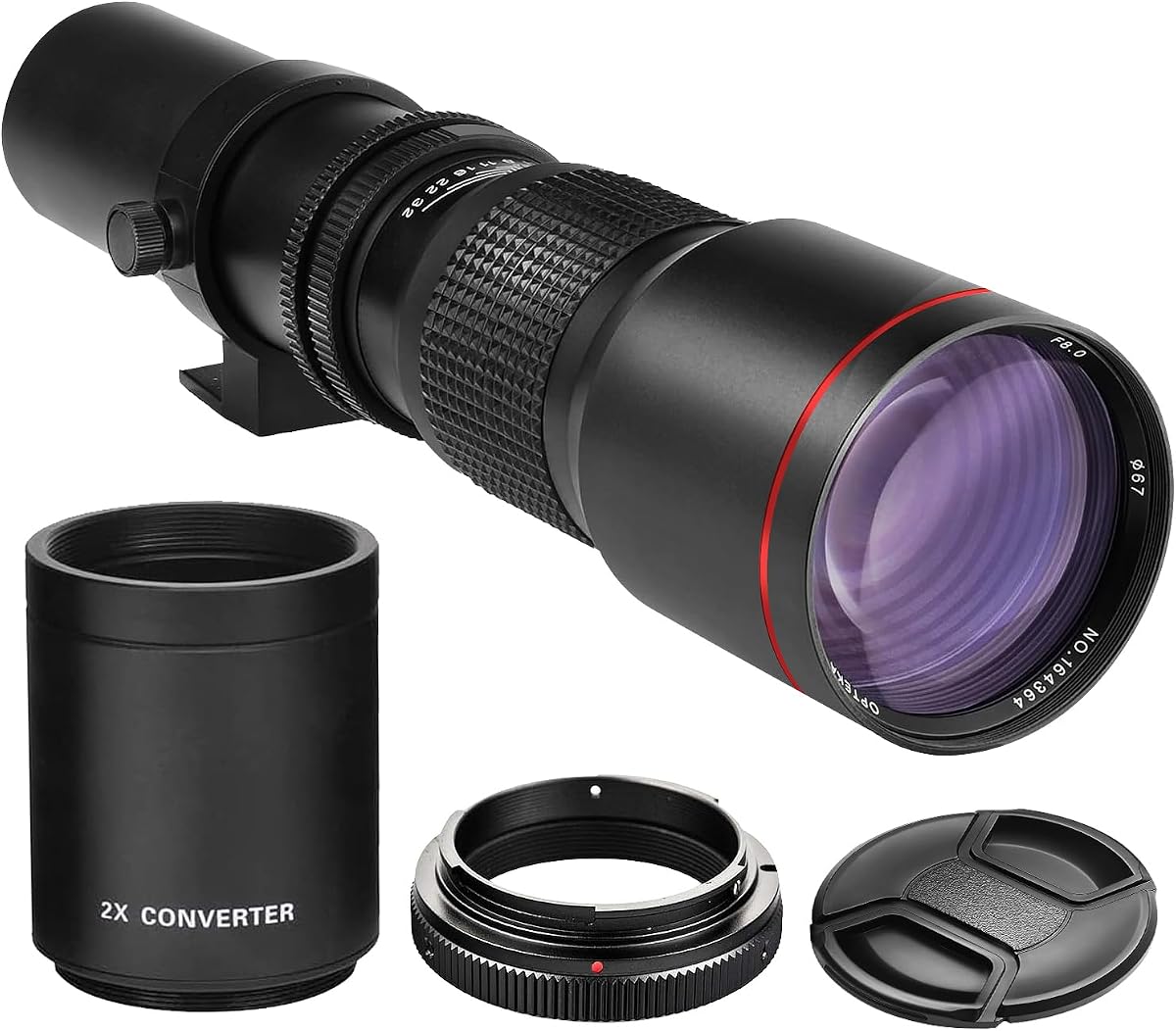
High-Power 500mm/1000mm Manual Lens
4.0Editor score
Manual focus telephoto lens
Extends to 1000mm reach
Compatible with Canon EF mount
This guide compares the top camera lens for long distance wildlife to help you choose the best telephoto option for capturing sharp images of animals from afar.
Capturing wildlife from a safe distance requires a specialized camera lens for long distance wildlife that delivers exceptional reach and image quality. Whether you are photographing birds in flight or mammals in their natural habitat, having the right optical tool is essential for success in the field.
We have evaluated ten leading telephoto options based on optical performance, autofocus speed, stabilization technology, and build quality. Each product was selected to represent a different budget and camera system, ensuring that every photographer can find a suitable match for their specific shooting needs and preferences.
Every selection in this list highlights key strengths and potential trade-offs to help you make an informed decision before purchasing. Please note that prices and availability can change frequently, so verify the current details on the product pages before finalizing your order to ensure you get the best value available today.
4.0Editor score
4.7Editor score
4.5Editor score
The following table provides a side-by-side comparison of all ten telephoto lenses reviewed in this guide. It highlights the key specifications and unique features of each option to help you quickly identify the model that best fits your wildlife photography requirements.


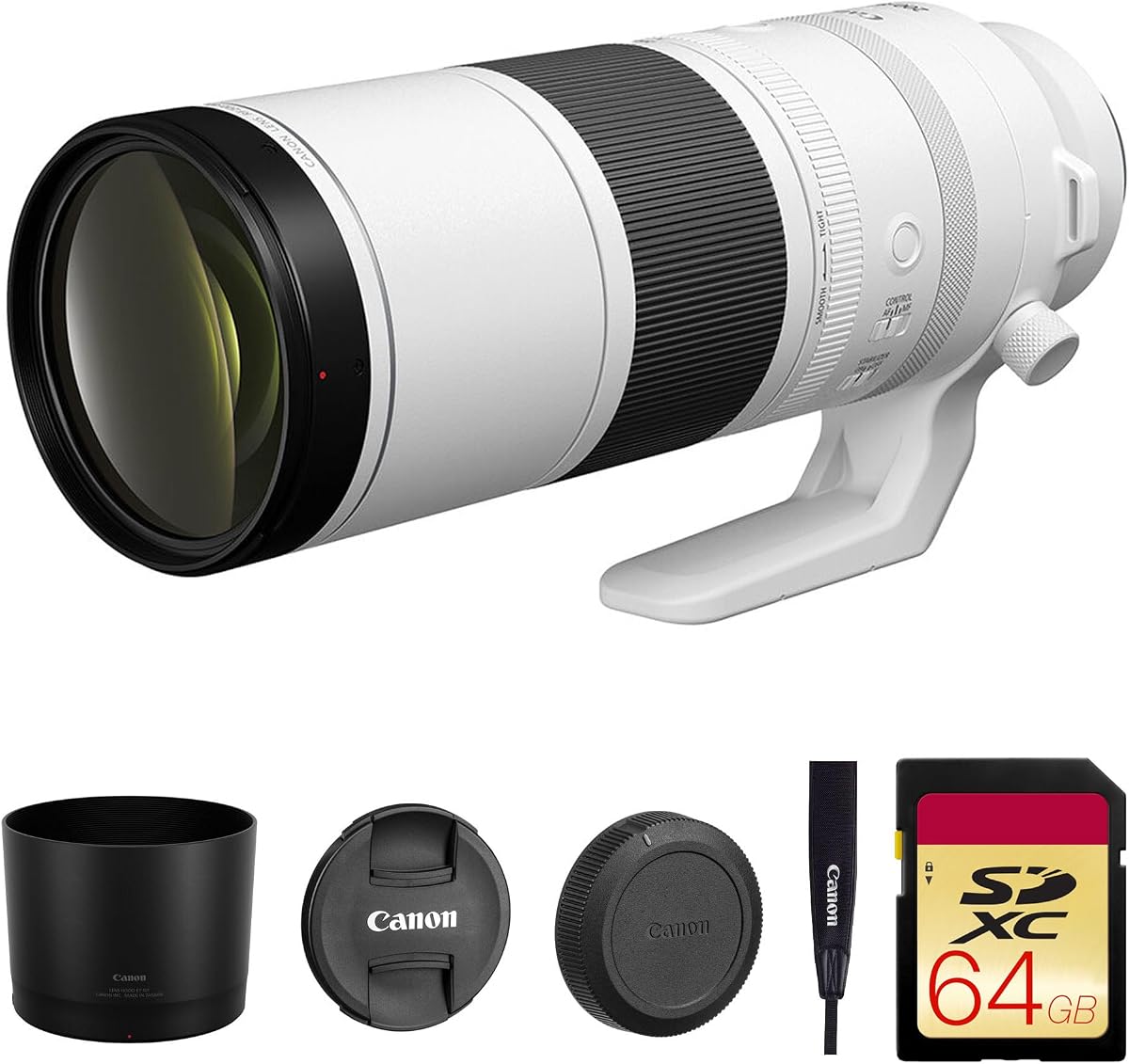
This Canon RF lens is a powerhouse for wildlife photographers needing extreme reach without excessive weight. It holds a high rating and delivers stunning clarity even at maximum zoom. The bundle includes essential accessories that add immediate value to your setup.
We may earn a commission when you buy through this link, at no additional cost to you.
The standout feature is the 200-800mm range, allowing you to frame distant animals sharply. The built-in image stabilization is crucial for handheld success at long distances. The USM autofocus system locks onto subjects quickly and quietly, which is vital for not disturbing wildlife.
One trade-off is the variable aperture which gets smaller as you zoom in, potentially limiting low-light performance. However, modern sensors handle this well and the reach compensates for most scenarios. It is also designed specifically for mirrorless RF mount cameras.
If you own a Canon EOS R camera, this is the premier choice for wildlife. It balances portability and performance better than almost any other option. We highly recommend it for serious nature photographers seeking professional results in the field.
The ability to stretch from 200mm to 800mm provides versatility for both medium distance and extreme wildlife shots.
Its compact size makes it easier to carry on long treks compared to traditional super-telephoto lenses.
We may earn a commission when you buy through this link, at no additional cost to you.
This lens sets a new standard for autofocus super-telephoto zooms in the mirrorless world. Its design prioritizes mobility while delivering professional-grade optical performance for nature photography. It is a direct competitor to the bundle version but focuses on the core optics.
We may earn a commission when you buy through this link, at no additional cost to you.
The 200-800mm zoom range covers almost every wildlife scenario you might encounter in the wild. It remains lightweight enough for comfortable handheld shooting even when fully extended to 800mm. You can also add extenders to push the reach even further when needed.
While it is an excellent lens, it is limited to Canon RF mount bodies which excludes older DSLR users. The aperture also reduces at the long end which requires good lighting or higher ISO settings. Despite this, it remains a top choice for R-series owners.
We recommend this lens for those who want the latest technology in a manageable package. It excels at tracking moving subjects like birds in flight or running mammals. It is a solid investment for anyone serious about wildlife photography with a mirrorless camera.
Despite its reach, the weight distribution allows for extended shooting sessions without excessive fatigue.
It works with RF extenders to unlock even greater magnification without losing autofocus performance.
We may earn a commission when you buy through this link, at no additional cost to you.
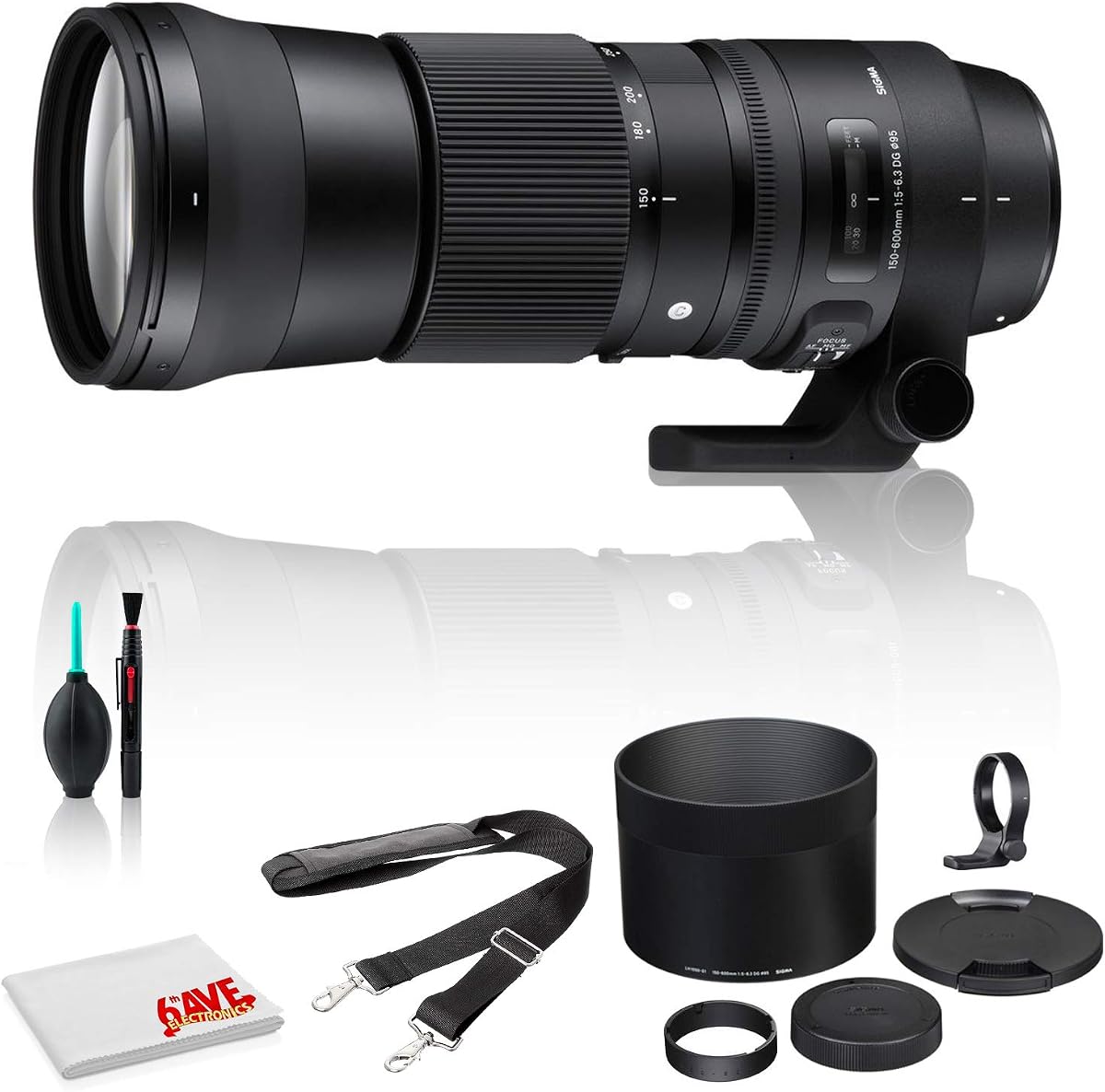
Sigma is renowned for high-quality glass and this lens delivers exceptional sharpness for wildlife photographers. The optical stabilization is advanced with an accelerometer to improve tracking. It offers a great balance of reach and image quality for EF mount users.
We may earn a commission when you buy through this link, at no additional cost to you.
The bundle includes a cleaning kit which is a nice touch for outdoor gear maintenance. The lens uses advanced glass elements to minimize aberrations and color fringing. It provides reliable autofocus performance with the Hyper Sonic Motor even in challenging conditions.
On the downside, it is heavier than some modern mirrorless lenses which can impact mobility. The aperture narrows at 600mm which limits low light capability slightly. However, for daylight wildlife shooting, it performs incredibly well.
This is our top pick for those stuck on a DSLR platform who still want modern performance. It rivals much more expensive options and offers incredible value. We highly recommend it for wildlife enthusiasts using Canon EF mount cameras.
The optical stabilizer with accelerometer ensures sharper images even when shooting handheld at long focal lengths.
One FLD and three SLD elements correct aberrations effectively for clean and vibrant images.
We may earn a commission when you buy through this link, at no additional cost to you.
For photographers on a tight budget, this lens offers unprecedented reach for a fraction of the cost of branded optics. It is a manual lens which means you control every aspect of the focus yourself. It works well for static subjects or patient photographers.
We may earn a commission when you buy through this link, at no additional cost to you.
The 500mm to 1000mm range allows you to capture very distant animals that would be impossible with standard lenses. The teleconverter doubles the power to 1000mm which is incredible for the price. Build quality is robust enough to handle outdoor conditions.
The main drawback is the lack of autofocus which requires steady hands and practice. The f/8 aperture limits you to bright daylight shooting mostly. You may need a tripod or monopod to prevent camera shake at these long focal lengths.
We recommend this for hobbyists who want to explore telephoto photography without spending a fortune. It teaches patience and manual control which are valuable skills. It is a great entry-level option for wildlife photography.
The 2X teleconverter doubles the focal length to 1000mm for capturing tiny distant details.
The lens is built to withstand the rigors of outdoor shooting with a robust finish.
We may earn a commission when you buy through this link, at no additional cost to you.
This L-series lens is a classic choice for wildlife and sports photographers who value sharpness and reliability. The stabilization allows for better handheld shots at the long end of the zoom. It includes a filter kit which adds value to the purchase.
We may earn a commission when you buy through this link, at no additional cost to you.
The 100-400mm range is versatile enough for environmental shots and closer subjects. It maintains sharpness throughout the zoom range thanks to advanced optical construction. The autofocus is fast and precise which is ideal for moving animals.
While it stops at 400mm which is shorter than 800mm options it excels in image quality. It is heavy and requires effort to carry over long distances. A tripod is often recommended for the best results at 400mm.
We suggest this for photographers who prioritize optical performance over maximum reach. It is a workhorse lens that delivers consistent results. It pairs well with teleconverters to gain more reach when needed.
The L-series build quality ensures durability and weather resistance in tough conditions.
A dedicated panning stabilization mode supports continuous tracking of moving subjects effectively.
We may earn a commission when you buy through this link, at no additional cost to you.
This lens claims an incredible 1600mm reach which is unmatched in this price segment. It uses a manual zoom mechanism which gives you direct control over framing. It is a great option if you need to photograph very distant subjects regularly.
We may earn a commission when you buy through this link, at no additional cost to you.
The teleconverter allows you to double the power to 1600mm easily. The design fits many Canon DSLR models so you can use it on various bodies. It is lightweight enough to be portable even at these focal lengths.
The downside is the manual nature which requires patience to zoom and focus. The aperture is narrow so you need plenty of light. It may not be sharp enough for professional work but it is great for enthusiasts.
We recommend this for those who want extreme reach without a professional budget. It allows you to capture subjects you could not otherwise see. It is a fun tool for experimenting with high magnification photography.
The 2X teleconverter allows you to reach 1600mm for capturing distant wildlife or landscapes.
Manual zoom and focus rings let you control the framing and sharpness manually.
We may earn a commission when you buy through this link, at no additional cost to you.
This lens is designed for those who want a lightweight option for their Canon mirrorless camera. It balances size and performance well for everyday wildlife photography. The stabilization is strong enough to allow handheld shooting in many conditions.
We may earn a commission when you buy through this link, at no additional cost to you.
The Nano USM motor is incredibly fast and smooth which helps track animals quickly. It keeps your camera balanced and manageable during long shoots. The optics are sharp and provide good contrast in well-lit environments.
The aperture reduces as you zoom which can be limiting in lower light. It may not reach far enough for very small birds without crop sensors. However, it is a solid starter lens for the RF system.
We suggest this for beginners or those who travel often and need to save weight. It delivers reliable performance for a great price. It is a perfect companion for nature walks and casual wildlife shooting.
Its lightweight build makes it easy to carry for long periods without fatigue.
Up to 5.5 stops of shake correction helps keep images sharp when handheld.
We may earn a commission when you buy through this link, at no additional cost to you.
This is an economical choice for those just starting with telephoto photography on a DSLR. It offers a modest reach for general purpose wildlife shots. It is highly rated for its reliability and ease of use.
We may earn a commission when you buy through this link, at no additional cost to you.
The zoom ring mechanism is smoother than older versions allowing for better control. It is very light which makes it easy to carry. The focus distance is close enough for some larger animals nearby.
It lacks image stabilization which makes handheld shooting difficult at 300mm. The reach is limited for truly distant subjects so a tripod is often needed. It is best used in bright light for best results.
We recommend this for casual shooters on a tight budget. It is a simple lens that gets the job done. It is a great way to learn telephoto techniques without a large investment.
The improved zoom ring mechanism ensures smoother operation for better framing.
At only 16.8 ounces it is easy to carry and handle for extended periods.
We may earn a commission when you buy through this link, at no additional cost to you.
Nikon photographers will appreciate this lens for its consistent performance across the zoom range. The VR system is highly effective and helps stabilize the image for sharp photos. The bundle includes filter kits and cleaning tools which add value.
We may earn a commission when you buy through this link, at no additional cost to you.
The Silent Wave Motor ensures quiet and fast autofocus which is essential for wildlife. It maintains f/5.6 across the entire range which is rare for lenses of this length. The electromagnetic diaphragm gives you precise exposure control.
It is a heavier lens which requires support for long periods of shooting. It is designed primarily for Nikon DSLRs so mirrorless users need adapters. Despite this it is a favorite among wildlife photographers.
We suggest this for Nikon users looking for a powerful telephoto zoom. It delivers excellent reach and optical quality at a competitive price. It is a solid choice for serious outdoor photography.
VR minimizes camera shake and allows for sharper handheld shots at long focal lengths.
The SWM ensures rapid and silent autofocus for unobtrusive wildlife photography.
We may earn a commission when you buy through this link, at no additional cost to you.
This renewed option gives you access to the same lens at a reduced cost. It is tested and refurbished to ensure it works like a new unit. It is a great way to save money while still getting quality optics.
We may earn a commission when you buy through this link, at no additional cost to you.
The DC autofocus motor provides decent speed for basic tracking. The body is compact and easy to carry on trips. The zoom range is suitable for general photography and close wildlife.
As a renewed product you rely on the seller warranty which is generally good. It does not have image stabilization so a tripod is recommended for long shots. It is perfect for budget conscious photographers.
We recommend this if you want a reliable lens without paying full price. It retains the high ratings of the new version. It is a practical choice for those entering telephoto photography.
This lens is refurbished to meet high quality standards at a lower price point.
Buying renewed allows you to get Canon optics while saving significantly on cost.
We may earn a commission when you buy through this link, at no additional cost to you.
Choosing the right telephoto lens for wildlife requires balancing reach, quality, weight, and budget. This guide outlines the key factors you should consider to find a lens that fits your specific photography needs.
Focal length determines how close you can get to distant subjects. For wildlife, you typically want at least 300mm to 400mm but 600mm or 800mm is ideal for birds. Shorter focal lengths like 70-200mm work for large mammals in open areas.
Look for a focal length that matches the distance of your target wildlife. Longer focal lengths provide more magnification but are often heavier and more expensive to buy.
Image stabilization (IS) is crucial for handheld shooting at long focal lengths. It counteracts camera shake and allows you to shoot at slower shutter speeds. Look for lenses that offer at least 4 stops of stabilization for best results.
Prioritize lenses with built-in image stabilization. This feature ensures sharper images even when you cannot use a tripod and makes handheld wildlife photography much easier.
Fast autofocus is vital for capturing moving animals like birds in flight. Look for lenses with Ultrasonic Motors (USM) or Silent Wave Motors (SWM) which provide rapid and quiet focus. This prevents disturbing the subject while shooting.
Choose a lens with a dedicated AF system that locks on quickly. Manual focus options exist but autofocus is generally preferred for active wildlife photography.
The maximum aperture affects low light performance and background separation. Lenses with wider apertures (like f/2.8) are brighter but heavier. Many wildlife lenses have variable apertures like f/5.6-8 which are lighter and more affordable.
Consider the lighting conditions you shoot in. Wider apertures are better for dawn or dusk but variable apertures are often sufficient for bright daylight wildlife photography.
Weight impacts how long you can carry the lens comfortably. Heavy lenses require tripods and cause fatigue. Lightweight options allow for more spontaneous handheld shooting and easier travel to remote locations.
Balance the need for reach with the weight of the lens. If you hike often, a lighter lens may be more practical than a heavy telephoto option.
Ensure the lens matches your camera mount. DSLR users need EF or F mounts while mirrorless users need RF or Z mounts. Some lenses are only for specific brands so check compatibility before buying.
Select a lens designed for your camera system. Using adapters is possible but native lenses offer better performance and autofocus speed.
Wildlife lenses vary widely in price from budget options to professional tools. Consider if bundles include filters or cleaning kits which add value. Higher prices often correlate with better optics and build quality.
Set a realistic budget and look for bundles that save money. Accessories like filters or tripods may also be needed so factor those costs into your total.
Outdoor photography exposes gear to dust and moisture. Look for lenses with durable construction and weather sealing. Higher-end lenses usually have better materials and more robust designs for rough conditions.
Choose a lens that can withstand the elements. A durable lens will last longer and perform better in harsh outdoor environments.
When using a long distance lens, always use a tripod or monopod if possible to prevent camera shake. Even with image stabilization, a solid support ensures maximum sharpness at high magnification. Make sure your camera settings are optimized for speed and focus accuracy.
Clean your lens carefully with a soft cloth and proper cleaning solution. Avoid touching the glass directly with your fingers to prevent smudges. Store the lens in a dry and cool place when not in use to avoid damage.
Practice focusing techniques like continuous autofocus for moving subjects. Learn to anticipate the movement of animals to capture the best moments. Regular maintenance and updates keep your lens performing at its best for years.
For general wildlife photography, a focal length of 400mm or longer is recommended. Birds in flight require 600mm to 800mm while larger mammals can be captured with 300mm to 400mm. It depends on how close you can get to the subject.
While image stabilization helps, a tripod is highly recommended for lenses above 300mm. It provides stability for sharp images especially in lower light. Monopods are also a good compromise for mobility.
Most lenses are specific to a brand mount like Canon or Nikon. Some third-party lenses like Sigma work across brands but may need adapters. Always check compatibility before purchasing.
Manual focus is useful for precise shots but autofocus is usually faster for moving animals. Many modern lenses have both options. Practice both to know when each is best for your situation.
Use a blower brush to remove dust and a microfiber cloth for smudges. Apply lens solution sparingly to the cloth not the glass. Store it in a protective case to keep it clean.
Zoom lenses offer flexibility to change focal lengths without changing lenses. Primes have fixed focal lengths but often offer wider apertures and sharper images. Wildlife photographers usually prefer zooms for versatility.
Budget lenses can be great for beginners but may lack sharpness or stabilization. They are good for learning and close-up wildlife shots. Investing in higher quality optics improves results in the long run.
We reviewed ten distinct options ranging from budget manual lenses to professional telephoto zooms. Each lens offers unique strengths depending on your camera type and budget. The top picks excel in stabilization and autofocus performance.
Prioritize image stabilization and autofocus speed for the best results in the field. A lens that matches your camera mount will perform better than an adapted one. Choose a balance of reach and weight that suits your travel style.
Always check the latest prices and availability before purchasing. Deals and bundles can offer significant savings for essential accessories. With the right lens, you can capture stunning wildlife images from a safe and respectful distance.