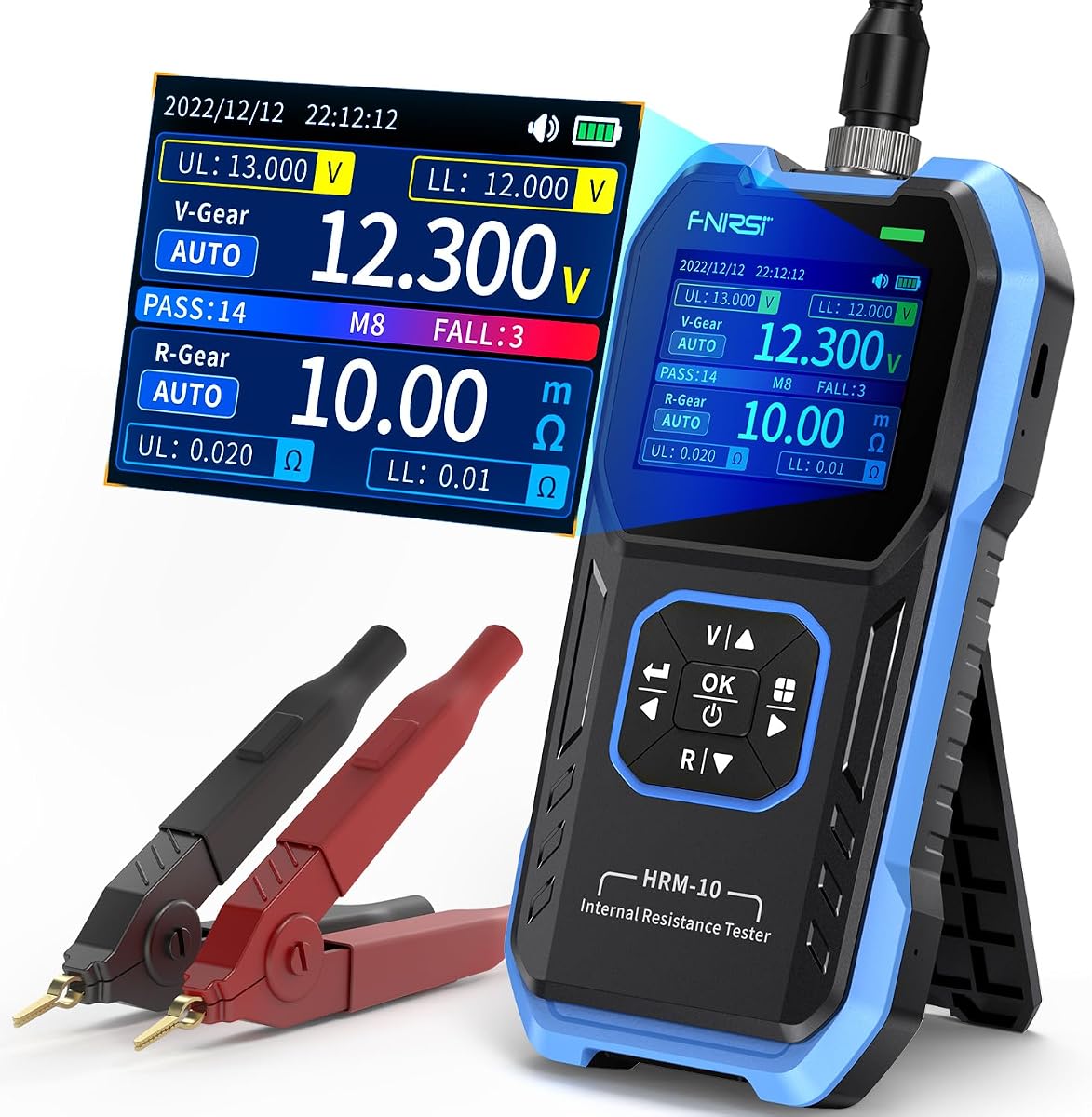
FNIRSI HRM-10
4.4Editor score
HD Color Display
Four-Wire Connection
Historical Record Storage
This guide compares the top Battery Internal Resistance Tester models for accuracy, speed, and versatility across automotive, lithium, and household battery
Finding the right Battery Internal Resistance Tester is crucial for anyone working with electronics or automotive systems. A good tester helps identify failing cells before they cause unexpected downtime or safety hazards in your devices.
We analyzed ten highly rated models based on measurement accuracy, display quality, and ease of use. Each option offers unique features tailored to specific testing scenarios ranging from hobbyist projects to professional diagnostics.
Each pick highlights key strengths and potential limitations to help you choose wisely. Please note that product prices and availability change frequently so verify current details before making your final purchasing decision today.
4.4Editor score

4.5Editor score

4.9Editor score
The following table provides a side-by-side overview of key specifications for each model to help you compare features quickly and make an informed choice based on your specific testing requirements.




The ZOYI ZT-XR1 stands out as a versatile tool combining a professional multimeter with a dedicated battery internal resistance tester. Its 25000 count display ensures high resolution readings for both general electronics repair and specific battery health checks.
We may earn a commission when you buy through this link, at no additional cost to you.
Equipped with 4-wire Kelvin sensing it minimizes lead resistance errors for highly accurate measurements. The adjustable brightness TFT screen allows comfortable viewing in various lighting conditions while the built-in rechargeable battery supports extended field use without frequent charging.
While the advanced features offer significant value they may overwhelm users needing only basic battery checks. The higher price point reflects the dual functionality but remains competitive for professionals requiring both tools in one compact unit.
Ideal for electricians and hobbyists who need reliability and precision the ZT-XR1 delivers comprehensive testing capabilities. Its robust protection ratings and self-calibration features ensure long-term accuracy making it a top choice for serious diagnostics.
Merging two tools saves space and cost while ensuring consistent calibration across measurements.
True RMS and Kelvin sensing provide reliable data while CAT ratings protect against electrical hazards.
We may earn a commission when you buy through this link, at no additional cost to you.
The FNIRSI HRM-10 offers an accessible entry point for those needing accurate internal resistance testing without breaking the bank. Its TFT HD color display presents results vividly improving readability compared to older monochrome alternatives.
We may earn a commission when you buy through this link, at no additional cost to you.
It supports historical data storage and export which is valuable for tracking battery degradation over time. The Kelvin four-wire connection ensures accuracy even with low resistance values making it suitable for various battery types from small cells to automotive units.
Though it lacks some advanced features like true RMS or internal power its simplicity is a strength for focused tasks. The manual range adjustment requires attention but ensures users can fine-tune measurements for specific applications effectively.
This model is ideal for DIY enthusiasts and small shops needing reliable routine checks. Its cost-effective design delivers essential functions well ensuring users can monitor battery health efficiently without unnecessary complexity.
Historical record export helps in long-term monitoring of battery performance trends and replacement planning.
The advanced color technology makes readings distinct and easy to interpret during quick inspections.
We may earn a commission when you buy through this link, at no additional cost to you.
The RC3563 represents a high-performance option favored by professionals requiring stability and precision in challenging environments. Its intelligent control system uses a Kalman filter algorithm to smooth out noise and deliver consistent readings even with fluctuating loads.
We may earn a commission when you buy through this link, at no additional cost to you.
Despite its advanced capabilities the unit remains lightweight and portable making it easy to carry for fieldwork. The ability to test AC resistance in capacitors extends its utility beyond simple battery diagnostics for broader electronic maintenance tasks.
While it lacks some user interface flair its focus on measurement integrity sets it apart. The energy-efficient design ensures long runtime on its internal battery supporting extended sessions without interruption or frequent recharging needs.
This tester is best suited for laboratory settings or specialized maintenance teams. Its reliability and specialized functions justify the investment for users who prioritize data accuracy and equipment longevity in critical applications.
The Kalman filter reduces signal interference ensuring stable results even in electrically noisy environments.
Lightweight build combined with efficient power management enables extended use without burdening the technician.
We may earn a commission when you buy through this link, at no additional cost to you.
This Dlyfull model is optimized for everyday users needing quick checks on common household and rechargeable batteries. Its large LCD screen clearly indicates remaining power helping prevent unexpected device failures during daily use.
We may earn a commission when you buy through this link, at no additional cost to you.
The rotary dial selection process is intuitive requiring no complex setup. It covers a wide range of battery types from AA to specialized cells ensuring versatility for various gadgets from toys to cameras.
While it lacks advanced resistance analysis it excels at providing actionable status updates for general maintenance. The compact size fits easily in toolkits or drawers making it convenient for quick household inspections.
Ideal for families or hobbyists managing multiple devices this tester simplifies battery management. Its straightforward design ensures anyone can use it effectively without technical training or expensive equipment.
Rotary selection and clear display make it accessible for non-technical users needing quick results.
Support for eleven battery types ensures coverage for most common consumer electronics and tools.
We may earn a commission when you buy through this link, at no additional cost to you.
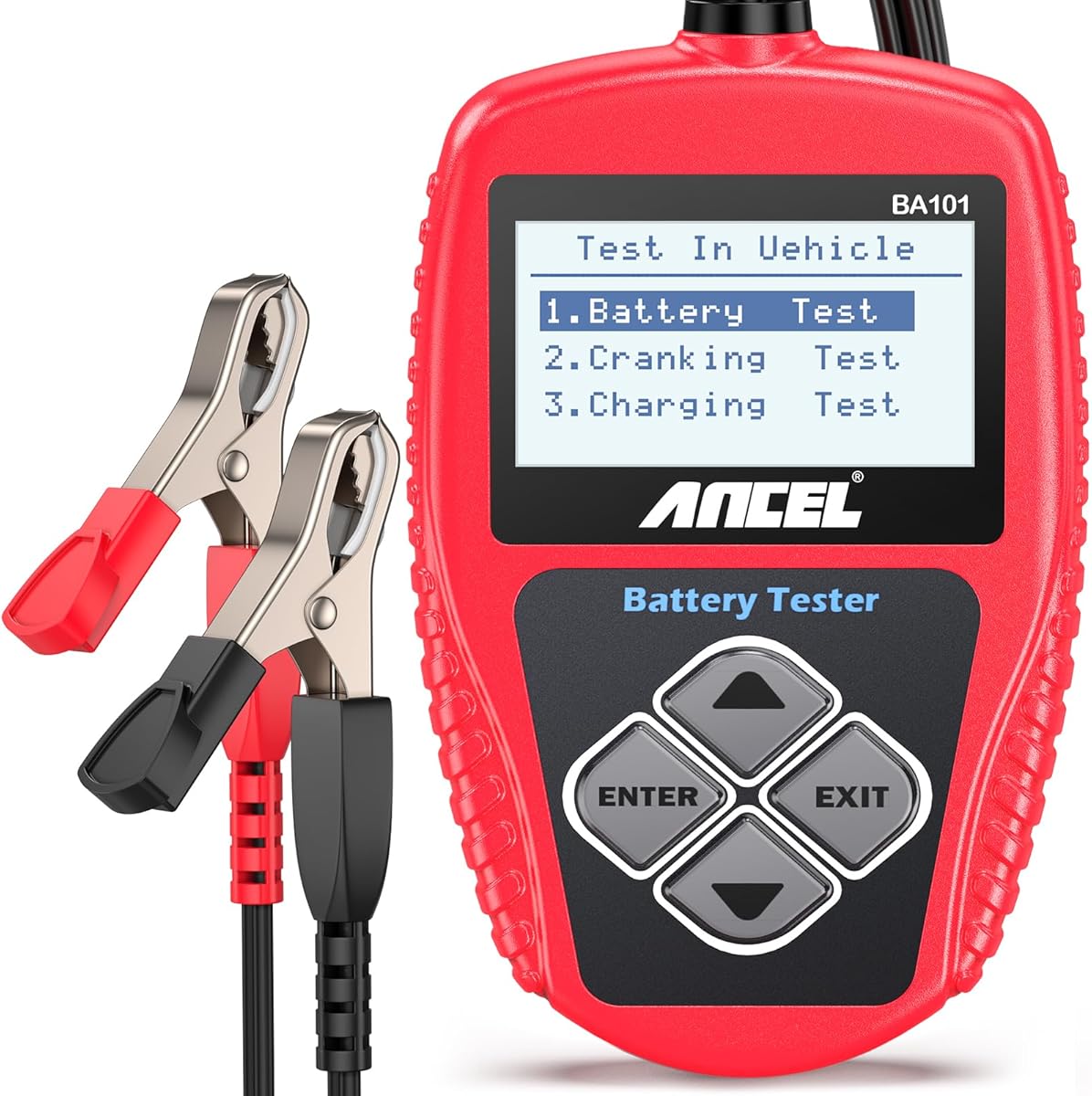
The ANCEL BA101 is designed specifically for automotive professionals and vehicle owners needing reliable battery and charging system checks. Its focus on 12V systems ensures high accuracy for cars trucks and boats within that voltage range.
We may earn a commission when you buy through this link, at no additional cost to you.
With no internal battery required it draws power directly from the vehicle streamlining the testing process. The multi-language support and clear backlight make results easy to read and understand regardless of user location.
While specialized it lacks versatility for other battery types which limits its general utility. However for automotive diagnostics it offers essential protection features and durable construction suitable for demanding shop environments.
Mechanics and fleet operators will appreciate its targeted functionality and robust design. It simplifies diagnosing vehicle electrical issues helping prevent roadside failures and ensuring vehicle readiness.
Supports multiple industry standards making it reliable for various vehicle makes and models worldwide.
Reinforced housing and protection mechanisms ensure it withstands the rigors of daily workshop use.
We may earn a commission when you buy through this link, at no additional cost to you.
This ZOYI model integrates multimeter functions with internal resistance testing in a compact package. Its 25000 count resolution provides detailed readings suitable for precise work while the Type-C port simplifies power management.
We may earn a commission when you buy through this link, at no additional cost to you.
The adjustable buzzer and brightness settings allow customization based on user preferences and environmental conditions. Despite its small size it offers extensive measurement capabilities for both professional and hobbyist use.
While user reviews suggest minor interface challenges it remains a capable tool for versatile testing needs. The focus on portability and integration makes it attractive for those wanting comprehensive data without bulk.
Tech-savvy users will find value in its feature set and modern connectivity. It serves well for field repairs where space and weight are concerns without sacrificing measurement quality.
Type-C charging aligns with current standards reducing the need for proprietary power accessories.
Adjustable alerts and display options enhance usability across different work environments and lighting.
We may earn a commission when you buy through this link, at no additional cost to you.
The YR1035+ achieves perfect user ratings by delivering core functionality with high reliability. Its true four-wire system ensures precise resistance measurements while the large LCD provides clear immediate feedback for users.
We may earn a commission when you buy through this link, at no additional cost to you.
Designed for simplicity it avoids unnecessary complexity focusing on what matters most for accurate battery testing. The inclusion of probes and clips reduces setup time allowing for rapid deployment in various testing scenarios.
Although it lacks advanced configuration options this straightforward approach is preferred by many users seeking consistency. The portable design supports both benchtop and field use making it versatile for general maintenance tasks.
Ideal for those valuing dependability over features this model offers excellent value. It ensures that battery health checks are accurate and easy to perform without frustration or technical overhead.
Perfect ratings indicate high reliability and ease of use across diverse user experiences and needs.
Included accessories and simple interface reduce setup time for immediate testing readiness.
We may earn a commission when you buy through this link, at no additional cost to you.
This T-685 model targets specialized applications requiring extreme precision and speed. With a resolution down to 1uOhm it can detect minute changes in battery health that other testers might miss during routine checks.
We may earn a commission when you buy through this link, at no additional cost to you.
The ability to switch between AC and DC resistance modes expands its utility to capacitors and other components. Computer connectivity facilitates detailed analysis and reporting essential for research and development environments.
User feedback varies suggesting a learning curve for optimal usage. While powerful the complexity may not suit casual users preferring simpler interfaces for basic diagnostic tasks and maintenance.
Researchers and lab technicians will appreciate its advanced capabilities and data handling. For high-stakes analysis where precision is paramount it offers the necessary tools despite its steeper learning curve.
Micro-ohm precision enables detection of subtle degradation patterns in advanced battery pack systems.
Computer connectivity allows for streamlined data management and integration with lab software.
We may earn a commission when you buy through this link, at no additional cost to you.
This accessory-focused version of the YR1035+ emphasizes convenience with a square clamp design. It supports a wide variety of battery chemistries and types ensuring broad applicability for different testing scenarios.
We may earn a commission when you buy through this link, at no additional cost to you.
The hands-free operation capability reduces fatigue and improves safety during repeated measurements. Type-C charging ensures compatibility with modern chargers reducing downtime during long testing sessions.
Users favor its practical design that prioritizes usability without sacrificing accuracy. While it may lack the features of higher-end models it covers essential needs efficiently for most users.
Ideal for workshops handling multiple battery types this model offers reliable performance. Its design choices reflect a focus on real-world efficiency and user comfort in demanding environments.
Square clamps allow secure attachment enabling efficient workflows during intensive testing tasks.
Type-C integration ensures the device stays powered with standard chargers found in most environments.
We may earn a commission when you buy through this link, at no additional cost to you.
The WESTOBIG model combines Kelvin four-terminal sensing with a user-friendly interface for automotive and universal testing. It supports a broad voltage range making it adaptable for various battery configurations including lead-acid and lithium types.
We may earn a commission when you buy through this link, at no additional cost to you.
Presets and auto modes streamline the testing process allowing quick identification of out-of-spec batteries. The display layout is designed to highlight critical data points ensuring efficient workflow during checks.
While it excels in versatility some advanced users may miss deeper data tracking capabilities. However for general diagnostics it delivers reliable performance at a competitive price point for shops and individuals.
Users needing a balance of features and affordability will find it suitable. It provides the essential tools needed for maintaining battery health across different vehicle and electronic systems effectively.
Voltage and resistance ranges align well with standard car and truck battery requirements.
Auto modes and presets reduce manual steps enabling faster assessment during routine maintenance.
We may earn a commission when you buy through this link, at no additional cost to you.
Selecting the right tester involves balancing accuracy, features, and usability. Understanding key factors helps you choose a device that fits your specific testing needs and environment.
Accuracy is critical for identifying subtle battery degradation. Look for Kelvin four-wire sensing which eliminates lead resistance errors ensuring precise low-ohm readings essential for reliable diagnostics.
Prioritize models with low tolerance ranges to maintain consistent results over time and across different battery types.
A clear display is essential for reading data in varying lighting conditions. TFT color screens enhance visibility and help distinguish between multiple parameters like voltage and resistance simultaneously.
Adjustable brightness ensures the display remains readable both in bright sunlight and low-light workshop environments.
Consider whether the device uses internal rechargeable batteries or external power. Units with internal cells offer portability but require charging while those drawing power from the test source eliminate battery concerns.
Choose based on your typical workflow needs between extended field use and stationary bench testing operations.
Ensure the tester supports the specific battery types you work with most frequently. Some devices focus on automotive batteries while others cover lithium cells or alkaline household batteries.
Check voltage and resistance ranges to confirm coverage for your most common testing scenarios and battery chemistries.
Models with data storage and export features allow you to track battery health over time. This is vital for preventive maintenance and identifying trends in battery performance across multiple units.
Look for USB or PC connectivity options to integrate results with your existing logging or diagnostic software systems.
Robust housing and safety ratings protect both the user and the equipment during testing. CAT ratings and protection against reverse polarity reduce risks in demanding environments.
Invest in durable units designed to withstand drops and exposure to harsh workshop conditions for long-term reliability.
User interface design impacts testing efficiency and accuracy. Simple rotary dials or auto-ranging features reduce setup time and potential operator errors.
Prioritize models with intuitive layouts and clear feedback to ensure fast and reliable testing across all users.
Prices vary widely based on features and build quality. Balance your needs with available budget to find a unit that delivers essential performance without unnecessary complexity or cost.
Consider long-term value by selecting devices that offer durability and accuracy to minimize future replacement expenses.
Before each test ensure the tester and battery connections are clean and free of corrosion to maintain accurate readings. Proper contact is essential for low resistance measurements.
Follow the manufacturer guidelines for range selection and safety precautions to prevent device damage. Always use the correct test leads and clips provided with your specific model.
Store the device in a dry place and recharge it regularly if it uses an internal battery. Regular calibration ensures consistent accuracy and extends the overall lifespan of your testing equipment.
Internal resistance indicates a battery's ability to deliver current. Higher resistance often signals aging or damage which can lead to poor performance or unexpected failure. Testing helps identify weak batteries before they cause issues.
Yes many models support lithium batteries including 18650 and LiPo. Check the voltage range to ensure compatibility with your specific lithium cell types before proceeding with testing.
For critical applications test monthly or before major usage. Household batteries can be checked as needed when devices show reduced performance or warning signs.
DC resistance measures battery health under direct current while AC resistance helps analyze capacitors. Most battery testers focus on DC to assess internal battery conditions accurately.
Yes periodic calibration maintains accuracy especially if the device is used frequently or exposed to harsh conditions. Many models include self-calibration features for convenience.
Yes measuring individual cell resistance helps identify weak cells within a pack. This is useful for maintaining performance and safety in larger battery systems.
Choosing the right tester depends on balancing accuracy, features, and budget. Models like the ZOYI ZT-XR1 offer versatility while others like the FNIRSI HRM-10 provide affordability for routine checks.
Prioritize measurement precision and compatibility with your most common battery types. A well-chosen tester simplifies diagnostics and ensures your batteries remain reliable for critical applications.
Always verify current pricing and availability before purchasing as market conditions change. Selecting the best match for your needs ensures efficient and accurate battery maintenance going forward.