
JOYO Guitar Audio Interface for Phone Direct Monitoring with 6.35mm Input & 3.5mm Headphone Out USB-C & Lightning Plug & Play Portable Pocket Size (MOMIX CAB)
4.2Editor score
Zero latency monitoring
Plug and play setup
Pocket sized portability
This guide compares the top ten audio interfaces for guitar recording covering sound quality connectivity latency and features to help musicians choose the
Finding the right audio interface for guitar is essential for capturing crisp tones and minimizing latency during recording. Whether you play electric acoustic or bass a quality interface ensures your instrument shines through digital audio workstations with professional clarity and dynamic range.
We evaluated ten leading models based on build quality input options software bundles and overall value for home studio creators. Our analysis considers factors like preamp performance converter resolution and compatibility with various devices including PCs Macs and mobile platforms for versatile workflows.
Each pick highlights unique strengths from budget-friendly options to premium units with advanced routing and expansion capabilities. Prices and availability change frequently so always verify current listings before purchasing to ensure you get the best deal for your specific recording needs.
4.2Editor score
4.6Editor score

4.7Editor score
This side-by-side comparison outlines the core specifications and capabilities of each model to help you quickly identify the best fit for your recording environment and budget constraints.



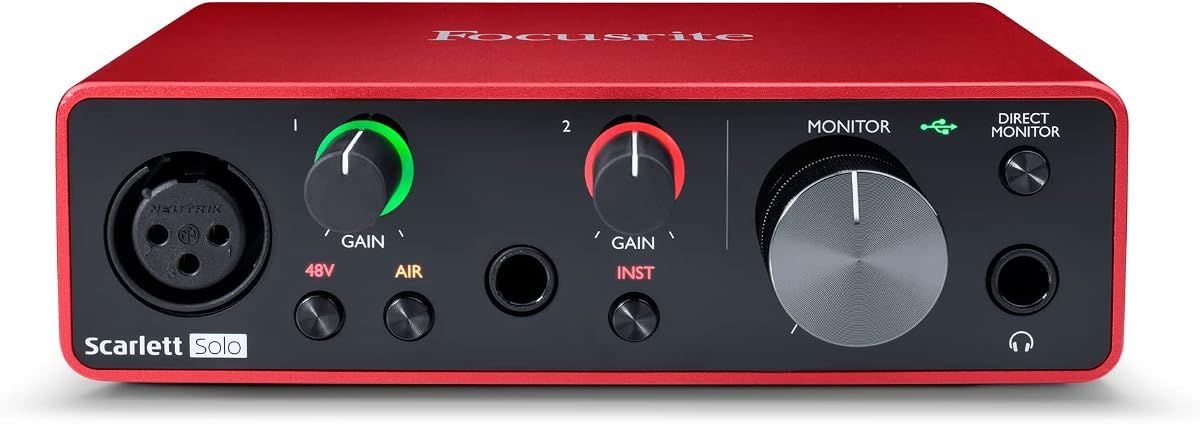
The Focusrite Scarlett Solo 3rd Gen USB-C Audio Interface stands out as a top choice for guitarists seeking professional sound at an accessible price. With a 4.6 rating users praise its transparent preamps and ease of use for home recording sessions.
We may earn a commission when you buy through this link, at no additional cost to you.
Its standout quality lies in the Air mode which adds brightness to acoustic tracks and the Gain Halos that prevent clipping during loud guitar passages. The 24-bit/192kHz converters ensure every nuance is captured without noise.
Trade-offs include only two inputs which limits recording full bands and some software suites may feel basic for advanced producers. These drawbacks are acceptable given the unit focuses on single musician workflows.
Ideal for solo artists and beginners this interface delivers studio quality results without complex setup. We highly recommend it for anyone starting their home studio journey.
The Air mode switchable preamp feature brings out high frequency details making acoustic guitars sound vibrant and clear.
Gain Halos provide visual feedback to prevent distortion ensuring your guitar levels stay consistent throughout sessions.
We may earn a commission when you buy through this link, at no additional cost to you.
The JOYO MOMIX CAB offers a surprisingly capable solution for mobile recording at an incredibly low price point. Rated 4.2 it is perfect for guitarists who want to capture ideas directly on their smartphones or tablets.
We may earn a commission when you buy through this link, at no additional cost to you.
Its main strength is direct monitoring which routes your guitar signal straight to headphones with zero latency while simultaneously sending audio to your phone for recording. This setup allows practice with backing tracks instantly.
Users should note that this device does not support real-time software amp simulations so you cannot use effects apps directly through the interface. Additionally Android users must enable OTG settings which adds a step to setup.
Best for casual players and content creators on a budget this interface lets you record anywhere without bulk. Its simplicity and price make it a fantastic entry level tool.
Connect directly to your device without drivers and start capturing riffs or songs within seconds of plugging in.
Bus powered design means you never worry about batteries or power banks keeping your gear ready for impromptu sessions.
We may earn a commission when you buy through this link, at no additional cost to you.
The Fender Quantum HD 2 represents the pinnacle of home studio interfaces with its massive I/O capacity and advanced conversion technology. Rated 4.7 it serves professional musicians and producers needing robust routing and pristine sound quality.
We may earn a commission when you buy through this link, at no additional cost to you.
Key strengths include the 32-bit/192kHz converters that capture every dynamic nuance and the Auto Gain button which instantly sets optimal recording levels to save time during setup. The Re-Amp outputs allow tone exploration later.
Trade-offs involve the higher cost and feature complexity which might overwhelm casual users. The sheer number of connections requires careful cable management and a larger physical setup space.
Ideal for serious producers and multi-instrumentalists this interface offers unmatched flexibility and tone shaping options. If you need a professional workspace this unit delivers unmatched value for advanced users.
Auto Gain button instantly optimizes levels ensuring you spend more time playing and less time tweaking knobs.
ADAT and S/PDIF inputs allow you to connect additional preamps or converters as your studio grows.
We may earn a commission when you buy through this link, at no additional cost to you.
The M-AUDIO M-Track Duo brings reliable performance to home studios with two combo inputs and transparent Crystal Preamps. It is particularly useful for users needing to record vocals and guitar simultaneously without extra costs.
We may earn a commission when you buy through this link, at no additional cost to you.
Key strengths include the USB/Direct switch for zero latency monitoring and the inclusion of MPC Beats software which provides a solid start for production. The 48kHz resolution ensures clear recordings for most streaming uses.
Trade-offs include a somewhat basic build feel compared to premium brands and software that might not satisfy advanced producers. However the hardware quality remains solid for the price.
Best for podcasters and duo acts this interface offers a balanced mix of features and price. Its simplicity makes it a great choice for straightforward recording tasks.
Two combo inputs let you plug in a microphone and guitar at the same time for full track creation.
Toggle between USB and Direct monitoring to eliminate delay while recording or hear processed signals when mixing.
We may earn a commission when you buy through this link, at no additional cost to you.
The IK Multimedia iRig USB is a compact interface designed for musicians who need a reliable bridge between their guitar and digital devices. Its 24-bit 48kHz resolution captures detailed audio suitable for professional demos and recordings.
We may earn a commission when you buy through this link, at no additional cost to you.
Standout features include the dedicated Amp out which lets you connect your signal to an amp or pedal chain while recording digitally. This hybrid functionality adds unique flexibility for tone lovers.
Trade-offs involve the lack of a Lightning cable requiring USB-C devices and basic physical controls that might not suit complex setups. The software bundle is helpful but basic.
Best for mobile creators and iPad users this interface combines portability with necessary features. If you work mostly on tablets it offers a seamless and robust recording path.
Use the Amp out to keep your analog pedalboard active while sending a clean signal to your computer for editing.
Its small size ensures it fits easily in gig bags making it perfect for rehearsals and travel recording.
We may earn a commission when you buy through this link, at no additional cost to you.
The MAONO PS22 Lite is tailored for streamers and vocalists needing high quality audio capture with easy routing capabilities. With 24-bit/192kHz resolution it delivers professional clarity for both vocals and instruments alike.
We may earn a commission when you buy through this link, at no additional cost to you.
Its main strength is the ProStudio Routing Software which enables loopback and virtual channels for seamless live streaming. This allows mixing game audio and voice separately on the fly.
Trade-offs include the need to install specific drivers for full functionality and a physical build that feels light compared to heavier units. The software is powerful but requires learning.
Best for content creators and podcasters this interface simplifies complex audio routing. If streaming is your priority the included tools provide unmatched value and ease.
Loopback capabilities let you capture game sound and voice together easily without external mixers or cables.
Capture audio at 192kHz to ensure every detail is preserved for broadcast quality streams and podcasts.
We may earn a commission when you buy through this link, at no additional cost to you.
This generic 2X2 interface delivers high-fidelity performance at a competitive price with features like loopback and zero-latency monitoring. Its 24-bit/192kHz resolution ensures studio quality sound for PC and Mac users.
We may earn a commission when you buy through this link, at no additional cost to you.
Key strengths include the elegant design with illuminated control knobs that look great in dim studios and the versatile combo inputs for mics and guitars. The loopback feature aids streaming workflows.
Trade-offs include a lighter build quality compared to established brands and limited technical support options. The interface is reliable but lacks the ecosystem of premium options.
Best for budget-conscious creators this interface offers premium features at a lower cost. If aesthetics and basic loopback are needed it is a strong contender.
Illuminated gain rings ensure you can see control levels clearly even in dark recording environments.
Integrated loopback simplifies capturing system audio for streamers needing easy integration without extra hardware.
We may earn a commission when you buy through this link, at no additional cost to you.
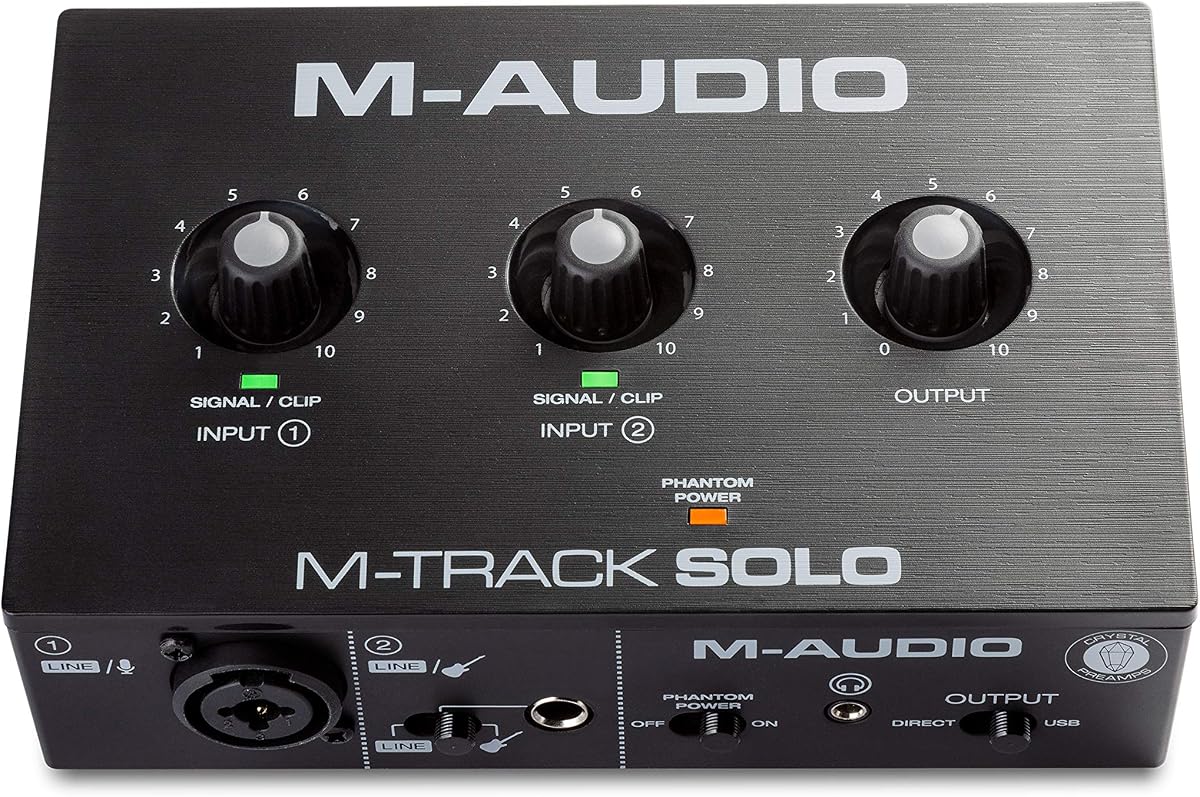
The M-AUDIO M-Track Solo is designed for solo musicians needing a simple and effective recording solution. With one combo input and one line input it offers flexibility for vocals or instruments without complexity.
We may earn a commission when you buy through this link, at no additional cost to you.
Key strengths include the transparent Crystal Preamp that ensures clean recordings and the inclusion of MPC Beats software. The 48kHz resolution delivers clear audio for standard home studio needs.
Trade-offs involve having only one XLR input and lacking loopback features for streaming. This limits its utility for more complex production setups.
Best for solo artists on a budget this interface provides essential tools without bloat. If simplicity is your goal it is a reliable and affordable choice.
A straightforward layout means you can start recording immediately without digging through menus or manuals.
Transparent Crystal Preamps ensure your signal remains clean and natural without added noise or coloration.
We may earn a commission when you buy through this link, at no additional cost to you.
The Arturia MiniFuse 1 combines robust hardware with an exceptional software bundle making it ideal for producers integrating MIDI gear. With a 5-year warranty it offers peace of mind and superior build quality.
We may earn a commission when you buy through this link, at no additional cost to you.
Key strengths include the dedicated MIDI ports for syncing synthesizers and the Loopback feature for streaming. The included software like Ableton Live Lite and Guitar Rig 6 LE provides huge value.
Trade-offs involve having only one audio input and relying heavily on bundled software for full potential. The audio section is simple but the ecosystem is rich.
Best for MIDI producers and electronic musicians this interface offers unmatched value and longevity. If you work with synths the MIDI connections are a critical advantage.
Standard MIDI inputs and outputs allow you to connect external synthesizers and drum machines easily.
Access premium software tools that enhance creativity and production capabilities right out of the box.
We may earn a commission when you buy through this link, at no additional cost to you.
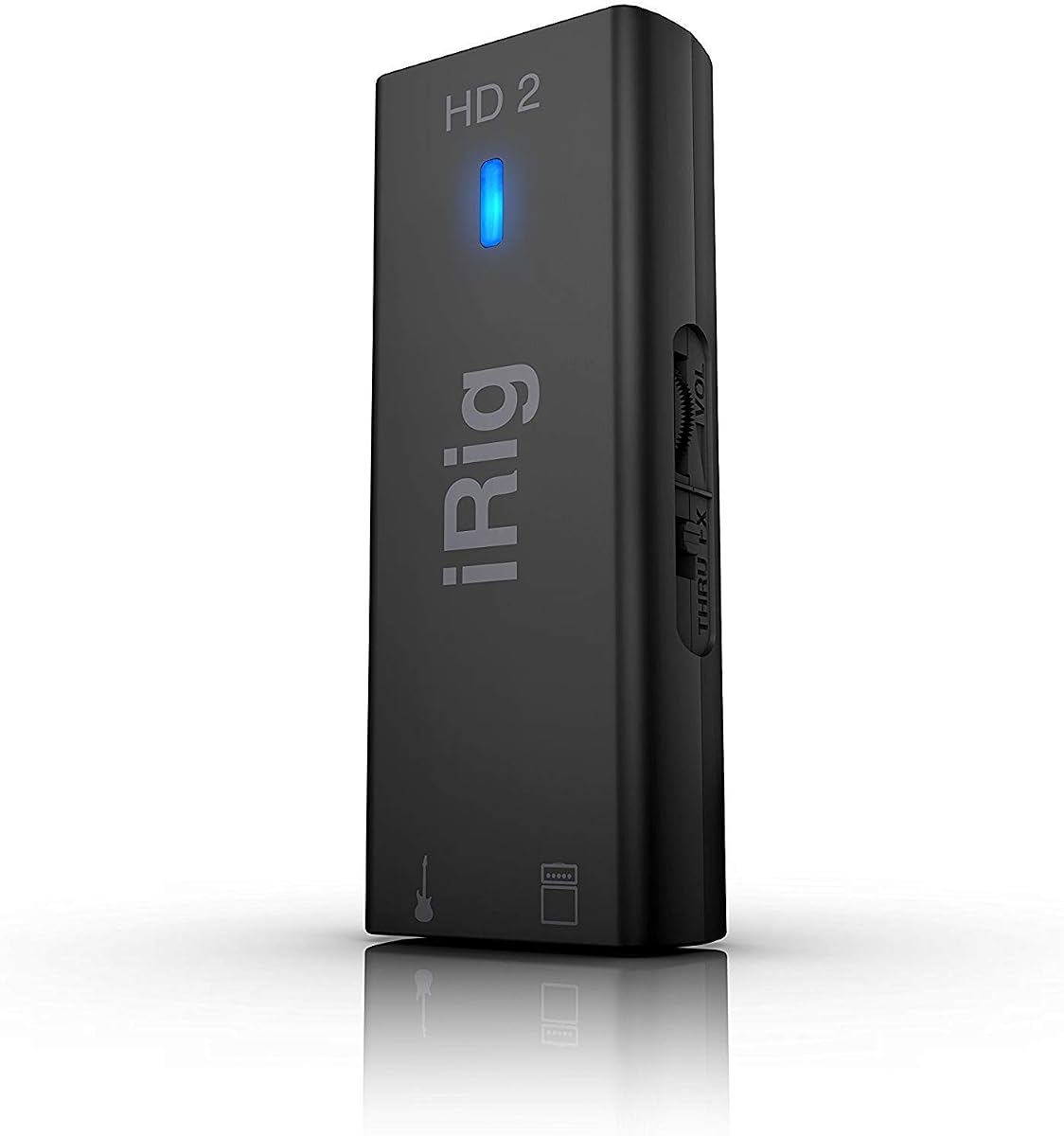
The IK Multimedia iRig HD 2 sets the standard for mobile recording with its high definition 96 kHz sampling rate. It is a premium choice for iPhone and iPad users needing top notch digital audio.
We may earn a commission when you buy through this link, at no additional cost to you.
Key strengths include the Amp Out jack which connects to your amp for silent practice and the inclusion of both USB-C and Lightning cables. The high sampling rate captures detailed audio.
Trade-offs include the higher price point and lack of direct amp simulations requiring external software. Its physical build is sturdy but the focus is on clean signal capture.
Best for mobile professionals this interface delivers high fidelity on the go. If you need Apple device compatibility and resolution it is a solid investment.
High sampling rates capture the full spectrum of your tone ensuring maximum clarity and detail in recordings.
Included Lightning and USB-C cables ensure seamless connection to any modern mobile or desktop device.
We may earn a commission when you buy through this link, at no additional cost to you.
Selecting the right interface involves balancing sound quality connectivity needs and budget. This section breaks down critical factors to consider for your recording setup.
For guitarists a dedicated instrument input with high impedance is essential to prevent tone loss. If you plan to record vocals simultaneously look for combo XLR/TRS jacks that handle multiple sources.
Prioritize interfaces with enough inputs for your current needs and potential expansion to avoid upgrading soon.
Higher bit depth like 24-bit or 32-bit offers better dynamic range preventing clipping during loud performances. Sample rates above 48kHz can capture more audio detail which is beneficial for professional releases.
Standard 24-bit/48kHz is sufficient for most but higher rates offer future proofing for studio production.
USB-C is the modern standard offering faster speeds and bus power compatibility. Ensure the interface supports your operating system and has reliable drivers for stable operation.
Check if mobile compatibility is needed for iPad or Android workflows to ensure seamless integration.
Many interfaces come with DAWs or effects plugins that add significant value. Look for suites that include amp simulators or mastering tools to save money on additional purchases.
Stable ASIO drivers are crucial for low latency monitoring especially during live streaming sessions.
Zero latency monitoring allows you to hear your instrument in real time without delay. This feature is vital for comfortable recording and prevents timing issues during performance.
Ensure the interface has a dedicated monitoring switch or mixer to control levels easily.
Durable construction ensures the interface withstands travel and frequent use. Metal housings and reliable knobs indicate longevity and better protection for internal electronics.
A longer warranty period like five years signals manufacturer confidence and protects your investment.
Bus powered interfaces draw energy from your computer eliminating the need for external power supplies. This simplifies your workspace and reduces cable clutter significantly.
Check power needs especially for units with multiple channels or high impedance inputs.
Balance your budget with the features you truly need. Higher priced units offer better converters and build but mid-range options often suffice for home recording.
Consider the total cost including cables and software to determine the true value of the interface.
Connect your guitar to the instrument input using a high quality cable to ensure optimal signal transmission. Always use the dedicated instrument port rather than a line input to avoid impedance mismatches.
Install the necessary drivers and software before plugging into your computer to ensure recognition. Set your audio preferences to the interface for lowest latency during recording.
Store the interface in a cool dry place when not in use to protect sensitive electronics. Regularly clean the ports with compressed air to prevent dust buildup from affecting connectivity.
While you can plug directly into some microphones a dedicated interface provides superior preamps and low latency. It ensures your tone remains intact and allows simultaneous monitoring while recording without delay.
USB-C is becoming the universal standard offering faster data transfer and reversible connectors. Lightning is specific to Apple devices but some interfaces support both via included cables for flexibility.
Yes you can connect your pedalboard to the instrument input directly. Some interfaces also feature loopback or amp outputs allowing you to retain your analog signal path while capturing digital audio.
Distortion often results from input levels being set too high. Check the gain knobs and look for red indicators on the interface to lower levels. Also ensure your guitar volume is not maxed out.
Most modern interfaces work with both operating systems through class compliant drivers. Always check specific compatibility lists for macOS or Windows to ensure full functionality and stability.
Enable direct monitoring on the interface to bypass software processing for your signal. Also adjust your buffer size in the driver settings to balance CPU load and real time audio performance.
We have reviewed ten top options ranging from budget friendly mobile solutions to premium studio units. Each offers unique strengths suitable for different skill levels and recording environments.
Prioritize features like latency and input types based on your specific needs whether for streaming or production. The right interface will significantly enhance the clarity and quality of your recordings.
Always verify current pricing and availability as deals change frequently. Selecting the right tool ensures you capture your best performances with professional sound quality.