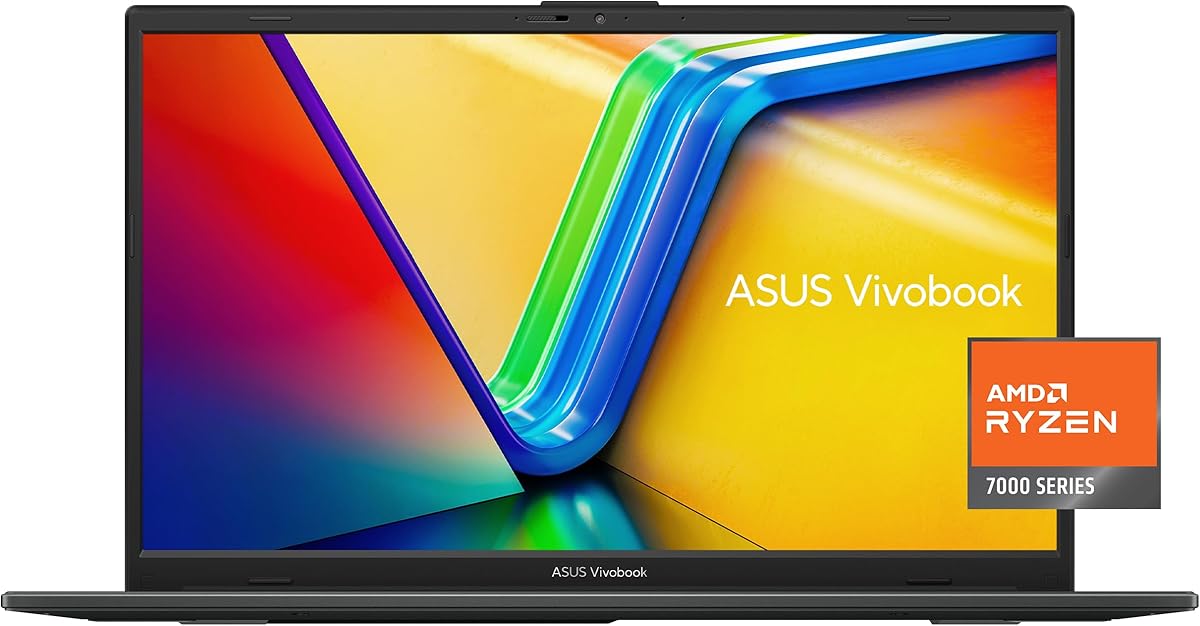
ASUS Vivobook Go 15.6" FHD Slim Laptop
4.3Editor score
AMD Ryzen 3 7320U Processor
8GB DDR5 RAM
128GB SSD Storage
Choosing the right laptop for academic success requires balancing performance, portability, and price. Students need reliable devices that can handle coursework, research, and entertainment without breaking the bank or weighing down a backpack.
We analyzed ten top-rated ASUS laptops specifically for student needs. Our comparison focuses on processor speed, memory capacity, storage options, display quality, and battery endurance to ensure you find a machine that supports your daily workflow effectively.
Each pick below highlights key features and potential trade-offs to help you make an informed decision. Please note that product availability and pricing can fluctuate frequently, so verify current details before finalizing your purchase for the semester.
4.3Editor score

4.8Editor score

4.5Editor score
As an Amazon Associate we earn from qualifying purchases.
The following table provides a side-by-side comparison of all ten ASUS laptops selected for students. Review the specifications to identify which model aligns best with your specific academic requirements and budget constraints.


The ASUS Vivobook Go 15.6" FHD Slim Laptop stands out as an excellent entry-level option for students on a tight budget. With a 4.3 rating from users, it offers reliable performance for everyday tasks like web browsing and word processing without compromising on essential features.
We may earn a commission when you buy through this link, at no additional cost to you.
This model features an AMD Ryzen 3 7320U processor paired with 8GB of DDR5 RAM, ensuring smooth multitasking during lectures or online classes. The 128GB SSD provides fast boot times, and the 15.6-inch FHD display delivers clear visuals for reading textbooks and watching educational videos.
While the storage might fill up quickly with large files, external drives can easily supplement this limitation. The military-grade durability ensures the laptop can withstand the rigors of daily commuting between classes or dorms.
Students seeking a dependable and affordable device should consider this Vivobook Go model. It balances cost and functionality effectively, making it a practical choice for those prioritizing essential computing needs over high-end specifications.
The integrated AMD Radeon Graphics and Ryzen processor handle standard productivity software efficiently.
Military grade standards ensure the chassis resists wear and tear from frequent travel.
We may earn a commission when you buy through this link, at no additional cost to you.
Building on the success of its predecessor, the ASUS 2023 Vivobook Go 15 Laptop improves storage and processing power. It maintains the same high rating of 4.3, indicating consistent quality and user satisfaction across the Vivobook Go series.
We may earn a commission when you buy through this link, at no additional cost to you.
The AMD Ryzen 5 7520U processor offers a noticeable performance boost over the Ryzen 3 variant, allowing for more demanding applications like data analysis or moderate video editing. The 512GB SSD provides ample space for storing project files and media without immediate need for external storage.
Connectivity is another strong suit here, featuring Wi-Fi 6E for faster and more stable internet connections in crowded campus environments. The AI Noise-Canceling Technology enhances video calls, ensuring clear communication during remote study sessions or group projects.
This laptop is ideal for students who need slightly more power and storage than the base budget model offers. It remains affordable while providing the necessary tools to handle a wide range of academic responsibilities efficiently.
Wi-Fi 6E ensures stable internet connections even in congested campus networks.
Battery recharge capabilities allow quick top-ups between classes without downtime.
We may earn a commission when you buy through this link, at no additional cost to you.
The ASUS Vivobook 14 with Snapdragon X processor earns our Editor's Choice award due to its exceptional balance of performance and efficiency. With a standout 4.8 rating, users appreciate its ability to handle tasks smoothly while maintaining long battery life throughout the school day.
We may earn a commission when you buy through this link, at no additional cost to you.
Equipped with 16GB of RAM and a Snapdragon X processor, this laptop supports multitasking with ease. The inclusion of Copilot+ PC capabilities means you get access to advanced AI features that can streamline research and writing tasks, giving you an edge in productivity.
While the 14-inch screen might be smaller than some competitors, the WUXGA resolution ensures text remains sharp and readable. The integrated Qualcomm Adreno GPU handles light creative work well, though it may not be suitable for heavy gaming or 3D rendering.
Students looking for a portable and highly efficient machine should prioritize this model. Its high rating reflects real-world reliability, and the advanced features make it a future-proof investment for digital learning environments.
Copilot+ PC features utilize AI to help automate common tasks and assist research.
The energy-efficient processor design ensures the battery lasts through long study sessions.
We may earn a commission when you buy through this link, at no additional cost to you.
This ASUS 15.6" Vivobook Go Slim Laptop is designed for students with minimal computing needs and strict budget constraints. While it has a lower rating of 3.9, it fulfills basic requirements for web-based learning and document creation without unnecessary complexity.
We may earn a commission when you buy through this link, at no additional cost to you.
The Intel Celeron N4500 processor combined with 4GB of RAM allows for essential web browsing and streaming. However, users may experience some slowdowns when switching between multiple heavy applications. The 128GB eMMC storage is adequate for OS and essential apps but limits local file storage.
The device features a 15.6-inch FHD display that provides decent viewing angles for general use. Battery life is supported by fast-charge technology, which can be crucial for students who often forget to charge their devices overnight.
Ideal for light users who primarily rely on cloud storage and web apps, this laptop serves as a functional backup or secondary device. It prioritizes portability and affordability over high-speed performance.
Thin and light form factor makes it easy to carry in a small backpack.
Rapid charging capabilities ensure quick power ups during short breaks between classes.
We may earn a commission when you buy through this link, at no additional cost to you.
The ASUS Vivobook 16 Laptop caters to students who prefer a larger workspace for multitasking. Boasting a 4.4 rating, it combines the efficiency of the Snapdragon X processor with the benefits of a larger screen, making it suitable for detailed work like spreadsheets or coding.
We may earn a commission when you buy through this link, at no additional cost to you.
Its 16-inch WUXGA display offers a 16:10 aspect ratio, providing more vertical screen real estate compared to standard laptops. This layout is particularly helpful when viewing long documents or having multiple windows open side-by-side. The 16GB RAM ensures smooth performance across these windows.
Despite the larger size, the Snapdragon architecture helps maintain a reasonable battery life, allowing for extended use away from power outlets. The integrated Adreno GPU supports media playback effectively, enhancing the experience of watching educational videos or lectures.
Students with desktop alternatives or those needing extensive screen space for complex projects will find this model beneficial. It balances performance and display quality well, though it requires a bit more room to carry and store.
The 16-inch screen offers ample room for managing multiple applications simultaneously.
Snapdragon X chip delivers strong performance while conserving battery energy.
We may earn a commission when you buy through this link, at no additional cost to you.
This ASUS Vivobook 14 FHD Business & Student Laptop targets users needing robust storage and professional features. With a 4.1 rating, it appeals to students handling large datasets or media files who also require a more secure operating system environment.
We may earn a commission when you buy through this link, at no additional cost to you.
The Intel Core 5 120U processor provides a balance of power and efficiency, while 12GB of RAM supports smooth multitasking. The 1TB SSD is a significant advantage, offering ample space for extensive libraries of research papers, videos, and software without relying on external drives.
Included in the package is a PLUSERA Docking Hub, which expands connectivity options significantly. This is particularly useful for students who frequently connect to external monitors or peripherals in library or lab settings. Windows 11 Pro adds features like BitLocker for data security.
Those planning to use their laptop heavily for professional internships or data-intensive coursework should consider this model. The combination of storage, connectivity, and professional-grade security makes it a versatile tool for academic growth.
The included docking hub simplifies connections to external displays and accessories.
One terabyte of storage ensures you can keep all files locally without clutter.
We may earn a commission when you buy through this link, at no additional cost to you.
The ASUS Vivobook 15 Laptop serves as a reliable all-rounder for general student use. It holds a 4.2 rating, reflecting its ability to handle common academic tasks without issue. The silver chassis offers a professional look that fits well in various study environments.
We may earn a commission when you buy through this link, at no additional cost to you.
Powered by an Intel Core 5 120U processor and 16GB of RAM, this laptop manages multitasking with ease. Whether you are working on research papers with multiple browser tabs open or running statistical software, the hardware provides sufficient headroom. The 512GB SSD is a practical standard size.
Connectivity is covered thoroughly with Wi-Fi 6 and multiple USB ports, ensuring you can connect to campus networks and peripherals quickly. The Full HD display provides good clarity for reading and writing tasks, though it may not offer the color accuracy needed for professional graphic design.
This model is well-suited for students who want a balanced laptop without specific niche requirements. It offers a dependable experience for everyday academic work with enough power to last through the degree program.
The Core 5 processor and 16GB RAM combination suits a wide range of student needs.
The silver finish and clean design look professional in internship or meeting settings.
We may earn a commission when you buy through this link, at no additional cost to you.
The ASUS Vivobook 15 Laptop with Intel Core i9 represents the premium tier of student laptops. With a 4.5 rating, it stands out for students requiring extreme performance for engineering, architecture, or heavy content creation. The inclusion of a PCO Bundle adds value to this high-end package.
We may earn a commission when you buy through this link, at no additional cost to you.
The Intel Core i9-13900H processor is a 14-core powerhouse designed to handle complex simulations and multitasking without throttling. Paired with 32GB of RAM, this machine is future-proof against demanding software updates. The 1TB SSD ensures you have plenty of room for large project files and media.
Security and usability are enhanced with a physical webcam shield and fingerprint reader for quick, safe logins. The AI-ready capabilities allow for smoother integration with modern tools that rely on neural processing units, keeping you ahead of the technological curve.
Investing in this laptop is best for students whose coursework involves heavy computation or professional-grade rendering. While the cost is higher, the performance and durability justify the investment for those needing a top-tier workhorse.
The Core i9 processor delivers elite-level computing power for complex academic tasks.
Fingerprint and webcam shield features ensure your data and privacy remain protected.
We may earn a commission when you buy through this link, at no additional cost to you.
The ASUS Vivobook 14 Laptop with Copilot+ PC features brings advanced AI processing to the student market. Holding a 4.2 rating, it is designed for those interested in utilizing AI tools to enhance their creativity and productivity. The Platinum Gold finish gives it a unique and stylish appearance.
We may earn a commission when you buy through this link, at no additional cost to you.
The AMD Ryzen AI 7 350 processor includes an XDNA NPU capable of up to 50 TOPS, enabling efficient AI workloads like real-time translation and recall features. The 14-inch WUXGA display is bright and sharp, making it great for creative tasks. Additionally, the AMD Radeon graphics support decent gaming performance.
Battery life is rated for up to 12 hours, ensuring the laptop lasts through a full day of classes. The backlit keyboard allows for comfortable typing in dimly lit study rooms or libraries. However, some Copilot+ features may require specific updates or regions to function fully.
This laptop is perfect for students who want the latest in AI technology combined with solid performance for entertainment and study. It offers a compelling package for those willing to embrace new computing paradigms.
The dedicated NPU accelerates AI tasks like translations and content summarization.
High brightness display and backlit keys improve usability in varied lighting conditions.
We may earn a commission when you buy through this link, at no additional cost to you.
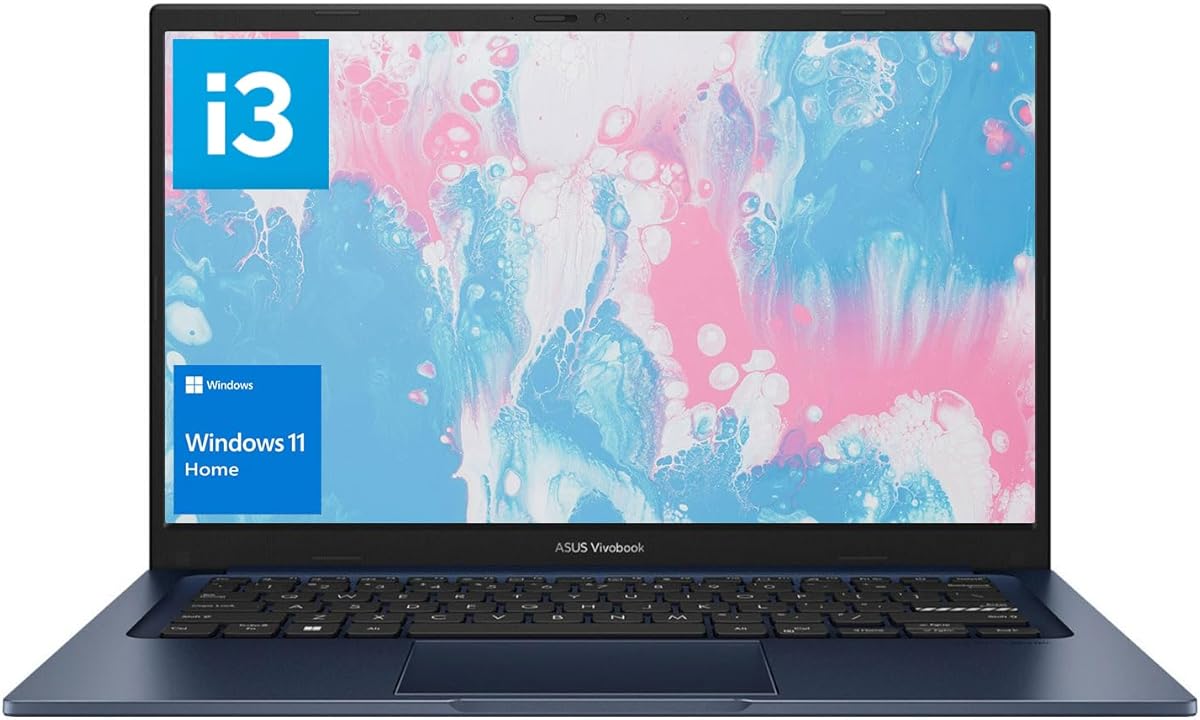
The ASUS Vivobook Laptop rounds out our list with a value-focused configuration. With a 4.2 rating, it proves that you do not need the most expensive processor to get a functional and well-specced machine. The blue color adds a touch of personality to the standard laptop design.
We may earn a commission when you buy through this link, at no additional cost to you.
Despite using an Intel i3-1215U processor, the inclusion of 16GB of RAM is a significant advantage. This ensures that the system runs smoothly even with multiple applications open, compensating for the lower CPU power. The 512GB SSD provides fast storage access and enough space for most student needs.
Connectivity is modern with Wi-Fi 6 and HDMI, allowing for easy connection to external projectors for presentations. The Windows 11 Home interface is intuitive, making it easy for students to adapt to the device quickly. It is a solid choice for generalist computing tasks.
Students looking for a balance of price and specs without spending too much should consider this option. It offers enough power for standard coursework while remaining affordable and stylish.
Sixteen gigabytes of RAM helps smooth out performance on a budget processor.
Wi-Fi 6 and HDMI ports ensure you stay connected to networks and displays easily.
We may earn a commission when you buy through this link, at no additional cost to you.
Selecting the right laptop involves weighing several critical factors to ensure it meets your academic and personal needs. This guide breaks down the essential elements to consider before making your purchase.
The processor is the brain of your laptop. For students, an AMD Ryzen or Intel Core i3 or higher is generally sufficient for writing papers and web browsing. However, if you study engineering or video editing, look for Ryzen 5, Core i5, or higher to handle intensive computations.
Choose a processor that aligns with your major's software requirements to ensure smooth performance.
Random Access Memory determines how many programs you can run simultaneously. 8GB is the minimum for smooth multitasking, but 16GB is recommended if you keep many browser tabs and applications open at once.
Prioritize at least 16GB of RAM for future-proofing your device against growing software demands.
Storage holds your files and operating system. Solid State Drives (SSD) are essential for fast boot times and responsiveness. Aim for at least 512GB to store documents, media, and software without relying on external drives.
A larger SSD prevents the need for external storage solutions and keeps your files organized locally.
Since you will spend hours looking at the screen, resolution and size matter. A 1080p Full HD display is standard, but higher resolutions like WUXGA provide sharper text. Consider a 15-inch screen for productivity or 14-inch for portability.
Select a display size and resolution that balances visual comfort with portability needs.
Students often move between classes without access to power outlets. Look for laptops with battery life lasting at least eight to ten hours to last through a full day of lectures and study sessions.
Verify battery specifications carefully to ensure the device supports all-day usage without constant recharging.
Modern learning requires connecting to various peripherals. Ensure the laptop has USB-C, USB-A, and HDMI ports for projectors and external drives. Wi-Fi 6 support is also important for stable connections in crowded dorms.
Check that the ports match your existing accessories to avoid needing expensive adapters.
Laptops endure significant wear and tear during the school year. Military-grade durability certifications indicate resistance to drops, dust, and spills, which is valuable for commuters.
Opt for a sturdy chassis if you frequently travel with your device to ensure longevity.
Windows 11 offers features like Snap Layouts for multitasking and improved security. Pro versions include additional tools for encryption and remote work, which might be useful for specific majors.
Choose an OS version that supports the security and workflow features you need for your studies.
To maximize battery life, adjust power settings to reduce screen brightness when indoors and close unused applications. Utilize sleep mode when taking short breaks instead of shutting down completely to maintain quick access.
Keep the laptop clean by using a microfiber cloth to wipe the screen and keyboard regularly. Avoid eating or drinking near the device to prevent spills and crumbs from damaging internal components.
Use a cooling pad or elevate the laptop slightly during intense tasks to improve airflow. Regularly update your software and drivers to ensure security patches and performance improvements are applied.
Engineering students typically need powerful processors and high RAM to run simulation software. The ASUS Vivobook 15 with Intel Core i9 or a Ryzen 7 model with 32GB RAM is ideal for these demanding tasks.
Most ASUS Vivobook models are designed with student needs in mind and offer decent battery life. Models with AMD Ryzen or Snapdragon processors tend to perform better in efficiency, lasting up to 12 hours on a single charge.
Upgradability depends on the specific model. Some Vivobook Go models have soldered RAM, while others allow upgrades. Check the product specifications or manufacturer guidelines before purchasing to confirm if upgrades are supported.
While not dedicated gaming laptops, models with AMD Radeon graphics can handle light gaming titles. For serious gaming, look for ASUS TUF or ROG series, but basic Vivobook models work for casual play.
The Vivobook Go series is generally more affordable and entry-level, focusing on essential features for budget buyers. Standard Vivobook models often come with higher performance components and better build quality.
Yes, Windows 11 Home provides all the necessary tools for writing papers, browsing, and media consumption. The Pro version offers additional business features but is not typically required for standard academic use.
Choosing the right laptop involves balancing budget with performance needs. The top picks range from budget-friendly options like the Vivobook Go to high-performance machines with Core i9 processors.
Prioritize RAM and storage if you plan to keep the laptop for several years. A device that handles multitasking well will reduce frustration during busy exam periods.
Remember to check current pricing and availability as these details can change frequently. Investing in a reliable ASUS laptop now will support your academic journey effectively.