
Nano V3.0 Board ATmega328P/CH340G Chip
4.5Editor score
ATmega328P CH340G chip
USB-C power socket included
Multiple power supply options
This guide compares the top ten Arduino Nano boards for 2026 focusing on performance compatibility features and value for makers engineers and students
The Arduino Nano Board remains a cornerstone for electronics enthusiasts seeking compact power in a small form factor. It supports a wide range of sensors and modules making it ideal for robotics and IoT development across various environments and use cases.
We evaluated ten highly rated options based on microcontroller specs connectivity types and community support. Our analysis highlights differences in chipsets USB ports and build quality to help you select the right fit for your specific prototyping needs and budget constraints.
Each pick showcases unique strengths whether you need classic compatibility modern wireless features or presoldered headers. Keep in mind that pricing and availability fluctuate so verify current stock and details before placing your order to ensure you get the best value today.
4.5Editor score
4.6Editor score

4.5Editor score
This side-by-side comparison reviews the top ten Arduino Nano boards available in 2026 offering a clear view of their technical specifications connectivity options and ideal use cases for different project requirements.


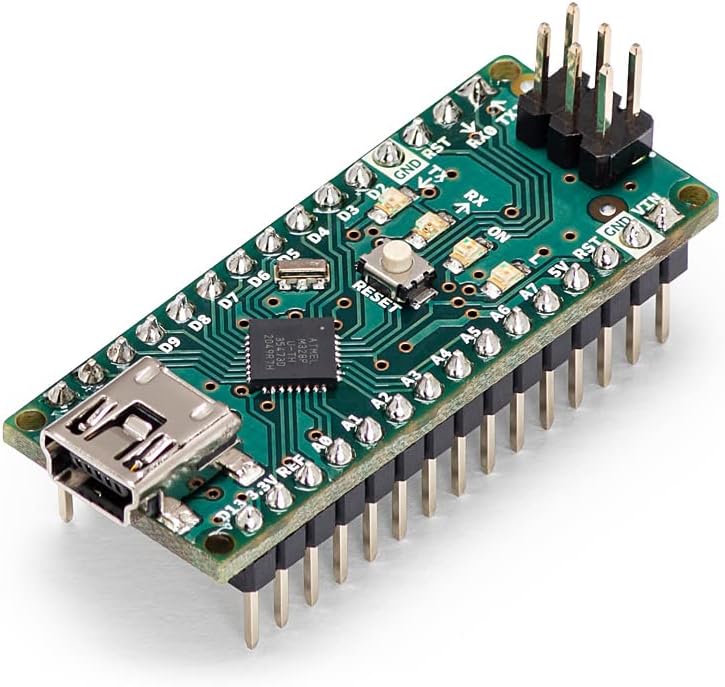
The Arduino Nano [A000005] stands out as the definitive choice for developers needing a reliable compact microcontroller. Rated highly by users it delivers consistent performance for embedded systems and wearable tech without sacrificing core capabilities.
We may earn a commission when you buy through this link, at no additional cost to you.
Its small form factor allows seamless integration into space constrained applications while maintaining robust features like 14 digital I/O pins and 8 analog inputs. The built in mini USB port simplifies programming and power supply making prototyping efficient.
While newer boards offer advanced connectivity this model remains a solid choice for standard projects. Its limitations are acceptable given the vast library support and proven stability in robotics and automation tasks.
Ideal for makers and engineers seeking a trusted foundation for IoT applications the Arduino Nano [A000005] is the top recommendation for balanced performance and ease of use.
Its compact design allows for easy integration into embedded systems wearables and portable applications without compromising performance or functionality.
Fully compatible with the Arduino IDE the Nano supports a vast library of pre-written code examples and community projects for beginners.
We may earn a commission when you buy through this link, at no additional cost to you.
This two pack kit offers exceptional value for beginners and hobbyists needing multiple units for experiments. With a 4.5 rating it delivers the core functionality of the classic Nano at a fraction of the cost.
We may earn a commission when you buy through this link, at no additional cost to you.
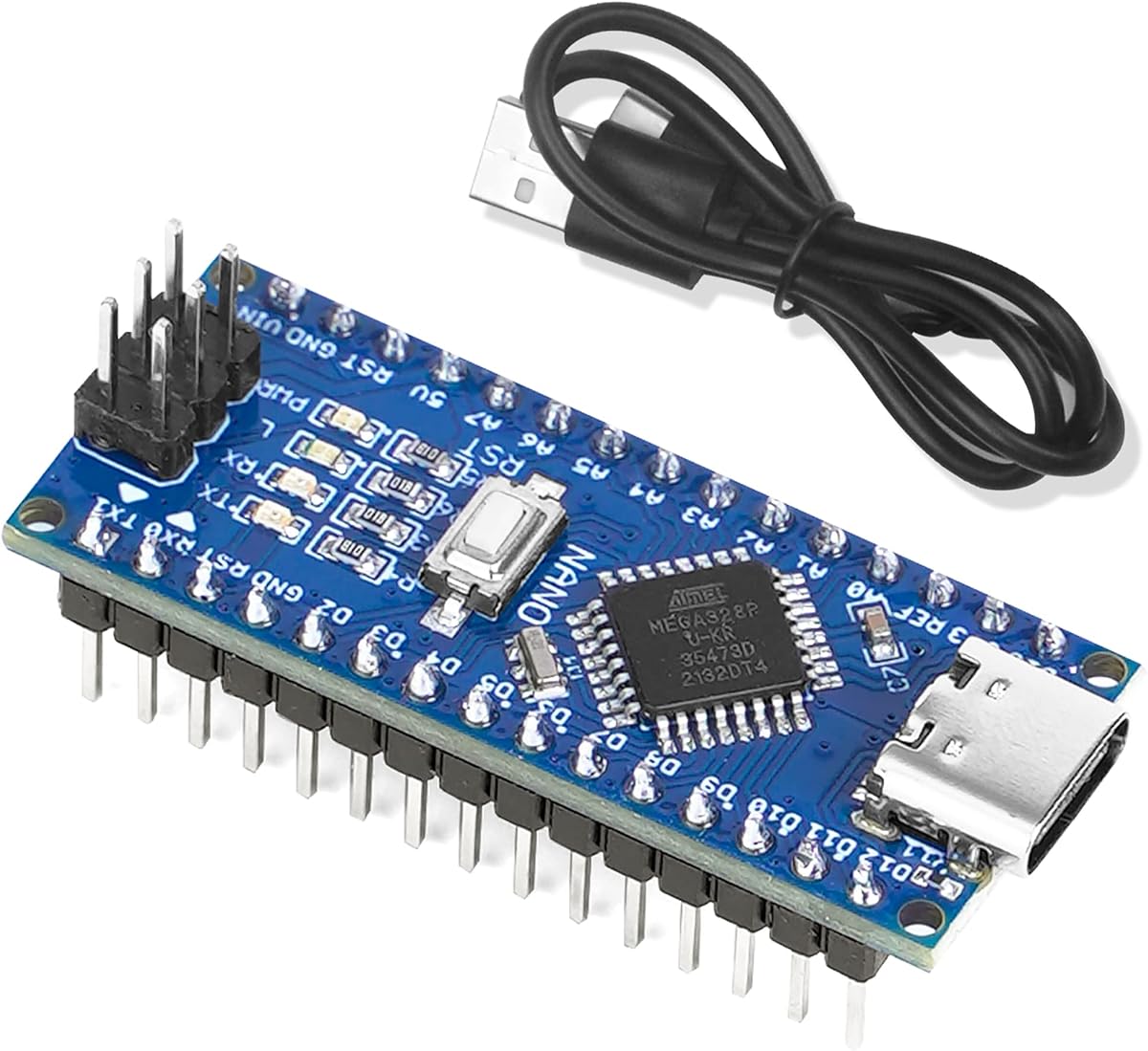
The improved CH340G chipset ensures smooth operation across Windows Mac and Linux systems without driver headaches. USB-C power connectivity modernizes the experience while maintaining breadboard friendly dimensions.
Though it lacks wireless features its reliable wired communication and flexible power options make it suitable for most standard robotics and sensor projects.
Highly recommended for budget conscious builders who want quality performance without overspending this kit is perfect for educational purposes and initial prototyping stages.
Built with ATmega328P and CH340 chips instead of FT232 the improved CH340G makes it ideal for beginners needing reliable support.
Supports USB-C 6-12V unregulated or 5V regulated power with automatic switching to the higher voltage source without jumpers.
We may earn a commission when you buy through this link, at no additional cost to you.
The Arduino Nano R4 represents a significant upgrade with its Renesas RA4M1 microcontroller and expanded memory. Rated 4.5 stars it brings modern connectivity and debugging tools to the trusted Nano form factor.
We may earn a commission when you buy through this link, at no additional cost to you.
Pre soldered headers eliminate assembly time while the Qwiic connector simplifies sensor integration. The programmable RGB LED adds visual feedback useful for debugging and interactive projects.
While it commands a premium price the enhanced capabilities justify the cost for advanced embedded applications and production ready prototypes.
Engineers and educators seeking a powerful versatile board for complex tasks will find this model offers the best balance of innovation and usability today.
Built on the robust Renesas RA4M1 microcontroller with 256KB flash 32KB RAM and 48MHz clock speed for advanced applications.
Includes a Qwiic connector and additional 5V I2C port for effortless expansion with sensors actuators and peripherals.
We may earn a commission when you buy through this link, at no additional cost to you.
This three pack kit provides the classic Nano experience with modern improvements to the USB controller. It maintains full compatibility with existing projects and IDE libraries ensuring a smooth transition.
We may earn a commission when you buy through this link, at no additional cost to you.
The CH340G chip replaces older FT232RL models offering better cross platform support for Windows Mac and Linux. The compact design fits easily on breadboards for quick prototyping sessions.
While it lacks new features like USB-C its proven reliability makes it a staple for teaching and legacy system maintenance.
A solid choice for anyone needing multiple units for classroom setups or batch production without compromising on core functionality or compatibility.
Improved new version CH340G replaces FT232RL providing better compatibility and stability across different operating systems.
LAFVIN Nano V3.0 card is 100% compatible with the Nano card and fully compatible with Windows Mac and Linux operating systems.
We may earn a commission when you buy through this link, at no additional cost to you.
ELEGOO offers a practical three pack kit with presoldered headers ready to plug straight into breadboards. The inclusion of USB-C cables modernizes connectivity for faster programming and power delivery.
We may earn a commission when you buy through this link, at no additional cost to you.
With standard ATmega328P performance this kit supports familiar 5V 16MHz sketches without needing custom coding or complex configurations. The footprint saves space while allowing for efficient layouts.
Soldering is unnecessary making it ideal for students and quick prototypes where speed is essential. However driver installation may be required for USB connectivity on some systems.
Perfect for batch projects or educational classes this kit provides convenience and reliability with minimal setup time for beginners.
Three presoldered USB-C boards for more projects keep one on a breadboard embed another in a robot and reserve a third.
The 18x45mm footprint arrives ready to plug into a solderless breadboard saving you from soldering header pins first.
We may earn a commission when you buy through this link, at no additional cost to you.
The Arduino Nano Every upgrades the classic design with an ATmega4809 microcontroller and larger memory. This provides better efficiency for real-time applications while retaining compatibility with existing shields.
We may earn a commission when you buy through this link, at no additional cost to you.
Its ultra compact form factor suits space constrained applications like wearables and robotics. The increased memory allows for more complex programs without sacrificing performance.
USB-C connectivity ensures modern programming speeds and stable power delivery. Users transitioning from older models will find the IDE integration seamless.
Engineers seeking cost effective solutions for sensor-based projects will appreciate its enhanced capabilities and reliable connectivity options.
Powered by the ATmega4809 microcontroller offering increased processing power larger memory and improved efficiency compared to classic Nano.
Features 48KB Flash 6KB SRAM and 256 bytes EEPROM enabling execution of more complex programs and improved data handling.
We may earn a commission when you buy through this link, at no additional cost to you.
This model brings wireless capabilities and Python scripting to the Nano form factor. The ESP32-S3 microcontroller offers dual-core processing ideal for advanced embedded applications and IoT.
We may earn a commission when you buy through this link, at no additional cost to you.
Support for both Wi-Fi and Bluetooth 5.0 enables seamless communication with cloud platforms and mobile devices. USB-C ensures stable connections for data transfer and charging.
HID support allows integration with keyboards and mice expanding its utility beyond traditional sensor control. Python compatibility speeds up development for experienced users.
Ideal for smart home systems and remote sensors this board offers a robust solution for modern connectivity needs.
The board supports both Wi-Fi and Bluetooth 5.0 enabling seamless communication with devices networks and cloud platforms.
Compatible with MicroPython a streamlined version of Python designed for embedded systems allowing rapid prototyping.
We may earn a commission when you buy through this link, at no additional cost to you.
This kit provides three boards perfect for classroom labs or multi-node projects. Using ATmega328P and CH340 chips it ensures reliable operation and broad software support.
We may earn a commission when you buy through this link, at no additional cost to you.
The USB-C port modernizes connectivity allowing for efficient programming and power. Automatic detection switches to the higher potential source simplifying power management.
While it lacks advanced features its simplicity makes it easy to handle for basic sensor integration and robotics.
A cost-effective choice for bulk deployments this kit supports seamless communication with PCs and offers stable performance across various operating systems.
The Nano board can be powered via USB C 6-12V unregulated or 5V regulated external power supply with automatic switching.
The Nano board has numerous possibilities for communication with a PC or other microcontrollers and is fully compatible.
We may earn a commission when you buy through this link, at no additional cost to you.
The Arduino Nano R4 Loose Pins version is designed for those who prefer custom assembly or direct PCB mounting. It features the powerful Renesas RA4M1 microcontroller for high performance.
We may earn a commission when you buy through this link, at no additional cost to you.
Castellated edges allow direct mounting onto custom PCBs while loose headers provide flexibility for prototyping. The Qwiic connector and RGB LED support advanced sensor integration and debugging.
While requiring soldering it offers a tailored solution for production needs where specific component arrangements are necessary.
Engineers designing custom PCBs will find this version ideal for embedding directly into circuits while retaining modern connectivity features.
Ships with loose male header pins that you can solder for breadboard prototyping or use the castellated edges for PCB mounting.
With its tiny footprint single-sided components and castellated edges it is perfect for both prototyping and embedding.
We may earn a commission when you buy through this link, at no additional cost to you.
OSOYOO offers a single compact board that mirrors original Nano functionality at an accessible price. The ATmega328P MCU ensures reliable performance for standard projects and experiments.
We may earn a commission when you buy through this link, at no additional cost to you.
USB-C connectivity streamlines power and programming while automatic switching handles multiple sources seamlessly. The design fits perfectly on breadboards for quick prototyping.
While basic in features its reliability and ease of use make it a strong contender for beginners.
A solid choice for those starting out in electronics this module provides all essential tools to learn and experiment effectively.
Can be powered via USB-C connection external unregulated power or regulated external power supply with automatic sensing.
This board especially is breadboard friendly and is very easy to handle the connections for various projects.
We may earn a commission when you buy through this link, at no additional cost to you.
Selecting the right Arduino Nano Board depends on project requirements and technical needs. This guide explores key factors to help you make an informed decision.
The microcontroller defines the board's processing power and memory capacity. Models like the Nano Every use ATmega4809 for higher performance while others use classic ATmega328P for compatibility.
Choose a newer chip for complex tasks but stick to classic versions if you rely on legacy libraries.
USB ports and wireless capabilities vary significantly across models. USB-C is modern and versatile but mini USB remains common on classic boards.
Ensure your chosen board supports the connection type required by your development environment and power sources.
Flash and SRAM determine how much code and data your project can handle. Larger memory is essential for advanced applications or machine learning tasks.
Check specifications to ensure your program size fits within available storage limits.
Digital and analog pins allow you to connect sensors motors and displays. Standard boards offer 14 digital and 6 analog but newer versions may differ.
Verify pin counts match your sensor requirements to avoid additional hardware.
Ensure the board is compatible with existing shields and libraries you plan to use. Most Nano boards work with Arduino IDE but drivers may vary.
Read product descriptions for OS support and driver installation requirements.
Physical size matters for wearable or portable projects. Nano boards are generally compact but some versions include headers or connectors that add bulk.
Consider dimensions and mounting options to ensure a fit for your enclosure.
Prices vary based on features and brand. Bulk kits often offer better value for classrooms or multiple projects.
Balance cost against necessary features to avoid overspending on unused capabilities.
Active communities provide tutorials and troubleshooting tips. Boards with widespread adoption offer more resources for learning.
Prefer models with broad user bases for easier access to documentation and examples.
Install the appropriate drivers for your operating system to ensure USB recognition. Connect the board to your computer using the specified cable and verify the COM port in the IDE.
Upload a simple test sketch like Blink to confirm functionality. This step helps identify hardware issues before starting complex projects.
Store the board in a dry static-free environment to prevent damage. Avoid bending pins or exposing the unit to excessive heat or moisture during use.
The Nano V3.0 boards with CH340G chips are excellent for beginners due to affordability and compatibility. They support all standard features and are easy to use with Arduino IDE.
Yes ensure you use the correct USB type (mini USB or USB-C) supported by your board. Using the wrong cable may prevent power or data transfer from occurring.
While standard Nano boards lack wireless features the Arduino Nano ESP32 is ideal for IoT. It offers built-in Wi-Fi and Bluetooth for remote connectivity needs.
Nano Every uses the ATmega4809 microcontroller with more memory and efficiency compared to classic Nano. It allows for faster execution and larger programs while remaining compact.
Connect sensors to analog or digital pins based on their type. Ensure voltage levels match the board's 5V logic and use libraries provided by the Arduino IDE for control.
Most pre-soldered versions do not require soldering for basic breadboard use. However some production models may need headers soldered for secure connections in custom setups.
Most boards support Windows Mac and Linux operating systems. Ensure you download the correct drivers for your OS to enable communication with the IDE.
Memory is fixed on the microcontroller chip so expansion is not possible. However optimizing code and using external memory modules can help manage data storage needs.
We reviewed ten options ranging from classic boards to advanced wireless models. Each offers unique strengths suited for different project scales and technical expertise.
Prioritize features like memory and connectivity based on your specific application needs. Compatibility with existing tools ensures a smoother development process.
Always check current availability and details before purchasing to ensure you get the latest version that matches your project requirements and budget.