
GeeekPi 2-Pack I2C 1602 LCD Display Module
4.6Editor score
I2C interface reduces wiring complexity
Blue backlight with adjustable contrast
Compatible with Arduino and Raspberry Pi
This guide compares the top Arduino LCD Display modules including OLED TFT and character screens to help you choose the right display for your next project.
Choosing the right Arduino LCD Display can transform your electronics projects from simple blinking lights to interactive dashboards. Whether you need a compact OLED for status updates or a large TFT for graphical interfaces, the market offers many options with varying resolutions and interfaces.
We evaluated ten popular display modules based on compatibility, resolution, interface type, and user feedback. Our analysis covers I2C character screens, self-luminous OLEDs, and color TFTs with touch capabilities to ensure you find a screen that fits your technical requirements and budget constraints effectively.
Each product entry highlights key specifications, pros, cons, and ideal use cases to help you make an informed decision. Prices and availability can change frequently so please verify current listings before purchasing. This guide aims to simplify your selection process with detailed technical insights and practical advice for makers and engineers.
4.6Editor score

4.5Editor score

4.7Editor score
The following table provides a side-by-side comparison of all ten selected display modules. It highlights key specifications such as resolution, interface type, and compatibility to help you quickly identify the best option for your specific microcontroller project requirements.




This product offers two I2C 1602 LCD modules at a highly competitive price point. It scores 4.6 stars from users who appreciate the simplicity of the serial interface. The blue backlight provides clear readability in most lighting conditions for text-based displays.
We may earn a commission when you buy through this link, at no additional cost to you.
The I2C protocol significantly reduces wiring complexity by using only four pins. This makes it ideal for projects with limited GPIO availability on boards like Arduino Uno or ESP32. Users can easily connect SDA and SCL lines to standard digital pins.
While the blue backlight is standard for this class of module, it may not be as bright as white backlight options. Some users find the contrast adjustment requires careful tuning using the potentiometer on the back of the board.
This choice is perfect for beginners needing multiple screens for prototyping or classroom setups. The inclusion of two units allows for redundancy or multi-panel displays without extra cost.
The I2C interface uses only four wires reducing clutter on your breadboard significantly.
Receiving two modules allows you to build multiple devices or keep spares on hand.
We may earn a commission when you buy through this link, at no additional cost to you.
This set includes three 1602 LCD modules designed for Arduino and similar platforms. It holds a 4.5 rating from users who value reliability and ease of integration. The standard blue display ensures legibility for text data and sensor readings.
We may earn a commission when you buy through this link, at no additional cost to you.
Each module features a built-in independent potentiometer allowing individual backlight adjustment. This is useful when using multiple screens in different lighting environments. The I2C address is typically 0x27 making software setup straightforward.
Users note that wiring is simple with GND VCC SDA and SCL connections. However the lack of a backlight color option limits aesthetic choices for custom projects. Some users prefer white backlight for darker themes.
This product is ideal for educational kits or multi-project labs where quantity matters. The reliability and standard specs make it a safe choice for critical displays requiring constant uptime.
Each module has its own knob to adjust brightness without affecting other units.
Compatible with most boards like Arduino Nano Raspberry Pi and ESP32 easily.
We may earn a commission when you buy through this link, at no additional cost to you.
This display offers a significant upgrade with 240×320 resolution and vibrant colors. It achieves a 4.7 rating from users seeking graphical interfaces for dashboards. The IPS panel ensures visibility from wide angles which is crucial for handheld devices.
We may earn a commission when you buy through this link, at no additional cost to you.
The ST7789V driver supports SPI communication allowing fast image rendering. This is essential for dynamic content like animations or real-time graphs. Pin labels are clearly marked simplifying initial setup compared to generic boards.
While it requires more wiring than I2C modules the performance justifies the complexity. Current draw can be higher than character displays so ensure your power supply is adequate. The 3.3V logic compatibility is useful for modern boards.
This is the best choice for professional projects needing visual appeal. The inclusion of two units allows you to prototype different interfaces or create stereo displays.
The IPS technology provides accurate colors and wide viewing angles.
SPI interface allows for smooth updates and responsive animations.
We may earn a commission when you buy through this link, at no additional cost to you.
These OLED modules provide high contrast with self-luminous pixels. They are rated 4.6 stars for their crisp display quality and compact size. The fixed yellow and blue zones help organize information visually without programming overhead.
We may earn a commission when you buy through this link, at no additional cost to you.
The SSD1306 driver is well supported by libraries like Adafruit. This reduces development time significantly for beginners. Including ten dupont wires in the box makes immediate prototyping convenient without extra purchases.
The fixed color zones are a design choice rather than a programmable feature. While this simplifies usage it limits customization compared to RGB OLEDs. Users must plan layout to fit these predefined areas.
Ideal for status displays where power efficiency is key. The compact size fits easily into wearable tech or small robotics projects requiring minimal space.
Pixels light themselves eliminating the need for a backlight.
Yellow zones for alerts and blue zones for data simplify reading.
We may earn a commission when you buy through this link, at no additional cost to you.
Freenove provides a new type of I2C module with integrated conversion circuits. It holds a 4.4 rating from users who value stability. The package includes two screens making it a good value for testing.
We may earn a commission when you buy through this link, at no additional cost to you.
The integrated circuit design makes the connection more stable than older adapters. This reduces signal noise issues during long cable runs. Documentation is available online which helps users save paper.
While code examples are provided the lack of printed tutorials may frustrate some. Users need internet access to find the tutorial link. This is minor for digital natives but a hurdle for others.
This module is great for learners needing code references. The stability improvements ensure reliable operation in noisy environments or for long-term projects.
Built-in circuitry improves stability and reduces external components.
Online tutorial links offer ready-to-run code for quick starts.
We may earn a commission when you buy through this link, at no additional cost to you.
SunFounder modules are known for simplicity and ease of integration. They rate 4.6 stars for user-friendly design. The I2C library provided allows direct calls without complex setup procedures.
We may earn a commission when you buy through this link, at no additional cost to you.
The four-wire connection reduces IO port usage significantly. This is crucial for boards with limited pins like Uno. The module is designed for 5V supply ensuring compatibility with standard logic levels.
Some users note that the standard contrast is adequate but not adjustable via software. The potentiometer on the back requires physical adjustment. This is a minor trade-off for the simplified wiring.
This is an excellent choice for quick prototyping sessions. The clear labeling helps prevent wiring errors which speeds up development time.
Call library functions directly without complex configuration steps.
Only four wires needed to connect to the main controller.
We may earn a commission when you buy through this link, at no additional cost to you.
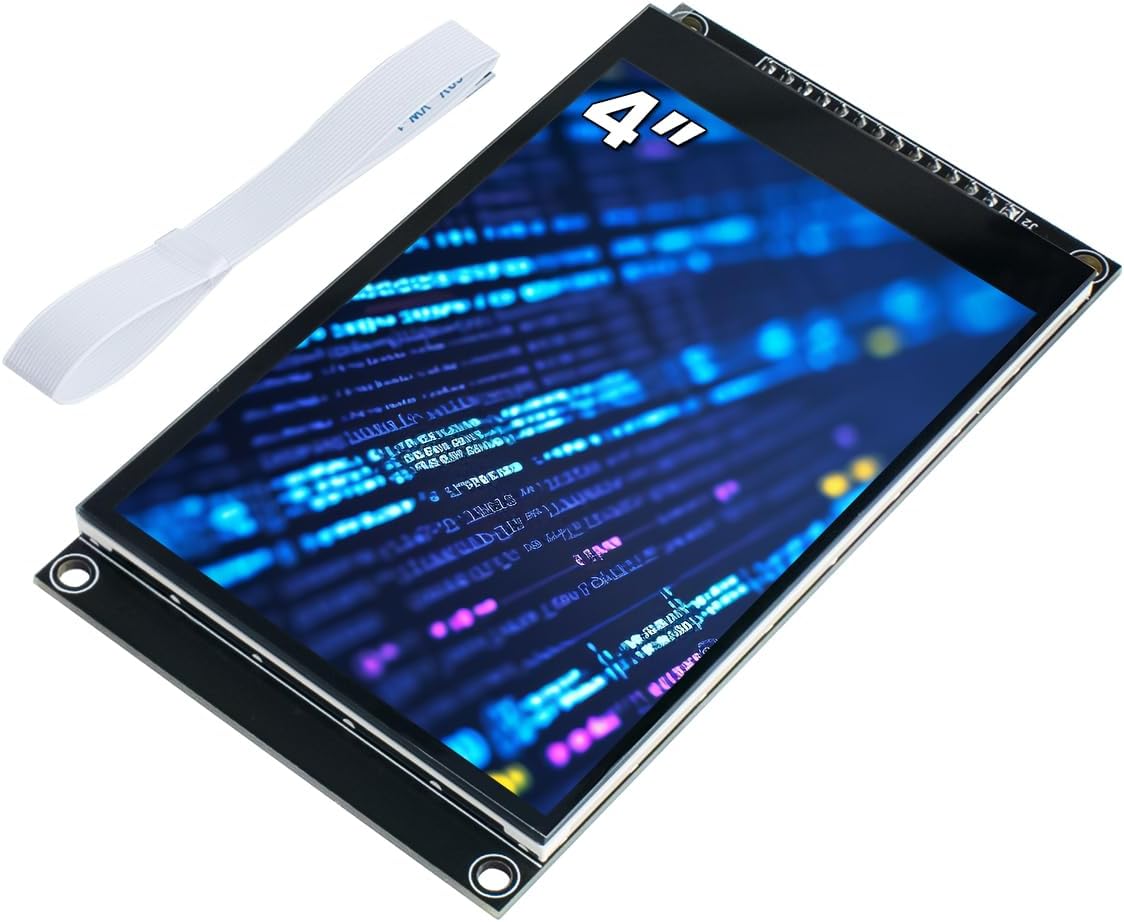
This module offers a 4-inch display with capacitive touch technology. It rates 3.9 stars due to higher power consumption. The resolution provides ample space for complex interfaces and navigation.
We may earn a commission when you buy through this link, at no additional cost to you.
Capacitive touch is more responsive than resistive alternatives. This allows for smooth multi-touch gestures. The included TF card slot helps store images and assets locally.
The larger size requires careful power management. Users must ensure their power source can handle the draw. Calibration may be needed initially for accurate touch response.
Ideal for kiosks or handheld devices needing rich visuals. The modern interface features make it a standout for interactive projects.
Uses capacitive technology for better accuracy and responsiveness.
Micro TF card slot allows for local asset storage.
We may earn a commission when you buy through this link, at no additional cost to you.
This bulk pack includes five OLED modules in blue and yellow. It holds a 4.6 rating for brightness and contrast. The self-luminous nature ensures excellent visibility even in dim environments.
We may earn a commission when you buy through this link, at no additional cost to you.
Having five modules allows for distributed display systems. You can place status screens in different locations easily. The low power consumption is ideal for battery-operated devices.
Users note that fonts are not embedded in the controller. This allows custom font generation but requires setup effort. The small size fits well on tiny PCBs.
Best for applications needing multiple status indicators. The variety of colors helps differentiate device states visually.
No backlight required for self-luminous high contrast visibility.
Bright clear dots are easy to read even small fonts.
We may earn a commission when you buy through this link, at no additional cost to you.
This module offers a compact 2-inch IPS display with 240×320 resolution. It receives a 4.3 rating for color accuracy and sharpness. The IPS type ensures good visibility from various angles.
We may earn a commission when you buy through this link, at no additional cost to you.
The SPI interface minimizes GPIO usage making it efficient. The RGB color support allows for rich graphics. It works with 3.3V or 5V logic levels.
Some users note that power supply voltage must match logic voltage. Failure to do so can cause malfunction. The lack of touch limits interactivity options.
Perfect for small handheld devices needing color. Its form factor fits comfortably in pockets or small enclosures.
IPS panel provides wide viewing angles and consistent colors.
Requires minimum GPIO for controlling the display interface.
We may earn a commission when you buy through this link, at no additional cost to you.
This module features a 4-inch display with high resolution and capacitive touch. It is rated 3.9 stars due to learning curve. The large size is ideal for detailed dashboards.
We may earn a commission when you buy through this link, at no additional cost to you.
The touch input supports modern interaction patterns. Users can navigate menus easily without buttons. The micro TF slot allows for expanding storage for media.
Calibration is a necessary step for accuracy. The higher cost reflects the advanced features. Power consumption is significant for larger screens.
Suitable for professional IoT kiosks or robotics screens. The advanced features justify the cost for complex applications.
Supports capacitive touch for intuitive modern control.
High resolution and TF slot support media rich interfaces.
We may earn a commission when you buy through this link, at no additional cost to you.
Selecting the right display involves considering interface compatibility resolution power needs and physical dimensions. This section breaks down key factors to help you match a module to your project requirements.
Interface type determines wiring complexity. I2C uses only four pins reducing clutter. SPI requires more pins but offers faster data updates. Parallel interfaces are fastest but consume many pins.
Choose I2C for simple text displays and SPI for dynamic graphics.
LCD requires backlight which consumes more power. OLED is self-luminous offering deep blacks but limited brightness. TFT offers color but may have narrower viewing angles.
Pick OLED for battery efficiency and TFT for rich color needs.
Resolution affects text clarity and graphical detail. Larger sizes like 4 inches need more power. Smaller sizes like 0.96 inch are compact for wearables.
Ensure the size fits your enclosure and resolution matches content.
Voltage must match your board. Most use 3.3V or 5V logic. Current draw varies significantly between OLED and LCD types.
Check voltage ratings to prevent damage to your controller.
Standard drivers like SSD1306 and ST7789V have many libraries. Custom drivers may require low-level coding. Ensure support for your development platform.
Stick to common drivers to speed up software development.
Resistive touch is cheaper but less accurate. Capacitive touch offers better responsiveness. Not all displays include touch capabilities.
Select capacitive touch for modern interactive experiences.
Check mounting holes and module thickness. Larger displays may need reinforced cases. Smaller modules fit in tight PCB spaces.
Verify dimensions before ordering to ensure fit.
Start by verifying voltage compatibility. Connect power first then data pins like SDA SCL or MOSI. Use libraries like Adafruit to test basic text output.
Avoid bending the cable excessively when routing wires. Secure modules with adhesive or screws to prevent loose connections on breadboards.
For OLEDs avoid displaying static images too long. This prevents image retention or burn-in. Use screen savers if possible.
LCD uses a backlight which consumes more power while OLED pixels light themselves. OLED offers better contrast but LCD is often cheaper. Choose OLED for deep blacks.
Connect VCC and GND to power and SDA to pin 4 on Uno. Connect SCL to pin 5. Ensure pull-up resistors are present on the bus.
Yes but they need unique I2C addresses. Use an address changer or multiplexer if addresses collide. Different models often have different addresses.
Check power supply stability. Long cables can cause signal noise. Try adding a capacitor across VCC and GND to filter noise.
Adafruit_SSD1306 is the industry standard. It works with most microcontrollers. Check if your library matches your controller voltage.
Many modules have a potentiometer on the back. Rotate it with a small screwdriver. Some OLEDs use code to adjust contrast.
We reviewed ten options ranging from simple text modules to high-res touch screens. Budget buyers should look at I2C LCDs while premium users may prefer TFTs.
Prioritize power consumption for battery projects and interface speed for animations. Always match voltage levels to avoid hardware damage.
Prices vary across platforms so check current deals before buying. This guide helps narrow your options to the most reliable displays.