
Askar 71F Flat-Field Telescope
4.9Editor score
Lightweight design
Quad air-spaced
Self-flattened field
Compare the top apochromatic refractors for astronomy and astrophotography in our detailed expert guide covering optics, portability, and value.
Apochromatic refractors represent the pinnacle of optical precision for serious astronomers. These telescopes minimize chromatic aberration using special glass types to deliver sharp, color-free views of deep sky objects and planets alike.
We evaluated ten leading models based on optical design, build quality, and versatility. Our analysis focuses on triplet configurations, glass types, and suitability for both visual observation and advanced astrophotography workflows.
Each selection highlights specific strengths for different user needs. Prices fluctuate frequently so verify current listings before purchasing. This guide helps you match the right scope to your observing goals and budget constraints.
4.9Editor score

4.5Editor score

5.0Editor score
This side-by-side comparison highlights key specifications across all ten selected apochromatic refractors to help you identify the best fit for your specific observational needs.


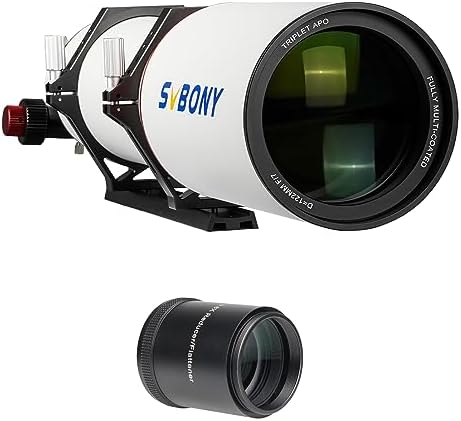


This SVBONY SV550 AP0 Telescope stands out as a versatile option for those seeking true apochromatic performance. With a solid 4.5 rating from verified buyers it delivers crisp images free from color fringing.
We may earn a commission when you buy through this link, at no additional cost to you.
The triplet air-spaced design using S-FPL51 ED glass effectively corrects blue-edge aberrations. This ensures bright high-contrast images ideal for exploring galaxies and nebulae with exceptional clarity.
While it lacks an included mount the magnesium alloy focuser reduces weight significantly. The dual-speed mechanism and internal extinction barriers further enhance imaging quality for serious astrophotographers.
It is perfect for observers wanting a portable yet powerful OTA. The focus on optical precision and weight reduction makes it a top contender in this category.
The triplet structure minimizes chromatic issues seen in single-ED designs.
Magnesium focuser lowers load on support platforms for easier handling.
We may earn a commission when you buy through this link, at no additional cost to you.
The Explore Scientific ED80 Essential Series offers genuine FCD1 HOYA extra-low dispersion glass for brilliant views. It has earned a 4.2 rating for delivering high-contrast images filled with stunning detail.
We may earn a commission when you buy through this link, at no additional cost to you.
Its air-spaced triplet design virtually eliminates chromatic aberrations for Moon and planetary imaging. The front cell push-pull adjustments allow users to achieve tight stars for precise astrophotography.
The USA-based support team provides reliable service for any technical questions. However the fixed dew shield and lower rating suggest some users found it less versatile than expected.
This model is ideal for spontaneous stargazing sessions. Its compact size makes it a great companion for larger setups or solo trips.
FCD1 HOYA glass ensures excellent views with minimal color distortion.
Push-pull adjustments on the front cell ensure tight star alignment.
We may earn a commission when you buy through this link, at no additional cost to you.
This bundle achieves a perfect 5.0 rating by combining the SV550 OTA with a dedicated field flattener. It is engineered to provide a flat field for large sensors like full-frame cameras.
We may earn a commission when you buy through this link, at no additional cost to you.
The 209 flattener corrects field curvature which is critical for wide-field astrophotography. The magnesium alloy focuser and hollow dovetail reduce weight while maintaining stability during long exposures.
While it costs more the included accessories save significant time on setup. The focus on eliminating vignetting and correcting aberrations makes it a premium choice.
It is best for photographers needing a turnkey solution. The 55mm back focus length simplifies integration with other astronomical accessories easily.
SV209 flattener ensures sharp stars across entire sensor surface.
45mm large target surface supports both half and full-frame sensors.
We may earn a commission when you buy through this link, at no additional cost to you.
This kit features a 122mm aperture which gathers significantly more light than smaller options. It uses FPL-51 triplet glass to ensure clarity and sharpness for deep sky objects.
We may earn a commission when you buy through this link, at no additional cost to you.
The SV211 dovetail base includes a comfortable handle for transport. This design makes moving a larger-aperture telescope easier and more convenient for field use.
While it lacks current ratings the optical design promises high limiting magnitude performance. The extra aperture helps reveal fainter objects that 80mm scopes might miss.
It is ideal for those needing extra light grasp. The portable handle mitigates the added weight making it practical for travel.
122mm aperture offers higher limiting magnitude for fainter targets.
Handle and dovetail base simplify carrying large telescopes.
We may earn a commission when you buy through this link, at no additional cost to you.
The Askar 71F is highly rated at 4.9 for its practicality and lightweight design. Weighing only 3kg including accessories it is easy to carry for spontaneous sessions.
We may earn a commission when you buy through this link, at no additional cost to you.
Its quadruplet air-spaced APO design corrects aberrations effectively without extra flatteners. The matte paint interior reduces stray light reflections for better contrast.
While it has a smaller aperture than 122mm options its portability is a huge advantage. It works well for both visual astronomy and astrophotography on the go.
It is perfect for those prioritizing weight. The self-flattened nature makes it a great budget-friendly choice for beginners.
3kg total weight allows for effortless transport and setup.
High-quality matte paint minimizes internal reflections for clarity.
We may earn a commission when you buy through this link, at no additional cost to you.
This model features a 102mm aperture and FMC coating for bright high-contrast images. It has earned a strong 4.8 rating from users appreciating its superior optics.
We may earn a commission when you buy through this link, at no additional cost to you.
The dual-speed focuser and 360-degree field rotator simplify camera alignment. These features reduce friction during setup allowing you to focus on framing targets.
While it uses single ED glass it still minimizes color fringing well. The aluminum retractable hood actively blocks stray light and protects the lens.
It is excellent for visual astronomy and general imaging. The balance of aperture and features makes it a robust mid-size choice.
360-degree rotator avoids tube rotation for better composition.
Dual-speed focuser ensures tight focus for sharp stars.
We may earn a commission when you buy through this link, at no additional cost to you.
This bundle includes both a field flattener and a 0.8X focal reducer for versatile imaging. It receives a perfect 5.0 rating for its ability to improve edge quality.
We may earn a commission when you buy through this link, at no additional cost to you.
The SV209 components correct field curvature which is critical for wide-field shots. The focal reducer shortens focal length for a wider field of view.
While managing multiple accessories requires care the image quality improvements are substantial. It is tailored specifically for prime focus astrophotography enthusiasts.
It is best for advanced shooters needing a flat field. The included optics save time and ensure consistent sharpness.
Focal reducer offers a wider field of view for larger targets.
Field flattener ensures stars remain sharp at image edges.
We may earn a commission when you buy through this link, at no additional cost to you.
This kit pairs the 122mm OTA with a focal reducer to enhance imaging. It shares the same optical structure as the 122mm SV550 models for high clarity.
We may earn a commission when you buy through this link, at no additional cost to you.
The focal reducer allows for wider framing of deep sky targets. Combined with the 122mm aperture it captures faint details effectively.
While the weight is significant the included handle aids in movement. It is a robust option for those wanting a complete package.
It is suited for serious astrophotographers needing aperture. The added accessories streamline the imaging workflow significantly.
122mm aperture collects more photons for deeper exposures.
Inclusive optics support various targets and framing needs.
We may earn a commission when you buy through this link, at no additional cost to you.
This kit combines the 80mm F6 OTA with a dedicated field flattener. It uses triplet optics to prevent irritating reflections and ensure bright images.
We may earn a commission when you buy through this link, at no additional cost to you.
The flattener effectively solves edge quality issues common with refractors. This allows for full-frame imaging without significant aberration.
While it is smaller than 122mm models its portability is excellent. The comfortable handle and lightweight design make it easy to transport.
It is perfect for entry-level astrophotographers. The included flattener provides a polished imaging experience.
Triple glass and coatings ensure sharp detailed images.
Flattener fixes fringe field curvature for better edge stars.
We may earn a commission when you buy through this link, at no additional cost to you.
This bundle adds a guide scope and telescope camera to the 122mm OTA. It is designed for complete autoguiding and imaging workflows.
We may earn a commission when you buy through this link, at no additional cost to you.
The 1.23-megapixel camera has high QE to track faint guide stars. This allows for tight tracking even on fainter deep sky objects.
While the system is heavy the guidance capability improves tracking accuracy. It is tailored for long-exposure astrophotography needs.
It is best for those needing a full guiding solution. The included components ensure precise tracking during imaging sessions.
Guide scope and camera ensure precise tracking for exposures.
High QE pixels allow tracking of faint stars easily.
We may earn a commission when you buy through this link, at no additional cost to you.
Selecting the right apochromatic refractor involves balancing optical quality, portability, and budget. Here are the key factors to consider.
Aperture determines how much light the telescope gathers. Larger apertures like 122mm reveal fainter deep sky objects but add weight.
For portability, 70mm to 80mm models are often the best compromise.
Triplet designs use three glass elements to correct color aberrations better than doublets. Air-spaced designs allow for better thermal performance.
Look for FPL-51 or FCD1 glass types for superior correction and clarity.
A lower focal ratio like f/6 provides a wider field of view and shorter exposures. Higher ratios like f/7 offer more magnification for planets.
Select f/6 if you want wide-field nebulae and f/7 for smaller targets.
Most OTAs include a Vixen dovetail plate but verify the length. Some bundles add a handle to make mounting easier.
Ensure your mount can support the total weight of the scope and accessories.
Astrophotography requires a flat field to keep stars sharp at the edges. Some bundles include a flattener while others require purchasing it separately.
Check the back focus distance required for your camera setup to avoid compatibility issues.
A smooth focuser is critical for achieving sharp focus during long exposures. Dual-speed focusers provide fine control.
Magnesium alloy focusers reduce overall weight which helps with portability.
Features like retractable dew shields and carrying handles make transport easier. A lighter scope reduces strain during setup.
Consider how often you will travel to observe to decide on weight limits.
Warranty and customer service vary by manufacturer. Some brands offer excellent support networks for technical issues.
Check if local repair centers or support channels are available for your region.
Always allow your telescope to reach thermal equilibrium before observing. Let it sit outside for thirty minutes to avoid internal air currents that blur images.
Use a dew shield or heater to prevent condensation on the objective lens. Regularly inspect the lens for dust and use a blower to clean it gently.
Store the scope in a dry place to prevent moisture damage to the optical coatings. Ensure all screws and mounts are tightened securely before transport.
Yes, apochromatic refractors use special glass to eliminate color fringing that is common in achromatic designs. They provide sharper and more detailed images especially on bright objects.
Yes, most of these products are Optical Tube Assemblies (OTAs) and do not include a mount. You must purchase a separate mount that can support the weight of the scope.
A triplet design uses three lens elements to correct chromatic aberration more effectively than doublets. This results in sharper stars and true-to-life colors in your images.
Yes, these scopes are versatile and can be used for terrestrial viewing as well as astronomy. Just ensure you have an appropriate eyepiece and follow safety guidelines.
A field flattener corrects the curvature of the image plane so stars at the edges remain round. This is critical for astrophotography to get sharp photos across the whole sensor.
Triplet refractors generally require less collimation than reflectors. However you should check alignment if you experience uneven stars or if the scope is bumped during transport.
We recommend the SVBONY SV550 AP0 for those seeking a balanced and reliable option with solid optical performance.
Prioritize aperture if you want deep sky detail or a field flattener if you plan to do serious photography with larger sensors.
Check current listings for prices and bundle details before buying to ensure you get the best value for your needs.