
BNC Male Connector Telescopic
4.5Editor score
Seven section telescoping design
Compact and lightweight build
BNC male plug connector
Discover the top antenna for scanner options for 2026. This guide compares range, build quality, and compatibility to help you choose the perfect receiver
Finding the right antenna for scanner use can transform your listening experience dramatically. Whether you track emergencies or monitor local traffic, signal clarity depends heavily on hardware quality and proper installation techniques.
We evaluated ten top-rated models based on frequency coverage, durability, and ease of setup. Our analysis covers mobile, desktop, and handheld options to ensure you find the perfect match for your specific monitoring needs.
Each selection highlights key strengths and potential limitations to guide your decision. Remember that availability and pricing fluctuate frequently, so verify current details before purchasing to ensure you get the best value today.
4.5Editor score
4.7Editor score

4.6Editor score
This side-by-side comparison details the specifications and capabilities of each model to help you make an informed decision based on your specific scanning requirements and budget constraints.



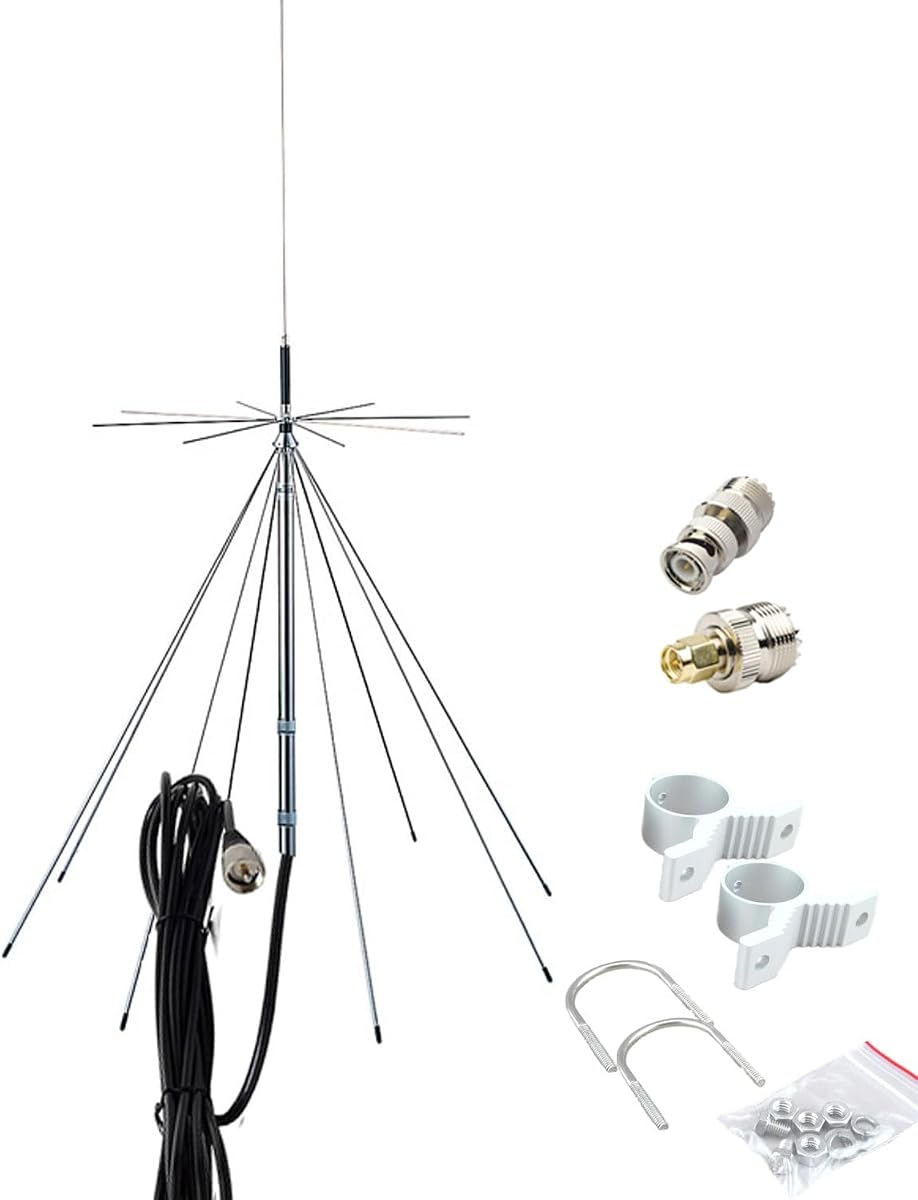
This Discone model stands out as the premier choice for serious enthusiasts. It boasts an impressive 25 to 3000 MHz range covering nearly every band you might want to monitor. The build quality is robust ensuring long-term reliability in various environments.
We may earn a commission when you buy through this link, at no additional cost to you.
It includes a full kit with ten meters of RG58 wire plus multiple adapter options. This versatility allows seamless integration with scanners radios and software defined receivers. The ability to transmit on select bands adds significant value for communicators.
The only notable drawbacks are the cost and the need for external installation. However these are minor trade-offs given the performance. Removing the top coil reduces weight if low frequency reception is not critical.
If you want the most versatile and complete solution available this is the one to choose. It delivers professional-grade performance that justifies the investment for dedicated users.
The included adapters ensure compatibility with virtually any device connector type without extra purchases.
Covering everything from VHF to ultra high frequency this antenna captures signals others might miss.
We may earn a commission when you buy through this link, at no additional cost to you.
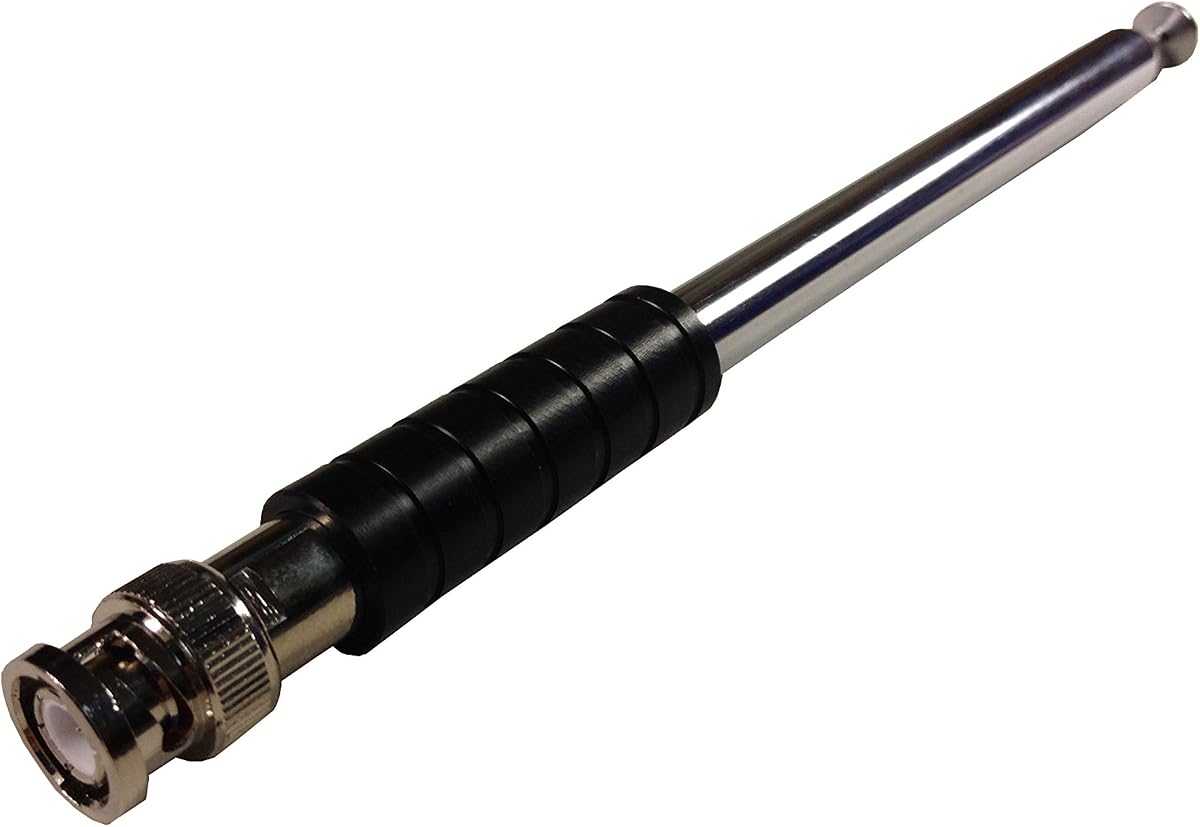
For those on a tight budget this telescopic option offers remarkable value. It extends to nearly twenty eight inches providing decent gain for the size. Its simplicity makes it easy to use with any device featuring a BNC port.
We may earn a commission when you buy through this link, at no additional cost to you.
The seven section design allows for precise length adjustment to tune reception. It handles frequencies from DC up to 12.4 GHz making it versatile for many applications. At under ten ounces it is easy to transport or store.
Being a budget item it lacks the ruggedness of premium models. It is best suited for temporary setups or indoor use where it will not face harsh conditions or frequent handling.
If you need a quick affordable replacement or test antenna this fits the bill perfectly. It provides solid performance for the price without requiring a significant financial commitment.
You can fine tune the antenna length to optimize signal strength for specific frequencies easily.
The standard BNC male connector fits most scanners and receivers directly without adapters.
We may earn a commission when you buy through this link, at no additional cost to you.
This Tram antenna represents the pinnacle of robust scanner hardware. The stainless steel construction ensures it withstands harsh weather conditions without rusting. It handles up to three hundred watts allowing active transmission on supported bands.
We may earn a commission when you buy through this link, at no additional cost to you.
The adjustable radials let you optimize performance for your specific location and height. Six lower radials plus eight upper ones create a balanced radiation pattern for clear reception. The SWR stays low under 1.5 to 1 for efficient signal transfer.
Installation demands a solid mast due to its size and weight. It is not designed for quick temporary setups but rather permanent professional stations. The investment pays off in consistent reliable performance over years.
If you need a permanent outdoor solution that will not fail you choose this model. It offers durability and power handling that cheaper alternatives simply cannot match in the market.
Rust free materials ensure long life even in coastal or harsh weather environments.
Multiple radials help direct signals efficiently reducing noise and improving clarity.
We may earn a commission when you buy through this link, at no additional cost to you.
This Bingfu model excels for mobile applications where quick setup is essential. The magnetic base allows instant attachment to any metal vehicle roof without drilling. It covers twenty to 1300 MHz covering public safety and ham bands effectively.
We may earn a commission when you buy through this link, at no additional cost to you.
A ten foot coaxial cable provides flexibility in positioning your scanner inside the car. The VSWR under 2.0 ensures efficient signal transfer and minimal loss. It fits a long list of Uniden and Whistler scanners perfectly.
Strong magnets are vital but may loosen on rough terrain or high speeds. Proper cable management is needed to prevent wear or interference. Regular checks ensure it stays secure during travel.
Ideal for vehicle use it balances convenience with solid performance. It makes monitoring while on the road accessible without complex installation steps or permanent modifications.
No tools or drilling are required to mount this antenna securely on your vehicle roof.
Works with major scanner brands ensuring you do not need extra adapters.
We may earn a commission when you buy through this link, at no additional cost to you.
For users avoiding magnetic bases this adhesive mount offers a clean alternative. It sticks securely to glass surfaces providing stable reception while driving. The dipole design helps reduce noise and improve clarity in urban environments.
We may earn a commission when you buy through this link, at no additional cost to you.
The adhesive pad is strong enough for most conditions but may weaken in extreme heat. You should clean the glass well before application to ensure it lasts. A ten foot cable gives plenty of slack for routing to your unit.
Long term exposure to sun can degrade the adhesive over time. Replacing the pad is simple if needed. Overall it remains a reliable choice for temporary or permanent window mounting.
This model is great for those who want a sleek look without metal contact. It delivers solid performance for scanning while keeping your vehicle exterior untouched.
Sticks to windows easily allowing quick position changes without tools.
Dipole configuration helps minimize interference from engine noise and electronics.
We may earn a commission when you buy through this link, at no additional cost to you.
Handheld units often need flexible antennas that can bend without breaking. This Comet model uses a rubber whip that withstands rough handling and transport. It covers twenty five to 1300 MHz ensuring you hear air and public safety signals.
We may earn a commission when you buy through this link, at no additional cost to you.
Its six inch length makes it ideal for pocket use or field monitoring. The omni-directional pattern captures signals from all directions without needing orientation. It weighs practically nothing keeping your kit light for long shifts.
Being short it lacks the gain of longer whips on distant UHF signals. But for general use it provides clear audio and reliable connections. The BNC connector fits Uniden and Icom models securely.
For field work or emergency preparedness this antenna is a practical upgrade. It enhances portability without sacrificing the ability to catch critical transmissions clearly.
Flexible rubber construction resists bending and breaking during transport.
BNC connector works with most modern handheld scanners directly.
We may earn a commission when you buy through this link, at no additional cost to you.
Home monitoring setups benefit from antennas designed to sit securely on a shelf. This Taurus model features a disc cone style that captures a broad spectrum efficiently. It stands at seventy centimeters providing height without being too tall.
We may earn a commission when you buy through this link, at no additional cost to you.
A heavy magnetic base keeps it stable on metal surfaces or desks. Four meters of mil spec RG58 coax ensures low loss transmission to your receiver. It handles frequencies from twenty five to 2000 MHz easily.
The design is best for stationary use since it is not meant for moving. It occupies some desk space but the performance justifies it. You can move it if needed but it is meant for fixed spots.
For indoor listening this offers excellent balance of size and performance. It helps you hear distant signals clearly without needing roof mounting or complex setups.
Stable base prevents tipping even on uneven surfaces during daily use.
Disc cone design ensures consistent reception across both VHF and UHF bands.
We may earn a commission when you buy through this link, at no additional cost to you.
This GMRS antenna offers flexibility with two whips tuned for different bands. The short whip suits UHF while the long one fits VHF coverage needs. It also handles air bands and SDR reception covering a wide range of signals.
We may earn a commission when you buy through this link, at no additional cost to you.
Sixteen feet of coax cable gives plenty of reach for placing scanners far from the window. The magnetic base makes it easy to move between cars or indoor setups quickly. You can remove the top coil if low frequency is not needed.
Assembly requires attaching the correct whip for your current listening target. The weight of the base is significant so ensure your surface is strong. It is a great middle ground between specialized and general antennas.
For users who switch between bands often this provides the versatility they need. It avoids buying multiple units by covering most standard frequencies effectively.
Swap whips to optimize for VHF or UHF signals without buying new hardware.
Seventeen feet of cable allows flexible placement of your receiver unit.
We may earn a commission when you buy through this link, at no additional cost to you.
When portability is key this telescopic antenna collapses down to under eight inches. It extends to over four feet for better reception when stationary. It supports frequencies from twenty to 1300 MHz covering most public safety bands.
We may earn a commission when you buy through this link, at no additional cost to you.
The design is intended primarily for receive use rather than heavy transmission. You can transmit up to ten watts which is enough for occasional check-ins. It is lightweight and easy to slip into a bag for travel.
Sections can bend if forced too hard or bent at sharp angles. Careful handling extends its life significantly. It is a great backup option for field work where weight matters.
If you need something small that still offers decent gain this works well. It balances size and performance for mobile monitoring tasks perfectly.
Collapses to fit easily in pockets or small gear bags.
Optimized for listening clearly without complex transmit requirements.
We may earn a commission when you buy through this link, at no additional cost to you.
This Tram unit offers a solid solution for permanent vehicle mounting. Its center loaded design maximizes gain while keeping the whip shorter. It covers twenty five to 1300 MHz handling most scanner needs reliably.
We may earn a commission when you buy through this link, at no additional cost to you.
Seventeen feet of RG58/U cable ensures you can place your receiver far inside the car. The hardware clamps securely to glass ensuring it stays put while driving. It stands at twenty eight inches which is tall enough for good performance.
Adhesive pads can degrade over months of sun exposure. You may need to replace them periodically to maintain a tight seal. It is a standard trade-off for this type of mount.
For drivers wanting a reliable semi-permanent solution this is ideal. It offers professional performance with easy installation without drilling holes in your vehicle.
Clamps firmly to glass ensuring it stays in place even on bumpy roads.
Center loading optimizes signal strength without needing an excessively long whip.
We may earn a commission when you buy through this link, at no additional cost to you.
Selecting the right antenna requires balancing coverage, mounting options, and your specific scanning goals.
The most critical factor is ensuring the antenna covers the frequencies you want to monitor. Many modern scanners operate across VHF UHF and air bands so look for models covering at least twenty five to 1300 MHz. Specialized models might extend higher for satellite or data traffic which is useful for advanced users.
Always check the specified frequency limits against your scanner's capabilities to avoid missing critical signals.
Consider where you plan to place the antenna before buying. Mobile options often use magnetic or glass mounts for easy vehicle installation. Desktop or home setups may benefit from heavier bases that sit securely on shelves. Indoor use might require flexible whips that fit on desks or walls.
Choose a mounting style that fits your location without requiring permanent modifications or drilling holes.
Long cable lengths provide flexibility in positioning your receiver away from the window. However longer cables can introduce signal loss if they are not high quality. Look for RG58 or RG58/U spec cables that are shielded to minimize interference.
Ensure the included cable is long enough to reach your setup comfortably without adding extra costs.
Most scanners use standard BNC connectors but some older models might use SMA or SO-239 plugs. Verify your device port type to avoid buying extra adapters that add complexity. Adapters can also introduce signal loss so matching the connector directly is best.
Check your scanner manual or look at the port to confirm the exact connection required.
Outdoor or mobile antennas face weather and vibration so materials matter. Stainless steel or coated aluminum resists rust and corrosion over time. For indoor use plastic or rubberized whips may suffice and offer better shock resistance.
Invest in rugged materials if the antenna will be exposed to elements or frequent movement.
Antenna gain indicates how well it captures and focuses signals from a specific direction. Higher gain improves distance reception but might reduce coverage from other angles. Omni-directional patterns are best for general scanning while directional ones suit fixed towers.
Balance gain with your environment to ensure you hear signals without increasing noise.
If you plan to transmit on any bands you need an antenna that can handle that power. Most scanner antennas are receive-only so check if transmit support is needed. Higher power ratings ensure safety and prevent damage to your radio during active use.
Select models with high wattage ratings only if you need active transmission capabilities.
Prices range from basic telescopic whips to premium stainless steel discones. Determine how much you are willing to spend before browsing to narrow options. Sometimes cheaper antennas work well for short range use while premium ones justify cost for long term stability.
Set a budget early to find models that meet your technical needs without overspending.
Proper installation starts with securing the antenna to a stable surface. For vehicle mounts ensure the magnet grips clean metal or the adhesive bond is strong on glass. Avoid sharp bends in the coaxial cable to maintain signal integrity.
Regular maintenance involves checking the connector for corrosion and ensuring the cable remains intact. Clean the base plate occasionally to remove dirt that might reduce adhesion. Tighten any loose fittings to prevent vibration damage over time.
Adjust your antenna height or position if you notice poor reception in certain areas. Raising it higher can help capture distant signals while rotating might reduce interference. Test different positions to find the optimal listening spot for your scanner.
The ideal frequency range depends on your goals but most users benefit from models covering twenty five to 1300 MHz. This range captures public safety aviation and amateur bands effectively. If you monitor specific data networks you may need higher frequency support beyond this.
Most modern scanners use BNC connectors which match many standard antennas directly. However if your device uses SMA or SO-239 you will need an adapter. Check your scanner manual to confirm the connector type before purchasing to avoid extra steps.
Many scanner antennas are designed for receive only and may not handle transmit power safely. If you plan to transmit ensure the model explicitly supports transmit modes. Using a receive only antenna for transmission can damage your radio equipment.
Cable length should be long enough to reach your setup comfortably without excess slack. Most models include ten to seventeen feet which works for most indoor and vehicle setups. Using cable longer than needed without shielding can introduce signal loss.
Magnetic mounts offer easier removal and repositioning compared to adhesive pads. However they may loosen on rough roads or high speed travel. Adhesive mounts provide a more permanent solution but require careful surface cleaning to stay secure.
Yes many desktop or flexible whips are designed for indoor use. They work well on shelves or desks provided they are positioned away from interference sources. Avoid placing them near large metal objects that might block signals.
Use a soft dry cloth to wipe down the antenna and cable regularly. If the base has adhesive residue use mild soap and water to clean the contact points. Avoid using harsh chemicals that might damage the rubber or metal coating.
Check that all connections are tight and the antenna covers the frequency band you are searching. Repositioning the antenna higher or away from interference can improve performance. Ensure your scanner is set to scan the correct frequency ranges properly.
We reviewed ten top models ranging from budget-friendly telescopes to rugged stainless steel mounts. Each offers unique strengths tailored to different listening environments and budget levels. Whether you need mobile flexibility or stationary power there is a right fit for you.
Prioritize frequency coverage and mounting compatibility to ensure you capture all relevant signals. Consider long term durability if you plan to leave the antenna outside or in high traffic areas. Investing in quality early saves money on replacements later.
Always verify current availability and pricing before making your final choice. Technology and market trends change quickly so staying updated helps you get the best value today. Happy scanning!