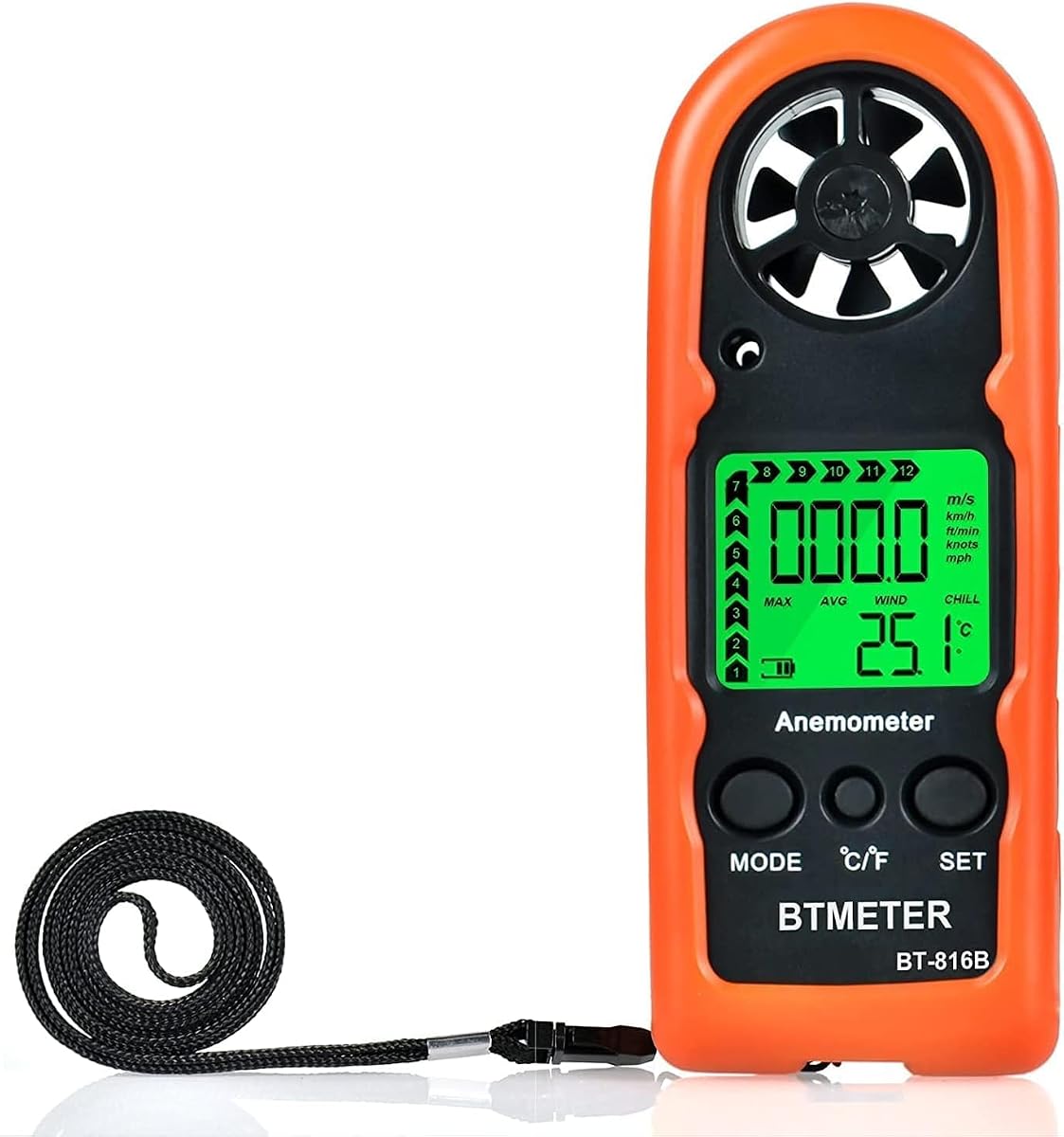
BTMETER BT-816B
4.3Editor score
Compact lightweight design
Wind chill measurement
Backlit LCD screen
This guide compares the top 10 Anemometer for Measuring Wind Speed models based on accuracy, features, and user ratings to help you choose the right device.
Finding the right tool to measure air velocity is essential for outdoor enthusiasts and professionals alike. A quality Anemometer for Measuring Wind Speed provides critical data for sailing, HVAC work, and weather monitoring.
We evaluated ten leading models available this month to determine which devices offer the best balance of precision and durability. Our analysis focuses on range accuracy unit variety and ease of use in real world conditions.
Each pick highlights specific strengths and ideal use cases to help you make an informed decision quickly. Remember that prices fluctuate regularly so verify current deals before finalizing your purchase online.
4.3Editor score

4.5Editor score

4.6Editor score
The following table provides a side-by-side overview of the top ten models selected for this guide. Compare their key specifications and features to find the perfect match for your needs.




The BTMETER BT-100 stands out as a versatile tool for both HVAC professionals and outdoor adventurers. With a solid 4.5 rating from users, it delivers consistent readings across various conditions. Its ability to measure air flow in CFM makes it particularly useful for duct testing.
We may earn a commission when you buy through this link, at no additional cost to you.
Accuracy is a key strength here thanks to dual temperature sensors and eight vanes that capture even subtle air movements. The device supports five different wind units allowing seamless transitions between metric and imperial systems. The included tripod hole allows for stable long-term monitoring during drone flights or shooting sessions.
While the temperature range is adequate for most outdoor tasks it may not suit extreme environments. The battery life is standard for this class of device requiring periodic replacement to maintain optimal performance. These minor limitations do not detract from its overall reliability and ease of use in daily tasks.
We recommend this unit for anyone needing a portable yet precise wind meter for diverse applications. It balances cost and functionality effectively making it a top choice for hobbyists and pros alike. Check current stock before ordering as availability can vary by region.
The CFM calculation feature simplifies airflow assessment in ducts and vents. Combined with high sensitivity this model ensures accurate diagnostics for heating and cooling systems.
The tripod hole transforms this handheld device into a stationary weather station. This is invaluable for tracking wind changes over time without holding the unit manually.
We may earn a commission when you buy through this link, at no additional cost to you.
The Mcbazel 3 in 1 offers a unique value proposition by including the Beaufort scale alongside standard wind speed metrics. This feature helps users quickly interpret wind conditions for activities like sailing or fishing without mental math. Its 4.5 rating reflects strong satisfaction among budget-conscious buyers.
We may earn a commission when you buy through this link, at no additional cost to you.
Display clarity is enhanced by the double-line LCD which shows speed and temperature simultaneously. The backlight ensures readability in early morning or evening settings. It supports multiple unit conversions catering to international users or those switching between measurement systems frequently.
Lack of a tripod mount limits its use for stationary monitoring compared to other models. Users must supply their own batteries which adds a small upfront cost to the purchase. However these are minor trade-offs for the price point and versatility offered.
This device is ideal for casual outdoor enthusiasts who need quick and reliable wind data. It fits easily in a pocket and is durable enough for regular trips to the water or mountain. Verify the battery type before purchasing to ensure you have spares on hand.
Understanding wind force levels helps in planning safe boating or fishing trips. This scale translates raw numbers into actionable advice for field conditions.
The compact form factor makes it easy to carry during hikes or fishing excursions. One-handed operation is smooth and responsive for quick readings.
We may earn a commission when you buy through this link, at no additional cost to you.
TopTes TS-301 distinguishes itself with a notably large screen that simplifies reading data in bright sunlight. It also measures humidity which adds a layer of environmental context useful for agriculture or comfort monitoring. The 4.5 rating indicates high user confidence in its build and performance.
We may earn a commission when you buy through this link, at no additional cost to you.
The inclusion of a humidity sensor broadens its utility beyond simple wind tracking. It supports six different units allowing flexibility for various professional and recreational needs. The carry pouch ensures protection during transport which extends the lifespan of the device.
Humidity and temperature sensors require a warm-up period of about thirty minutes in a new environment. This means instant readings may be less accurate until the device stabilizes. Users should plan accordingly if immediate precision is critical for their tasks.
Ideal for users who prioritize visual clarity and additional weather metrics this unit is a strong contender. It balances feature set with portability well. Ensure you allow time for sensor calibration when starting a new measurement session for best results.
Humidity readings help in assessing comfort levels or crop drying conditions. This dual data stream supports more informed decisions on site.
The oversized screen reduces eye strain during prolonged use. This is particularly helpful for older users or those with vision challenges.
We may earn a commission when you buy through this link, at no additional cost to you.
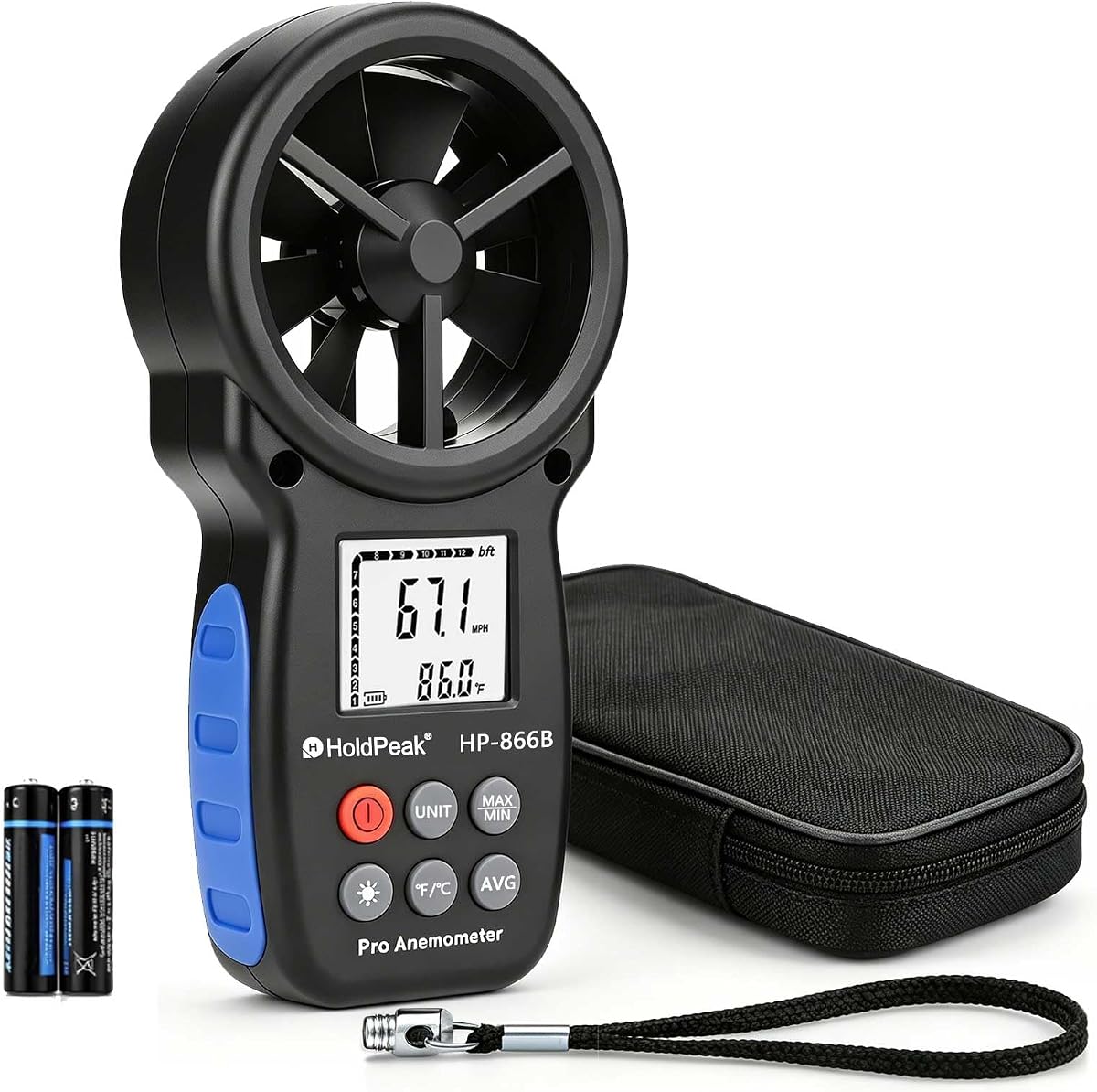
The HoldPeak 866B is engineered for robustness and precision in technical applications like HVAC repair. Its dual sensor setup ensures reliable wind chill and temperature data which is vital for energy efficiency checks. A 4.5 rating underscores its reliability among industry users.
We may earn a commission when you buy through this link, at no additional cost to you.
Features like the hand strap and carrying pouch enhance safety and convenience in the field. The tripod hole allows for secure mounting during detailed airflow analysis. The included screwdriver suggests attention to maintenance access for long-term service.
It lacks humidity measurement which might limit its use in broader weather studies. Battery life depends on usage frequency and is standard for this class. Despite this it remains a favorite for technicians who need steady airflow data.
Choose this model if you need professional-grade airflow analysis on a budget. It handles tough conditions well and provides clear data for system optimization. Confirm accessory compatibility if you plan to mount it on custom setups.
The waterproof pouch and hand strap prevent drops and damage during work. This ensures the device survives the rigors of daily site visits.
Eight vanes and a smooth shaft detect minute air currents. This precision is crucial for balancing systems with tight tolerances.
We may earn a commission when you buy through this link, at no additional cost to you.
The BTMETER BT-816B is a highly portable option that sacrifices little on core functionality. It offers a wide speed range suitable for most outdoor activities and includes wind chill for safety planning. The 4.3 rating shows consistent performance for its price point.
We may earn a commission when you buy through this link, at no additional cost to you.
Its small footprint makes it easy to stash in a jacket pocket during runs or hikes. The backlight ensures visibility at dawn or dusk. The ability to switch between current average and max modes helps capture peak gusts effectively.
Accuracy can vary slightly at extreme speeds compared to higher-end units. It also lacks some advanced data logging capabilities found in premium models. These trade-offs are acceptable for casual users focused on basic measurement tasks.
We recommend this for hobbyists needing a reliable tool without a steep investment. It serves well for fishing trips or casual drone flights. Check the weight limits if you need it for prolonged handheld use.
Weighing only 53 grams it adds almost no load to your gear. This makes it ideal for ultralight hiking or travel where space is tight.
Wind chill data helps in assessing frostbite risks quickly. This is a vital feature for mountaineering or cold weather sports.
We may earn a commission when you buy through this link, at no additional cost to you.
Soonkoda markets this unit heavily towards industrial sectors like aviation and petrochemical. Its range covers low to high flow scenarios making it adaptable for various facility checks. The 4.3 rating suggests it meets basic professional expectations reliably.
We may earn a commission when you buy through this link, at no additional cost to you.
The display is straightforward and easy to read in noisy environments. It supports multiple unit conversions for diverse international teams. The inclusion of a low-battery indicator prevents unexpected failures during critical tasks.
It does not offer advanced environmental data like humidity which might be needed in some settings. The auto off timer is standard but could be shorter for long monitoring sessions. However it holds up well for general utility work.
Choose this if you need a rugged tool for site inspections or factory floors. It provides essential data without unnecessary complexity. Verify the specific units required for your region before ordering.
Designed for complex environments it suits duct ventilation and underground warehouses. This reliability helps maintain safety standards in regulated sectors.
The simple interface minimizes training time for new staff. This efficiency is valuable in fast-paced industrial shifts.
We may earn a commission when you buy through this link, at no additional cost to you.
The AEM01S introduces a visual alert system that changes color based on wind speed. This is particularly useful for construction zones where quick awareness of danger is required. A 4.5 rating confirms users find this feature intuitive and helpful.
We may earn a commission when you buy through this link, at no additional cost to you.
The design prioritizes safety with a housing that withstands light impacts. The HOLD button allows freezing data for record-keeping without holding the trigger. Auto power off preserves battery life effectively during long workdays.
The alarm levels are fixed which might not suit all specific safety thresholds. Battery replacement is a standard maintenance task that must be monitored. Still these limitations do not undermine its value in high-risk environments.
We recommend this for site managers needing immediate visual cues on wind safety. It adds a layer of protection beyond simple numeric readouts. Confirm compatibility with your local safety protocols before deployment.
The color-coded system removes ambiguity about safe conditions. This helps teams react quickly to changing weather during work.
The ergonomic design prevents slipping and protects internal components. This durability is essential for tools used in active industrial sites.
We may earn a commission when you buy through this link, at no additional cost to you.
The Caldwell Wind Wizard II is engineered for precision hunters and long-range shooters. Its 4.6 rating reflects exceptional reliability and build quality. The water resistant casing ensures it performs in varied weather conditions without failure.
We may earn a commission when you buy through this link, at no additional cost to you.
The non-slip rubber casing provides a secure hold which is crucial when holding a scope or rifle. The lifetime warranty offers significant peace of mind for a premium purchase. It comes with a battery so you can start using it immediately.
The higher cost is a barrier for casual users but justified for professionals. Battery availability may vary since it uses a specific type included. However the performance consistency makes it a top-tier choice for serious applications.
We recommend this for those who cannot afford measurement errors in the field. It is a robust companion for high-stakes shooting or hunting trips. Check current warranty terms for full details on coverage.
Accurate wind data helps adjust for bullet drop and drift effectively. This precision can make the difference between a miss and a clean shot.
The lifetime coverage protects your investment against defects. This adds substantial value to the overall cost of ownership.
We may earn a commission when you buy through this link, at no additional cost to you.
The Proster unit offers robust calculation capabilities for airflow volume in CFM and CMM. It is well suited for HVAC professionals needing specific volume data. A 4.4 rating shows it meets expectations for accuracy and readability.
We may earn a commission when you buy through this link, at no additional cost to you.
The large screen displays numbers clearly making it easy to read quickly. The backlight ensures usability in darker rooms or during night shifts. It supports five different wind units for flexible unit reporting.
The 9V battery is less common than standard AAA cells which may limit field replacements. It also lacks humidity sensing which limits environmental monitoring breadth. However it remains a solid choice for airflow-specific tasks.
Choose this if you require volumetric airflow calculations often. Its performance in HVAC settings is reliable. Keep extra batteries handy to avoid downtime during long projects.
Supporting CFM and CMM allows precise air volume tracking. This is essential for system balancing and energy auditing.
The large display simplifies reading in low light. This helps reduce errors when working in dim mechanical rooms.
We may earn a commission when you buy through this link, at no additional cost to you.
The VEVOR Split model stands out with its ability to connect to a PC for data logging. This is useful for researchers needing long-term wind records. A 4.4 rating indicates satisfaction with its advanced feature set.
We may earn a commission when you buy through this link, at no additional cost to you.
The extendable cord allows measurements in hard-to-reach places without moving the unit. The IP44 rating means it handles light rain well. The included storage bag protects the unit during transit.
PC connectivity requires setup on Windows systems which may be a hurdle. The cost is higher than basic models but justified by the data management features. It is a strong option for research and engineering tasks.
We recommend this for projects requiring historical wind data analysis. It bridges the gap between handheld measurement and digital record keeping. Ensure your operating system is compatible before purchasing.
Data logging enables tracking trends over days or weeks. This is essential for environmental research or site planning.
The two-meter cord allows you to measure in confined spaces safely. This reduces the need to climb or stretch during tests.
We may earn a commission when you buy through this link, at no additional cost to you.
Selecting the right device depends on your specific use case and desired features. Consider these key factors to narrow down your options effectively.
Look for a device that covers the speeds you expect to encounter. Professional units often offer higher accuracy at low speeds which is vital for HVAC.
Ensure the tolerance level matches your precision needs.
Verify that the device supports the units you need for your work. Options include mph km/h knots and m/s for global compatibility.
Switching between these easily saves time during fieldwork.
A backlight is crucial for reading data in dim or bright conditions. Larger screens help prevent eye strain during long monitoring sessions.
Opt for high contrast displays for quick readability.
Some models include temperature and humidity sensors for broader weather context. This is useful for activities like sailing or agriculture.
Determine if these features add value to your specific tasks.
Check if the unit has a tripod hole for stationary monitoring. This stabilizes the device for long-term wind studies.
Hand straps are helpful for preventing accidental drops.
Water resistance ratings indicate how well the device handles outdoor weather. Robust housing protects against impacts in rugged environments.
Choose a build quality that matches your usage intensity.
Consider the battery type and expected runtime before buying. Some use standard AAA batteries while others use specialized 9V cells.
Look for auto power off features to conserve energy.
A longer warranty period can indicate confidence in product quality. Customer support access is important if you encounter technical issues.
Verify the terms before making a purchase decision.
Hold the device steady at a height where you want to measure airflow and avoid shielding it with your body. Ensure the vanes face directly into the wind direction for accurate readings.
Allow the device to stabilize in the environment before recording data if it includes temperature or humidity sensors. This warm-up period ensures the internal components adapt to current conditions.
Store the unit in a protective case when not in use to prevent damage. Replace batteries regularly and clean the vanes gently with a soft cloth to maintain sensitivity.
Handheld models typically offer accuracy within 2 to 5 percent depending on the brand. Professional units with dual sensors tend to be more reliable for critical applications.
Yes many devices are designed to measure indoor air flow like HVAC vents. Ensure the unit is sensitive enough for lower flow rates common inside buildings.
The Beaufort scale classifies wind speed based on observable conditions at sea or on land. Some Anemometers include this to help users interpret wind strength quickly.
Most consumer units do not require manual calibration. If readings seem off compare them with a trusted weather source or another calibrated device.
Basic wind meters do not measure humidity but advanced models include humidity sensors. Check the product specs to confirm if this feature is included.
Waterproof ratings are crucial if you work outdoors in rain or humidity. IP44 or higher ensures the device can withstand light weather exposure safely.
The BTMETER BT-100 offers the best balance of features for most users. Its tripod support and high sensitivity make it versatile for both pros and hobbyists.
Prioritize build quality and display readability for long-term satisfaction. A device that is easy to read and durable will serve you well over years of use.
Prices and availability change often so check current deals before finalizing your order. Ensure you have the right batteries on hand to start using your new tool immediately.