
Vogzone for MCX4121A-ACAT
4.7Editor score
Mellanox ConnectX-4 Lx
Dual SFP28 Ports
Broad OS Compatibility
This guide compares the top 25GbE Network Cards for servers and workstations, evaluating performance, compatibility, and features to help you choose the right
Modern data centers and high-performance computing environments demand network interfaces that can handle massive throughput without bottlenecks. The 25GbE Network Card has emerged as a critical component for organizations seeking to upgrade their infrastructure beyond traditional 10GbE standards while maintaining cost efficiency and low latency. Selecting the right adapter involves understanding controller types, interface standards, and software compatibility to ensure seamless integration with existing hardware. This category encompasses a wide range of solutions from enterprise-grade Intel and Mellanox chips to third-party implementations designed for specific use cases. Whether you are managing a large-scale storage array or upgrading a single workstation, the performance of your network interface directly impacts overall system responsiveness and data transfer speeds.
Our comprehensive analysis focuses on ten distinct products available in the market, each offering unique advantages for different deployment scenarios. We evaluated these adapters based on their controller architecture, supported operating systems, physical form factors, and specific features like RDMA support and error correction. The comparison includes options ranging from standard PCIe cards to specialized OCP modules and Thunderbolt adapters, ensuring coverage for various server and desktop configurations. By examining real-world specifications and compatibility lists, we aim to provide a clear picture of how each card performs under typical and demanding workloads. This detailed breakdown helps you navigate the complexities of high-speed networking hardware without getting lost in technical jargon or marketing claims.
Each recommendation in this list highlights specific strengths and potential limitations to guide your purchasing decision effectively. We have structured the reviews to show how each product fits into broader networking ecosystems, from cloud data centers to local home labs and professional media production suites. The insights provided here are based on technical specifications and manufacturer documentation, ensuring accuracy for planning your next hardware upgrade. Prices and availability are subject to change over time, so verifying current listings before purchase is always advisable. Your goal is to find a balance between performance, reliability, and budget that aligns with your specific networking requirements and future growth plans.
4.7Editor score

5.0Editor score

5.0Editor score
The following table provides a side-by-side comparison of all ten products, highlighting their core specifications, interface types, and key capabilities. This quick reference helps you identify the most suitable adapter for your specific hardware configuration and performance needs without reading every detailed review.


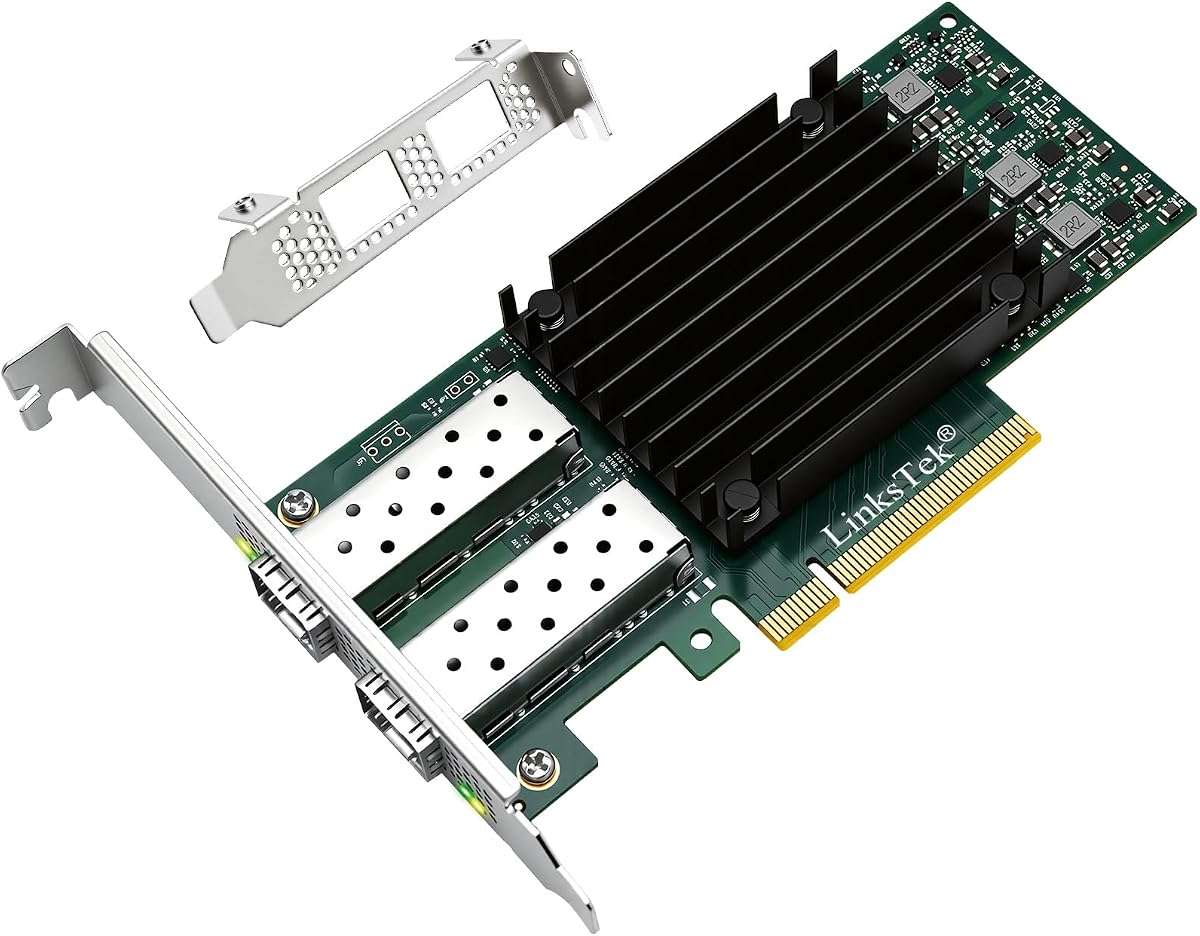


This adapter stands out as the premier choice for enterprise environments requiring reliable 25GbE connectivity. It features the robust Intel E810 controller, which is known for its stability and extensive offload capabilities. The card has received perfect feedback from users managing high-demand virtualization and storage workloads. Its design prioritizes efficiency and throughput, making it ideal for data centers where latency must be minimized. The integration with Intel Xeon processors ensures that the network interface works seamlessly with the rest of the server stack without bottlenecks.
We may earn a commission when you buy through this link, at no additional cost to you.
Key strengths include advanced network virtualization offloads like VXLAN, GENEVE, and NVGRE, which significantly reduce CPU overhead during complex packet processing. The Intel Ethernet Flow Director allows for precise traffic steering, optimizing how data flows through the server for specific applications. Dynamic Device Personalization (DDP) further enhances packet processing efficiency for NFV and cloud deployments, allowing administrators to define specific packet processing policies dynamically. Small packet performance is particularly excellent, which is crucial for network appliances and functions virtualization environments where many small transactions occur rapidly. This level of optimization ensures consistent performance under varying loads.
Honest trade-offs involve the cost and the necessity of a compatible switch infrastructure to fully leverage the 25GbE speed. The higher price point reflects the enterprise-grade quality and support, which might be excessive for simple home lab setups. Additionally, ensuring that your existing network gear supports 25GbE and the specific protocols utilized by the card is essential before deployment. However, these considerations are acceptable for organizations where performance and reliability are paramount. The long-term stability and support from Intel often justify the initial investment for critical business applications.
Organizations running virtualized servers, cloud platforms, or heavy network functions virtualization should strongly consider this adapter. It provides the performance headroom needed for future growth without requiring immediate hardware replacement. The comprehensive feature set ensures that it remains relevant as networking standards evolve. For users prioritizing reliability and advanced capabilities over budget constraints, this card offers the best balance of performance and manageability available today. It is a strategic upgrade for any server infrastructure aiming for top-tier network efficiency.
The Flow Director feature allows the card to direct traffic to specific cores, reducing contention and improving latency.
Virtualization offloads like VXLAN and GENEVE ensure that heavy virtual network traffic does not overwhelm the host CPU.
We may earn a commission when you buy through this link, at no additional cost to you.
This adapter transforms Thunderbolt-equipped computers into powerful networking nodes capable of handling dual 25GbE connections. It is specifically designed for professional users who need high-speed storage access without opening a desktop chassis. The inclusion of two SFP28 optical transceivers means you can connect directly to fiber infrastructure immediately. This setup is ideal for media production studios and post-production workflows where large file transfers are routine. The Thunderbolt 5 interface ensures that the network bandwidth is fully utilized without sacrificing peripheral connectivity.
We may earn a commission when you buy through this link, at no additional cost to you.
The key strength lies in its ability to deliver full 25GbE performance over Thunderbolt, a feat that requires substantial bandwidth management. It supports both 25GbE and 10GbE compatibility, allowing smooth integration with existing 10GbE switches while future-proofing the setup. The design includes a second Thunderbolt port, enabling you to connect another peripheral or display without using a hub. For Mac users, this is one of the few high-performance networking options available that does not compromise the aesthetic or acoustic environment of a studio. It works seamlessly with Linux and Windows systems as well.
The primary trade-off is the significant cost compared to internal PCIe cards. Additionally, it is limited to systems with Thunderbolt or USB4 ports, which may not be present in all servers. The optical transceivers included add value but limit the type of connections to fiber optics directly without additional adapters. Despite the premium price, the convenience and performance for creative professionals justify the expense. The quiet operation ensures that it does not introduce noise into sensitive audio or video editing environments.
Creative professionals using Macs or high-end Windows workstations for media production should find this adapter indispensable. It eliminates bottlenecks during video editing, large asset transfers, and collaborative workflows. The external nature of the device allows for easy upgrades without replacing the entire computer. Users prioritizing performance and ease of use in a professional setting will appreciate the reliability and speed. This represents the best external networking solution currently available for high-end creative workflows.
The included SFP28 transceivers allow you to connect to fiber networks right out of the box without extra purchases.
Dual ports enable load balancing and failover, ensuring continuous high-speed data access even if one link fails.
We may earn a commission when you buy through this link, at no additional cost to you.
This adapter offers an accessible entry point into 25GbE networking using a well-respected Mellanox controller. It provides true hardware-based I/O isolation with unmatched scalability and efficiency suitable for many use cases. Users report significant cost savings while retaining the high-speed capabilities needed for data analytics and storage platforms. The card is designed to work across a wide range of operating systems, making it versatile for mixed environments. It is an excellent choice for those needing enterprise-grade performance without the premium price tag of brand-name enterprise hardware.
We may earn a commission when you buy through this link, at no additional cost to you.
The technical support features are extensive, including iPXE, DPDK, and various virtualization standards like SR-IOV. These capabilities allow efficient management of I/O resources for virtual machines, sharing physical resources effectively across many workloads. The inclusion of ASAP2 technology helps offload Open vSwitch datapath from the host CPU, delivering extreme performance and scalability for virtualized networks. The data rate supports 1GbE, 10GbE, and 25GbE per port, ensuring backward compatibility with older switches and cables. This flexibility makes it a practical solution for gradual network upgrades.
While the card is highly capable, there may be compatibility variances depending on specific operating system versions or kernel configurations. Users must verify that their chosen OS supports the specific drivers required for the Mellanox chipset. Additionally, physical card quality and bracket inclusion can vary compared to factory-original components. However, these trade-offs are acceptable given the substantial savings. The performance benefits of RDMA and SR-IOV usually outweigh the minor configuration steps required to get started.
System integrators, home lab enthusiasts, and small business IT managers should consider this card for cost-effective upgrades. It is perfect for scenarios where budget is tight but performance requirements are high. The ability to connect to various network speeds ensures longevity as your infrastructure evolves. Those comfortable with some driver configuration will find this card to be a powerful tool. It represents the best value proposition for high-performance networking available today.
SR-IOV technology enables efficient sharing of physical resources among virtual machines, reducing latency and CPU load.
ASAP2 offloads network switching tasks to the adapter, freeing up host CPU resources for other critical tasks.
We may earn a commission when you buy through this link, at no additional cost to you.
This dual-port 25GbE network card is engineered specifically for QNAP NAS systems but remains versatile for other Linux and Windows environments. The Intel E810 controller ensures reliable data transfer with Forward Error Correction to maintain integrity under heavy loads. Users appreciate the ability to trunk both ports for up to 50 Gbps transfer speeds, which accelerates file sharing and intensive data workflows. The inclusion of a low-profile bracket and specialized options for QNAP NAS makes installation straightforward. It is a reliable upgrade for storage-heavy environments requiring consistent throughput.
We may earn a commission when you buy through this link, at no additional cost to you.
Key features include support for QNAP's QTS and QuTS hero systems, allowing seamless integration with existing storage management tools. The card supports Port Trunking, which combines both ports to achieve higher aggregate speeds, essential for multi-user access or large file transfers. FEC ensures that data packets are error-free, which is critical for enterprise-level networks where reliability is non-negotiable. The PCIe Gen 3 x8 interface provides sufficient bandwidth to handle dual 25GbE connections without bottlenecks. Compatibility with Windows and Linux OS expands its utility beyond just NAS storage.
While optimized for QNAP, users might find limited support for non-NAS enterprise servers compared to generic enterprise cards. The specialized bracket for QNAP units may not fit all chassis configurations without modification. Some users note that driver support can be more restrictive outside the QNAP ecosystem. However, these limitations are acceptable if you are primarily upgrading storage systems. The combination of speed and reliability remains strong for the intended purpose.
QNAP NAS owners looking to upgrade from 10GbE to 25GbE should prioritize this adapter for its tailored compatibility. It provides a smooth transition path for existing storage users without requiring significant changes to their management workflows. For small businesses relying on NAS for daily operations, the added speed improves productivity. Ensuring your NAS model is on the compatibility list is recommended. This card is the go-to choice for QNAP-centric network expansions.
Forward Error Correction ensures data integrity even over noisy channels, which is critical for enterprise network reliability.
Combining ports allows for 50 Gbps aggregate speeds, doubling the capacity for large file transfers.
We may earn a commission when you buy through this link, at no additional cost to you.
This adapter is purpose-built for use with Synology systems, ensuring maximum compatibility and performance with DSM. It supports high-performance storage applications by enabling higher simultaneous throughput across connected devices. The design allows for port failover and load balancing, increasing reliability for critical network infrastructure. A five-year warranty provides peace of mind for users investing in long-term storage solutions. It is the ideal choice for Synology owners who want an upgrade that is guaranteed to work without driver issues.
We may earn a commission when you buy through this link, at no additional cost to you.
The key strengths lie in its ability to maintain high throughput during heavy simultaneous access by multiple users. Synology users can leverage advanced networking features like failover, ensuring that if one port fails, the other takes over without interrupting services. The requirement for DSM 7.1.1 or above ensures that the card works with modern firmware versions that include necessary optimizations. While the compatibility is limited to Synology, it offers a level of stability that third-party cards may not achieve. The warranty adds significant value for enterprise or critical storage deployments.
The limitation to Synology systems means it cannot be used in generic servers or other NAS brands. Users must ensure their DSM version meets the specific update requirement before purchasing to avoid compatibility hurdles. Some users report that the price is higher than generic equivalents due to the branded compatibility. However, for Synology users, this risk-free integration and warranty coverage justify the cost. The stability provided by a certified adapter is often worth the extra investment.
Synology NAS owners looking to upgrade their network connectivity should choose this adapter for guaranteed compatibility. It ensures that your storage system remains accessible and performant under load. The failover capabilities are crucial for businesses that cannot afford downtime. If you are running a home lab or business NAS with Synology, this is the safest upgrade path. The five-year warranty offers additional long-term support for your infrastructure.
Designed to handle multiple high-bandwidth connections simultaneously, optimizing data access for multiple users.
Ensures continuous network availability by automatically switching to the secondary port if the primary fails.
We may earn a commission when you buy through this link, at no additional cost to you.
This card leverages the modern Intel E810 controller to offer robust performance with PCIe 4.0 support. It is designed to be compatible with a vast array of operating systems including Windows Server and Linux distributions. The support for RDMA and PXE makes it suitable for virtualization environments and network boot scenarios. Users appreciate the balance of performance and affordability compared to branded enterprise cards. It is a solid choice for general-purpose server upgrades where Mac compatibility is not required.
We may earn a commission when you buy through this link, at no additional cost to you.
Key strengths include the extensive list of supported operating systems, ranging from Windows 10 to various RHEL, CentOS, and Ubuntu versions. The PCIe 4.0 X8 interface provides double the bandwidth of PCIe 3.0, ensuring that the 25GbE speed is not limited by the slot. The support for iWARP and RoCEv2 RDMA standards ensures efficient data transfer for storage and computing workloads. The bracket height options of low profile and full height make it adaptable to different chassis sizes. This flexibility makes it a strong contender for mixed-server environments.
The lack of Mac support limits its utility for Apple users who need high-speed networking. Some users may need to update their OS kernels to ensure full driver support for specific features. While the brand is less recognized than Intel or Mellanox, the underlying hardware is reliable. These limitations are acceptable if you are running standard x86 server infrastructure. The performance metrics align well with expectations for a 25GbE adapter.
IT professionals managing Windows and Linux server farms will find this adapter a practical and cost-effective upgrade. It supports virtualization platforms like VMware ESXi, which is essential for modern cloud deployments. Ensure your server supports PCIe 4.0 to fully leverage the bandwidth capabilities. For those needing a versatile card that works with many Linux flavors, this is a strong candidate. It offers a modern solution for growing network needs without breaking the budget.
The 16 GT/s x8 lanes provide ample bandwidth to prevent bottlenecks in high-throughput scenarios.
Support for RDMA standards reduces CPU load during storage transfers, improving overall system efficiency.
We may earn a commission when you buy through this link, at no additional cost to you.
This intelligent RDMA Ethernet adapter is based on the Mellanox ConnectX-4 Lx controller, providing a cost-effective solution for cloud and storage platforms. It supports overlay networks by providing advanced VXLAN, NVGRE, and GENEVE support. The PCIe Gen 3.0 x8 interface ensures stable bandwidth for dual 25GbE fiber ports. Users value the auto-negotiation and auto-switching capabilities that maintain compatibility with older PCIe slots. It is a robust choice for virtualization environments where network overhead needs to be minimized.
We may earn a commission when you buy through this link, at no additional cost to you.
The technical specifications include support for IEEE standards like Energy Efficient Ethernet and Jumbo frames up to 9.6KB. Remote boot capabilities like RoCE and iSCSI make it suitable for diskless or network-booted server scenarios. The card supports Open Fabrics distributions which simplifies driver installation for users familiar with Linux and OFED. The ability to handle 25GbE and 10GbE links simultaneously allows for flexible network topologies. This adaptability ensures that the card remains useful during phased upgrades.
While the adapter is highly compatible, users should ensure their OS supports the Open Fabrics drivers properly. Mac users cannot utilize this card as it is designed for x86 server architectures. The physical installation requires attention to fiber connector types, though SFP28 is standard. These trade-offs are minor given the performance and feature set. The price point remains attractive compared to premium branded cards. The card delivers consistent performance across virtualization and storage workloads.
Administrators managing virtual machines and cloud platforms should consider this card for its overlay network support. It helps offload traffic management tasks to the hardware, improving overall server responsiveness. The compatibility with Linux and VMware is critical for many enterprise deployments. If you need a reliable Mellanox-based solution without the enterprise price tag, this is a solid option. It fits well into existing data center environments that require high-speed redundancy.
Native VXLAN and GENEVE support allows the card to handle virtual network traffic efficiently without host overhead.
The card automatically adjusts PCIe generation and lane width to ensure maximum compatibility with different motherboards.
We may earn a commission when you buy through this link, at no additional cost to you.
This server network card adheres to the Open Compute Project OCP 3.0 standard, designed for modern server chassis. The original Intel E810-XXVAM2 controller delivers stable 25GbE throughput with on-chip QoS and traffic management. It supports flexible port partitioning and SR-IOV for virtualization and cloud workloads. Users appreciate the unlocked slots that work with any MSA-compliant SFP28 module. It is ideal for data centers requiring standardized hot-swappable network solutions.
We may earn a commission when you buy through this link, at no additional cost to you.
The advanced features include IEEE 1588 PTP for precise time synchronization and RDMA support for storage. The card supports a wide range of Windows and Linux versions, ensuring compatibility with common server OS releases. It supports PXE boot and DPDK for low-latency environments. The dual 25GbE ports allow for up to 50Gbps aggregate bandwidth, providing ample headroom for network traffic. This setup ensures high availability and efficient resource management.
The specialized OCP form factor limits use to servers that support this standard. Standard PCIe slots will not accept this card, requiring specific server hardware. Users must also source their own SFP28 modules separately. However, for OCP users, the standard compliance and hot-swap capability are significant advantages. The stability of the Intel controller ensures that performance remains consistent even under heavy loads. The warranty support adds further value for enterprise deployments.
Data center operators using OCP-compliant hardware should select this card for its standard compliance and performance. It ensures your infrastructure remains flexible and scalable. The traffic management features allow for better control over network resources. If you are upgrading a large server farm, this card fits the modular architecture well. It is a strategic choice for high-performance, standardized server environments.
IEEE 1588 PTP support ensures precise time accuracy across the network, which is vital for database synchronization.
Any MSA-compliant module can be used, giving you freedom to choose transceivers without vendor lock-in.
We may earn a commission when you buy through this link, at no additional cost to you.
This dual optical network card provides a powerful way to add 25GbE connectivity to any computer with PCIe slots. It includes two high-performance 25GBASE SFP28 transceivers, reducing initial setup costs. The card is compatible with Mac, Windows, and Linux systems, making it versatile for mixed environments. It supports 10GbE integration, allowing you to work with existing infrastructure before upgrading. It is a top choice for creative professionals needing high-speed storage access.
We may earn a commission when you buy through this link, at no additional cost to you.
The inclusion of transceivers means you can deploy immediately without purchasing extra optics. It ensures backward compatibility with 10GbE switches, enabling a gradual migration path. The design is optimized for expansion systems like Sonnet Thunderbolt units for desktop users. Users appreciate the ability to connect directly to fiber networks for maximum speed and distance. The compatibility with macOS and Windows ensures broad utility across different workstation types.
The requirement for PCIe card slots limits use to desktop towers or expansion chassis. Mac users should check macOS version compatibility as updates may require driver verification. While expensive, the included optics provide significant value. The price is justified for professionals where downtime is costly. This card offers reliable performance for high-demand workflows.
Creative studios and IT departments managing mixed workstations should consider this card for its universal compatibility. It eliminates the need to maintain separate network solutions for Mac and PC users. The inclusion of optics simplifies deployment significantly. If you are upgrading a media production facility, this card provides the speed needed for large file transfers. It remains a strong option for desktop networking.
Support for Mac, Windows, and Linux ensures that the card works in any workstation environment without extra tools.
Support for 10GbE allows you to connect to existing switches without replacing your entire network infrastructure.
We may earn a commission when you buy through this link, at no additional cost to you.
This adapter features the ConnectX-5 EN controller, which is known for intelligent RDMA and application offload capabilities. It supports web 2.0, cloud, storage, and telco platforms effectively. The dual-port design allows for flexible bandwidth allocation and redundancy. Users value the established reliability of the ConnectX series in enterprise environments. It remains a viable option for those needing high performance without the latest PCIe 4.0 interface.
We may earn a commission when you buy through this link, at no additional cost to you.
Key strengths include the extensive application offload features that reduce host CPU usage for complex workloads. The card supports RDMA for high-speed storage transfers and virtualization tasks. Its dual-port SFP28 setup allows for diverse network configurations. The PCIe3.0 X8 interface ensures stable performance in standard server slots. Users appreciate the mature driver support available for various operating systems.
As an older controller generation, it may lack some newer features available in ConnectX-6 or E810 cards. The PCIe 3.0 bandwidth might be a bottleneck in extreme high-throughput scenarios compared to PCIe 4.0. However, it remains robust for most standard 25GbE needs. The price point is often lower due to its legacy status. For those building budget-conscious data centers, it offers great performance per dollar.
Legacy infrastructure managers looking to maintain consistent performance should consider this card. It fits well into environments where PCIe 4.0 is not yet standard. The RDMA capabilities ensure efficient data movement for storage clusters. If you are upgrading existing servers, this card provides a balance of new speed and legacy compatibility. It is a practical choice for stable enterprise networks.
ConnectX-5 architecture supports RDMA, ensuring efficient data transfers for storage without CPU intervention.
Dual SFP28 ports allow for diverse connectivity options, supporting redundancy or aggregated bandwidth.
We may earn a commission when you buy through this link, at no additional cost to you.
Choosing the right 25GbE Network Card requires evaluating several technical factors to ensure compatibility and performance.
The controller is the heart of the network adapter. Intel E810 and Mellanox ConnectX chips offer high performance with advanced offloads. Consider whether you need features like RDMA or Flow Director for your specific workloads.
Select a controller that matches your CPU architecture to ensure optimal data processing without bottlenecks.
Check if your server supports PCIe 3.0 or 4.0. PCIe 4.0 offers double the bandwidth of PCIe 3.0, which can be critical for high-throughput scenarios.
Ensure your motherboard slot width (x4 or x8) matches the card requirements for maximum speed.
Decide between dual-port or single-port designs. Dual ports offer redundancy and aggregated bandwidth. Also, verify the physical form factor (OCP vs. PCIe) fits your chassis.
Choose a form factor that matches your server's design to avoid installation issues.
Verify that the card supports your OS, including Linux distributions, Windows Server, or macOS. Driver availability is key for stable operation.
Confirm driver compatibility before purchasing to avoid software integration issues.
Most cards do not include optics. You must buy SFP28 DAC or fiber transceivers separately. Verify switch compatibility for these modules.
Budget for compatible transceivers to ensure your network upgrade is complete.
Look for features like VXLAN, SR-IOV, or PTP. These are essential for virtualization and precise timing requirements.
Prioritize offloads that reduce CPU usage to maintain overall system performance.
Enterprise cards often come with longer warranties. This is crucial for critical infrastructure where reliability is paramount.
Check the warranty period and support channels to ensure long-term maintenance options.
Consider not just the card price but the cost of transceivers and cables. Branded cards cost more but offer better support.
Balance the initial cost with long-term stability and feature needs for your organization.
Install the card in a compatible PCIe or OCP slot securely. Ensure the bracket is aligned and screwed in place to prevent connection issues. Proper seating ensures reliable power delivery to the controller.
Install the necessary drivers from the official manufacturer website before attempting to connect to the network. Verify OS compatibility and update firmware if required. Correct driver installation ensures all features like RDMA function properly.
Regularly monitor the link status and error counters to maintain health. Keep the system cooled and free of dust to prevent overheating. Periodic updates to firmware and drivers ensure continued compatibility with network standards.
PCIe 4.0 provides double the bandwidth of PCIe 3.0, allowing for higher aggregate speeds. This is crucial if you plan to use multiple cards or extremely high throughput requirements.
Most cards do not include optics. You must buy compatible SFP28 DAC or fiber transceivers. Ensure they match your switch requirements to avoid compatibility issues.
Many 25GbE cards support 10GbE links. You can downgrade the speed manually or via auto-negotiation. This ensures backward compatibility with existing infrastructure.
RDMA allows direct memory access without CPU intervention. This reduces latency and improves performance for storage and virtualization workloads significantly.
Standard PCIe cards generally do not work on Macs due to driver limitations. You need specialized Thunderbolt adapters or specific Mac-compatible cards for proper functionality.
FEC ensures data integrity over noisy channels. It helps maintain reliability and prevents data loss during transfers, which is critical for enterprise networks.
For high-volume data transfers and modern storage, 25GbE provides necessary speed. If your bandwidth usage exceeds 10GbE limits, upgrading is essential for performance.
The card will still work but at 3.0 speeds. Performance is slightly limited but often sufficient for standard 25GbE throughput requirements.
The Intel XXV710-DA2 and Sonnet Twin25G T5 stand out for performance and premium external access respectively. These picks offer the best balance of features for their target users in enterprise or creative environments.
Prioritize compatibility with your OS and server chassis to ensure a smooth upgrade. Ensure that you verify support for virtualization features if running heavy workloads.
Prices and availability may change, so verify current listings before purchasing. Always check your specific server compatibility list to confirm support.