
Panasonic Pro 16X9 Anamorphic Lens Adaptor
5.0Editor score
Affordable entry point
Simple plug and play
Basic 16×9 format
This guide compares the top 10 Anamorphic Lens Adapter models for cinematic look, detailing squeeze factors, build quality, and compatibility with modern
Anamorphic lens adapters transform standard glass into cinematic tools with unique flares and oval bokeh. Choosing the right one requires understanding squeeze ratios, optical clarity, and mount compatibility for your specific camera setup.
We analyzed ten distinct models ranging from budget-friendly add-ons to premium cinema solutions. Our comparison focuses on optical performance, build durability, ease of use, and how well they integrate with popular lens series available today.
Each pick highlights specific strengths for different shooters, from solo creators to production teams. Note that availability and pricing can fluctuate quickly, so always verify current stock before making your final purchasing decision online.
5.0Editor score

4.8Editor score

4.5Editor score
The following table provides a side-by-side overview of all ten models, highlighting their unique specifications, target lens series, and primary advantages to help you narrow down your choices quickly.



The Samyang SYCAF V-AF 1.7X Anamorphic MF Adapter stands out as a top choice for filmmakers seeking authentic CinemaScope visuals. It transforms compatible V-AF lenses into high-quality anamorphic optics with a 1.7x squeeze ratio and T1.9 aperture.
We may earn a commission when you buy through this link, at no additional cost to you.
Its standout qualities include exceptional brightness for low-light shooting and a precise linear rail with secure bayonet mount for stable attachment. The integrated tally lamp aids solo creators, while the design maintains balanced handling on mirrorless rigs.
While limited to the V-AF series, the adapter delivers rich depth of field and dramatic widescreen perspectives consistently. The trade-off is a higher investment, but the optical performance and build quality justify the cost for serious creators.
If you own Samyang V-AF lenses and want professional anamorphic results without changing your entire kit, this adapter is the ideal solution. It combines optical excellence with practical features tailored for efficient film-making workflows.
The T1.9 maximum aperture ensures exceptional light intake, allowing expressive low-light shots and shallow depth of field unmatched by other V-AF solutions.
A precise linear rail and secure bayonet mount provide fast, stable attachment optimized for professional workflows and smooth manual focusing.
We may earn a commission when you buy through this link, at no additional cost to you.
The SIRUI 35mm T2.9 1.6X Full-Frame Anamorphic Lens Kit delivers a complete solution for full-frame shooters. It includes a dedicated lens plus a 1.25x adapter that increases the squeeze factor to 2x for more pronounced characteristics.
We may earn a commission when you buy through this link, at no additional cost to you.
Key strengths lie in its premium build quality and distinctive optical effects like sci-fi blue flares and waterfall bokeh. The included adapter offers flexibility to adjust the squeeze ratio without buying separate optics.
While it is heavier and pricier than standalone adapters, the full-frame coverage and dedicated optics ensure consistent image quality. This makes it ideal for productions requiring robust gear and specific cinematic looks.
For professionals needing a reliable full-frame anamorphic system, this kit provides unmatched versatility. The combination of a native lens and expandable adapter covers a wide range of creative needs effectively.
The included 1.25x adapter allows instant expansion from 1.6x to 2x squeeze, embracing more noticeable anamorphic characteristics like flares and bokeh.
Achieves iconic visual traits such as waterfall bokeh and sci-fi blue flares that define high-end cinematic storytelling.
We may earn a commission when you buy through this link, at no additional cost to you.
The Panasonic Pro 16X9 Anamorphic Lens Adaptor offers an accessible entry point for creators wanting a cinematic aspect ratio. It is designed for simplicity and delivers a 16×9 format suitable for many basic projects.
We may earn a commission when you buy through this link, at no additional cost to you.
Its strengths include being very affordable, lightweight, and easy to install. Users appreciate its straightforward plug-and-play nature which removes barriers for beginners or those on tight budgets.
However, it lacks the advanced optical features of more expensive options. The trade-off is acceptable for those prioritizing cost and simplicity over complex flares or variable squeeze ratios.
If you need a functional, budget-friendly way to get a widescreen look, this adaptor meets the need. It is perfect for hobbyists or secondary setups where cost efficiency is paramount.
Delivers a 16×9 format at a highly affordable price point, making anamorphic effects accessible to budget-conscious creators.
Features a lightweight design and simple attachment method that ensures effortless use without complex setup.
We may earn a commission when you buy through this link, at no additional cost to you.
This adapter is praised for its high optical quality and bright performance with V-AF lenses. It provides a 1.7x squeeze ratio and T1.9 aperture for expressive depth and low-light capability.
We may earn a commission when you buy through this link, at no additional cost to you.
Key strengths include a secure bayonet mount and compact design that maintains balance on camera rigs. The integrated tally lamp adds professional value, supporting focused shooting in varied conditions.
While limited to the V-AF series and costing more than basic options, the performance justifies the expense for serious creators. It balances optical fidelity with practical workflow enhancements effectively.
If you seek a reliable, professional adapter for V-AF optics, this model delivers excellent value. It meets the demands of filmmakers needing consistent, high-quality anamorphic results.
The T1.9 aperture delivers exceptional brightness, enabling expressive low-light shooting unmatched by other solutions.
A compact and balanced design ensures comfortable handling on mirrorless cinema rigs without compromising mobility.
We may earn a commission when you buy through this link, at no additional cost to you.
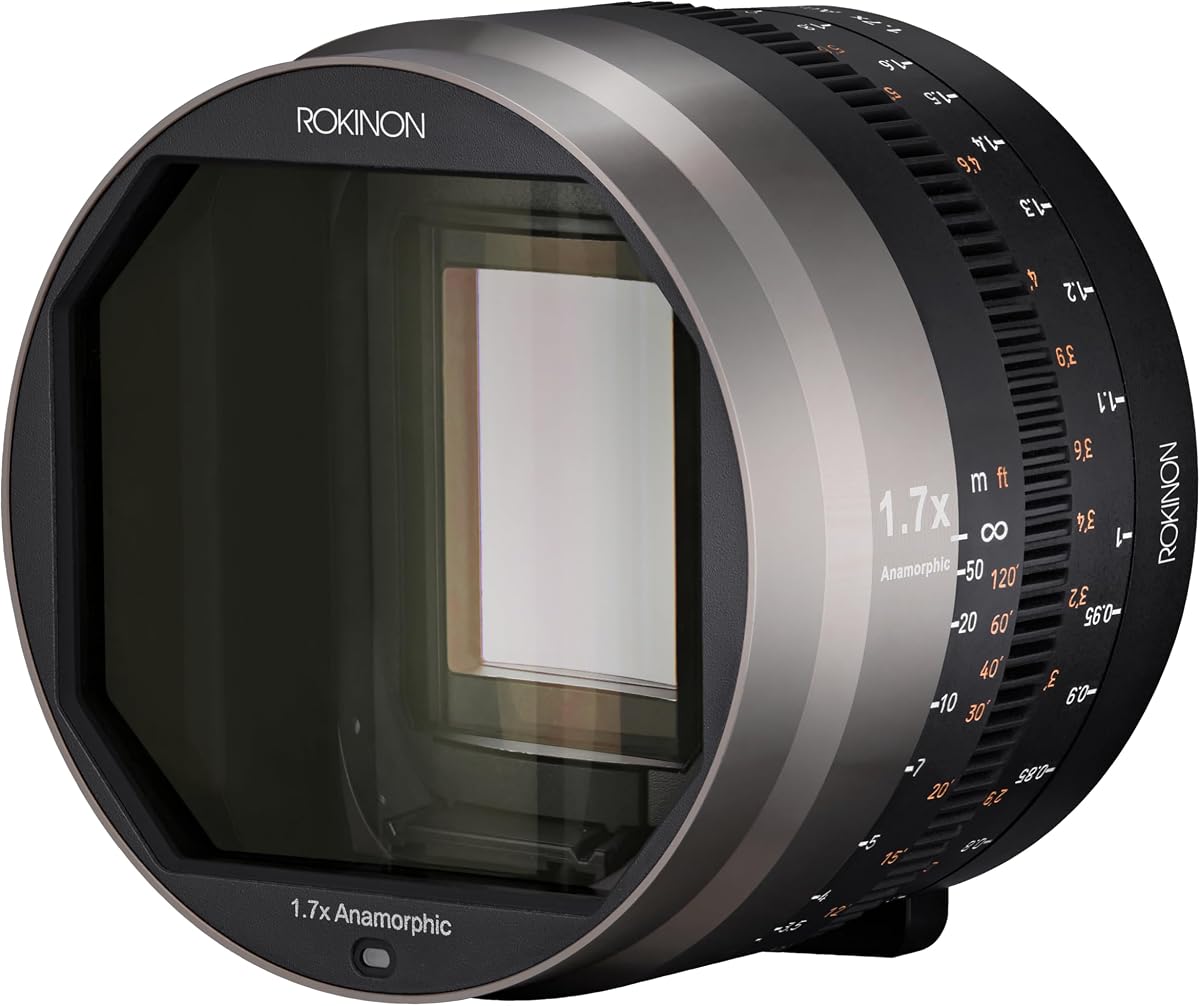
The Rokinon Cine AF 1.7X Anamorphic MF Adapter is purpose-built for Rokinon Cine AF lenses. It offers a 1.7x squeeze ratio and T1.9 aperture, delivering bright, cinema-scope compatible imagery.
We may earn a commission when you buy through this link, at no additional cost to you.
Strengths include a linear rail and bayonet mount structure for stability, plus a built-in tally lamp for set visibility. It supports various focal lengths from 24mm to 100mm for creative flexibility.
While it is limited to the Rokinon system, the dedicated design ensures smooth performance and consistent color rendering. The pricing reflects its specialized nature but remains accessible.
Owners of Rokinon Cine AF lenses will find this adapter a seamless upgrade. It transforms existing kits into anamorphic setups with reliable quality and professional features.
Designed specifically for Rokinon Cine AF lenses, ensuring smooth optical performance and consistent color across the kit.
Features a built-in tally lamp and linear rail for stable attachment, supporting efficient and professional workflows.
We may earn a commission when you buy through this link, at no additional cost to you.
This adapter transforms V-AF lenses into a 2.55:1 film ratio with a 1.7x squeeze factor. It supports T1.9 aperture for bright shots even in difficult lighting conditions and includes a Tally Lamp function.
We may earn a commission when you buy through this link, at no additional cost to you.
Strengths include unparalleled light intensity, wide focal length support from 24mm to 100mm, and distinctive film look characteristics like oval bokeh. It is designed to help solo creators track vision uninterrupted.
While the price is premium and limited to V-AF lenses, the feature set is compelling for independent makers. The focus on solo workflow needs makes it stand out in crowded markets.
For solo content creators using V-AF optics, this adapter offers a tailored solution. It combines wide aspect ratios with practical support features to streamline independent film production.
Thanks to the 1.7x squeeze factor, achieves an impressive 2.55:1 aspect ratio while maintaining a lightweight profile.
Support of the Tally Lamp function allows solo creators to maintain vision focus without interruption during shoots.
We may earn a commission when you buy through this link, at no additional cost to you.
This adapter kit features multiple rings (67/72/77/82/92mm) to fit various lenses and DSLR cameras. It delivers a 1.25x anamorphic effect that can be expanded to 2x for more layered visuals.
We may earn a commission when you buy through this link, at no additional cost to you.
Strengths include its solid material build, stable installation without shaking, and straightforward plug-and-play design. It expands application scenarios for different lenses and improves visual presentation.
The trade-off is a basic optical design compared to premium optics. However, its expandability and compatibility with many lens sizes make it highly versatile for budget-conscious users.
If you want a flexible, expandable adapter for multiple lenses, this kit fits well. It balances simplicity with functional versatility for DSLR and mirrorless shooting.
Includes three step-down and one step-up ring for flexible compatibility with various lens calibers from 67mm to 92mm.
Can be flexibly expanded to a 2x effect to enrich the layering and expressiveness of shooting pictures.
We may earn a commission when you buy through this link, at no additional cost to you.
Designed for lenses up to 85mm front diameter with 82mm threads, this adapter offers a stable connection and smooth operation. It features a 1.25x anamorphic squeeze without needing complex debugging.
We may earn a commission when you buy through this link, at no additional cost to you.
Strengths include sturdy material, simple plug-and-play installation, and strong compatibility with various devices. It expands application scope for lenses and ensures normal lens function during use.
The trade-off is size limitations and basic features. However, for lenses within its range, it provides a reliable solution for stable, easy-to-use anamorphic effects.
If your lenses match its size specs, this adapter delivers stability and simplicity. It suits enthusiasts and beginners seeking an uncomplicated anamorphic experience.
Features fine workmanship that keeps stable installation without loose shaking during shooting for consistent results.
Simple plug-and-play design allows effortless installation and replacement, making it friendly for photography enthusiasts.
We may earn a commission when you buy through this link, at no additional cost to you.
The Laowa Venus 1.33x Rear Anamorphic Adapter expands the 16:9 sensor canvas to a 2.35:1 cinematic widescreen ratio. It retains image resolution while adding special bokeh and flares to ordinary lenses.
We may earn a commission when you buy through this link, at no additional cost to you.
Its strength lies in rear mounting that preserves image resolution and introduces cinematic flares. It pairs best with the OOOM 25-100mm lens for maximum effectiveness.
While rear mount is specific to certain workflows and pairs best with OOOM, the results are compelling for resolution-focused users. It maintains quality while delivering cinematic looks.
For PL mount setups needing rear anamorphic effects, this adapter is a solid choice. It balances resolution retention with the special characters that define anamorphic cinema.
Expands filming canvas to 2.35:1 ratio while retaining full image resolution for high-quality output.
Adds special characters in bokeh and flares on ordinary spherical lenses to enhance cinematic appearance.
We may earn a commission when you buy through this link, at no additional cost to you.
This adapter aims to turn any camera lenses into anamorphic with a consistent 1.25x squeeze factor. It adds distinctive flares and waterfall bokeh when combined with compatible SIRUI Full-frame optics.
We may earn a commission when you buy through this link, at no additional cost to you.
Strengths include front single focus method for simplified focusing and versatile compatibility with multiple thread sizes. The included rings allow flexible adaptation across a range of lenses.
While it may show lower ratings, its focus on specific anamorphic characteristics and simplified workflow is useful. It suits users who value unique visual traits and adaptability.
For those seeking distinctive flares and flexible thread compatibility, this adapter delivers. It simplifies focusing while enabling creative anamorphic looks for varied projects.
Front single focus allows setting the base lens at infinity and using only the adapter to focus, simplifying workflow.
Comes with step-down and step-up rings for flexible compatibility with many lens diameters and mounting options.
We may earn a commission when you buy through this link, at no additional cost to you.
Selecting the right adapter depends on your existing lens ecosystem, desired optical quality, and production workflow needs.
The squeeze ratio determines how much the image is horizontally compressed. Common values include 1.25x, 1.33x, 1.6x, and 1.7x. Higher ratios yield wider aspect ratios and more pronounced anamorphic characteristics like bokeh distortion and flares.
Choose a ratio that matches your target aspect and visual preference for cinematic impact.
Optical quality affects clarity, sharpness, and color rendering. Premium adapters use multi-coated glass and precision optics to minimize aberrations. Budget options may introduce softer images or color shifts under challenging conditions.
Prioritize high-quality glass if image fidelity is critical to your project standards.
Maximum aperture impacts low-light performance and depth of field. An adapter that maintains a bright aperture like T1.9 or T2.9 allows expressive shallow depth in darker environments. Dimmer adapters may struggle in low-light scenes.
Select adapters that support bright apertures for versatile shooting conditions and creative control.
Ensure the adapter matches your lens mount, thread size, and lens series. Some are universal with rings while others work only with specific lenses like V-AF or Rokinon. Confirm physical dimensions and mounting types before purchase.
Always check mount and thread specs against your existing lens kit to avoid fit issues.
Focus methods vary between front single focus, linear rails, or standard ring adjustments. Front single focus simplifies focusing but requires base lens settings. Others offer independent focus control for more precision in production.
Choose a mechanism that aligns with your workflow complexity and focus accuracy needs.
Materials like solid metal ensure durability and stability during shooting. Lightweight builds are easier to handle but may lack rigidity. Look for secure connections and robust construction to avoid movement during takes.
Invest in sturdy builds for professional reliability and long-term use in field conditions.
Some adapters include tally lamps, step-up/down rings, or expandable squeeze options. These features enhance usability and flexibility for solo creators and varied workflows. Weigh their practical value against cost.
Consider extra features that save time or improve visibility on set for your production style.
Prices range significantly from budget-friendly to premium. Assess the adapter's features against its cost to determine overall value. Higher costs may bring better optics and build, but entry-level models suffice for hobbyist use.
Balance your financial constraints with performance needs to find the best value for your specific use case.
Attach the adapter to your lens using the specified thread or mount. Ensure it is tightened securely to prevent wobbling during recording. For front single focus models, set your base lens to infinity and adjust focus through the adapter.
Align the adapter correctly to achieve the desired horizontal squeeze. Rotate it slightly to minimize lens flare if unwanted. Use step-up or step-down rings as needed for different lens diameters to maintain a stable fit.
Clean the adapter's glass with a microfiber cloth and lens solution after each use. Store it in a protective case to prevent scratches. Regular maintenance ensures consistent optical performance and extends the adapter's lifespan significantly.
A 1.33x squeeze produces a 2.35:1 aspect ratio while a 1.7x squeeze yields 2.55:1. Higher squeeze factors create more dramatic horizontal compression and oval bokeh but may reduce image brightness slightly due to optical design.
Not all adapters work with every lens. Universal kits include rings for various diameters, while specific models match only certain series. Always verify your lens thread size and mount type before purchasing to ensure compatibility.
Yes, most modern adapters are designed for mirrorless mounts. Ensure the adapter includes the correct bayonet or threading for your specific camera system to maintain proper alignment and optical performance.
Front-mounted adapters are more common and easier to attach. Rear-mounted models preserve image resolution better for certain lenses. The choice depends on your lens type and whether image fidelity or ease of use is prioritized.
Some models use front single focus where you set the base lens to infinity and focus via the adapter. Others allow independent focus rings. Consult the adapter manual to understand its specific focusing workflow and settings.
Universal adapters typically include step-up or step-down rings to fit multiple lens diameters. Specific kits may not. Check the product specs to see which thread sizes are supported and if extra rings are included for your lenses.
The top picks highlight the Samyang V-AF adapter for balanced performance and premium build for full-frame users. Budget options like the Panasonic adaptor deliver accessibility while the SIRUI kit offers expandable versatility.
Prioritize optical quality, compatibility, and aperture support to match your shooting needs. Consider extra features like tally lamps and focus mechanisms if they support your workflow and production scale effectively.
Always verify current stock and pricing before buying as they can change quickly. These adapters are tools that transform standard lenses into cinematic assets when chosen wisely for your setup and goals.