
Creality Ender 3 V3 SE
4.9Editor score
Direct Extruder Upgrade
Auto Leveling
High-Speed Printing
Discover the top 3D printers for beginners in October 2026. This guide compares speed, ease of use, and quality to help you choose the right machine.
Starting a journey into 3D printing can be exciting yet overwhelming for newcomers. Finding the right machine involves balancing ease of use, printing speed, and build quality to ensure a smooth experience from the very first layer to the final object.
We have carefully evaluated ten leading 3D printers suitable for beginners by analyzing their automation features, print quality, and overall user experience. Our selection includes a variety of models designed to minimize calibration headaches while maximizing creative potential for hobbyists and students alike.
Each product pick in this guide highlights key specifications and real-world performance metrics to help you make an informed decision. Please note that pricing and availability can change frequently, so always verify the current offer on the retailer page before making your purchase.
4.9Editor score

4.7Editor score

4.5Editor score
This table provides a side-by-side comparison of the top ten 3D printers for beginners available in November 2026. We highlight key specifications such as print speed, build volume, and special features to help you quickly identify the model that best fits your specific needs and budget constraints.




The Bambu Lab A1 stands out as the top choice for beginners due to its seamless automated setup and high-quality print results. It combines user-friendly features with reliable performance, making it an ideal starting point for those new to 3D printing technology.
We may earn a commission when you buy through this link, at no additional cost to you.
Its full-auto calibration system eliminates the need for manual adjustments, ensuring perfect first layers every time. The active flow rate compensation further enhances print quality by dynamically adjusting extrusion for consistent and smooth results across various geometries.
While the A1 offers exceptional performance, beginners should note that multi-color printing requires purchasing the AMS lite accessory separately. Additionally, the lack of an enclosed chamber limits it to printing materials that do not require heated environments, such as PLA and PETG.
Overall, the A1 is highly recommended for anyone seeking a reliable, high-speed printer that minimizes frustration. It delivers professional results with minimal intervention, allowing users to focus on creativity rather than troubleshooting technical issues.
The printer automatically handles Z-offset and bed leveling, saving hours of manual tinkering and ensuring successful prints from the very first layer.
With 10,000 mm/s acceleration, the A1 completes prints significantly faster than traditional printers while maintaining exceptional detail and accuracy.
We may earn a commission when you buy through this link, at no additional cost to you.
The Creality Ender 3 V3 SE is an outstanding budget-friendly option that does not compromise on essential features for new users. It provides a solid foundation for learning 3D printing with improved speed and reliability over previous generations.
We may earn a commission when you buy through this link, at no additional cost to you.
Its new Sprite direct extruder ensures smooth and consistent filament feeding, reducing the risk of clogs and improving print quality. The CR Touch sensor and strain sensor automate bed leveling and Z-offset adjustments, making the setup process much simpler for beginners.
Although it offers significant value, users may occasionally need to perform manual firmware updates to access the latest features or bug fixes. The cooling fans can also be a bit noisy during operation, which might be noticeable in quiet environments like bedrooms.
This printer is perfect for those on a tight budget who want a dependable machine capable of handling a wide range of printing projects. The included filament bundle adds extra value, allowing beginners to start printing immediately without additional purchases.
The upgraded Sprite direct extruder provides better control over filament, making it easier to print with flexible materials like TPU without slippage.
Printing speeds of up to 250mm/s save time on longer projects, making it efficient for producing prototypes and household items quickly.
We may earn a commission when you buy through this link, at no additional cost to you.
The Bambu Lab P1S is a premium choice that delivers exceptional performance and versatility for beginners willing to invest in a high-quality machine. Its enclosed design and advanced features make it suitable for a wide variety of materials and printing tasks.
We may earn a commission when you buy through this link, at no additional cost to you.
With an acceleration of 20,000 mm/s/s, the P1S produces high-quality prints at incredibly fast speeds, reducing wait times significantly. The fully enclosed body ensures better stability and temperature control, which is essential for printing advanced filaments like ABS and ASA without warping.
While the P1S is a powerful machine, its higher price point might be a consideration for those on a strict budget. Additionally, enabling multi-color printing requires connecting the optional AMS system, which is sold separately and adds to the overall cost.
For beginners who want a printer that will grow with their skills, the P1S is an excellent investment. It offers the speed and reliability of high-end industrial machines in a compact and user-friendly package that is easy to set up and use.
The fully enclosed design maintains stable temperatures, allowing for successful printing with engineering-grade materials that require heat retention.
The P1S can print up to 500mm/s, enabling you to complete large projects in a fraction of the time compared to standard printers.
We may earn a commission when you buy through this link, at no additional cost to you.
The FLASHFORGE Adventurer 5M is designed for users who prioritize speed without sacrificing quality. Its high-speed capabilities and automated features make it a strong contender for beginners who want to produce results quickly.
We may earn a commission when you buy through this link, at no additional cost to you.
With a CoreXY structure and a 600mm/s travel speed, the Adventurer 5M completes prints faster than many competitors. The direct drive extruder can reach 280°C, allowing for versatile material choices, and the quick-swap nozzle system simplifies maintenance and upgrades.
However, the high speed can sometimes result in louder operation, which might be disruptive in shared spaces. Beginners may also need to spend time learning how to optimize settings to fully leverage the printer's speed without compromising print quality.
This printer is a great fit for those who value efficiency and want to maximize their production time. It balances advanced features with ease of use, making it a robust tool for both hobbyists and small production runs.
The CoreXY motion system ensures high stability at high speeds, reducing vibration and improving accuracy even during rapid printing.
The Flash Studio app allows you to monitor and control prints remotely, providing convenience and flexibility for busy users.
We may earn a commission when you buy through this link, at no additional cost to you.
The FLASHFORGE AD5M combines durability with high performance, making it a reliable choice for beginners who want a long-lasting machine. Its all-metal construction ensures stability and longevity, while automated features simplify the printing process.
We may earn a commission when you buy through this link, at no additional cost to you.
Featuring a CoreXY all-metal structure, the AD5M delivers precise and consistent prints even at high speeds. The automatic one-click leveling system saves time, and the patent quick-release nozzle makes it easy to swap nozzles for different print resolutions.
While the printer offers many robust features, it can be somewhat noisy during operation, especially at higher speeds. The lack of an enclosed chamber also means it works best with materials that do not require strict temperature control.
This printer is ideal for those looking for a durable and versatile machine that can handle a variety of printing tasks. Its combination of speed, precision, and user-friendly maintenance features makes it a top pick for dedicated beginners.
If a power outage occurs, the printer saves the current layer and resumes printing once power is restored, preventing wasted filament and time.
The full metal frame reduces vibrations and ensures long-term stability, making it suitable for frequent and extended printing sessions.
We may earn a commission when you buy through this link, at no additional cost to you.
The P1S Combo brings multi-color capabilities to beginners, allowing for vibrant and creative prints without requiring manual color switching. It combines the performance of the P1S with the AMS system for seamless multi-material printing.
We may earn a commission when you buy through this link, at no additional cost to you.
With support for up to 16 colors, this setup encourages creativity and allows for highly detailed designs. The enclosed body ensures reliable performance with advanced materials, and the automatic bed leveling simplifies the initial setup process for new users.
The main trade-off is the higher cost associated with the multi-color feature set. Additionally, users need to set up the AMS system correctly to ensure smooth operation, which may require a bit of patience and technical understanding.
This bundle is perfect for beginners who want to explore creative possibilities from day one. It provides a professional-level experience that encourages experimentation with colors and materials while maintaining ease of use and reliability.
The AMS system allows you to switch between colors automatically, creating complex designs with minimal effort and maximum visual impact.
The fully enclosed design maintains stable temperatures, which is critical for high-quality prints and prevents issues like warping or layer separation.
We may earn a commission when you buy through this link, at no additional cost to you.
The AOSEED AI 3D Printer is a unique solution designed specifically to make 3D printing accessible to families and kids. Its AI-powered tools simplify the design process, turning ideas into printable models with just a few prompts.
We may earn a commission when you buy through this link, at no additional cost to you.
With AI Doodle and AI MiniMe features, users can generate custom 3D models from text, voice, or images without needing design skills. The enclosed design ensures safety, and the included filament rolls provide everything needed to start creating immediately.
Limitations include single-color printing only, which restricts multi-color projects, and a smaller build area compared to standard models. However, these are acceptable trade-offs for the convenience and safety features that make it ideal for younger users.
This printer is perfect for introducing children to STEM and creativity through 3D printing. It reduces technical barriers with intuitive software and safety features, making it a fantastic tool for educational and family projects.
AI tools allow anyone to design models without prior experience, turning simple ideas into complex 3D objects with minimal effort.
The fully enclosed and pinch-resistant design ensures a safe environment, giving parents peace of mind when children use the printer.
We may earn a commission when you buy through this link, at no additional cost to you.
The Mini 3D Printer Kit is an excellent choice for absolute beginners and children who want to start with a simple and fully assembled solution. It provides everything needed to begin printing, including filament and an SD card with pre-sliced files.
We may earn a commission when you buy through this link, at no additional cost to you.
With a speed of 250mm/s and 0.01mm precision, it delivers quality results while being easy to use. Features like automatic nozzle cleaning and one-touch filament loading make maintenance straightforward for young users and first-time owners.
Its compact size is suitable for smaller projects, but may limit larger prints. While it is designed for beginners and kids, it is a limited tool for professional use, but perfect for learning the basics of 3D printing.
This kit is highly recommended for educational purposes or for families looking for a fun and safe introduction to 3D printing. The included support and warranty further add value, ensuring peace of mind for new buyers.
The package includes filament, tools, and SD card, allowing users to start printing immediately without buying additional accessories.
Simple one-button controls for leveling and loading make it easy for anyone to operate the printer without technical knowledge.
We may earn a commission when you buy through this link, at no additional cost to you.
The A1 mini is a compact and user-friendly printer designed to fit easily into small spaces while delivering high-quality results. It is an ideal option for beginners who want a simple entry point into 3D printing without the bulk of larger machines.
We may earn a commission when you buy through this link, at no additional cost to you.
It includes an LED Lamp Kit, allowing you to create functional decorative lights and fun projects right away. The automatic calibration and easy setup ensure that you can start printing quickly without technical hurdles or complicated configuration steps.
The main limitation is the smaller build volume, which restricts the size of single prints. Additionally, it focuses on single-color printing, so multi-color projects will require manual switching or an optional AMS lite accessory.
This printer is perfect for desk setups and creative hobbies where space is limited. It balances simplicity with performance, making it a great choice for students, hobbyists, or anyone looking for a reliable and compact 3D printer.
The included LED kit allows you to turn printed objects into functional lighting, adding a practical element to your creative projects.
Its small size makes it easy to fit on a desk or in a small room, making it ideal for apartments or limited spaces.
We may earn a commission when you buy through this link, at no additional cost to you.
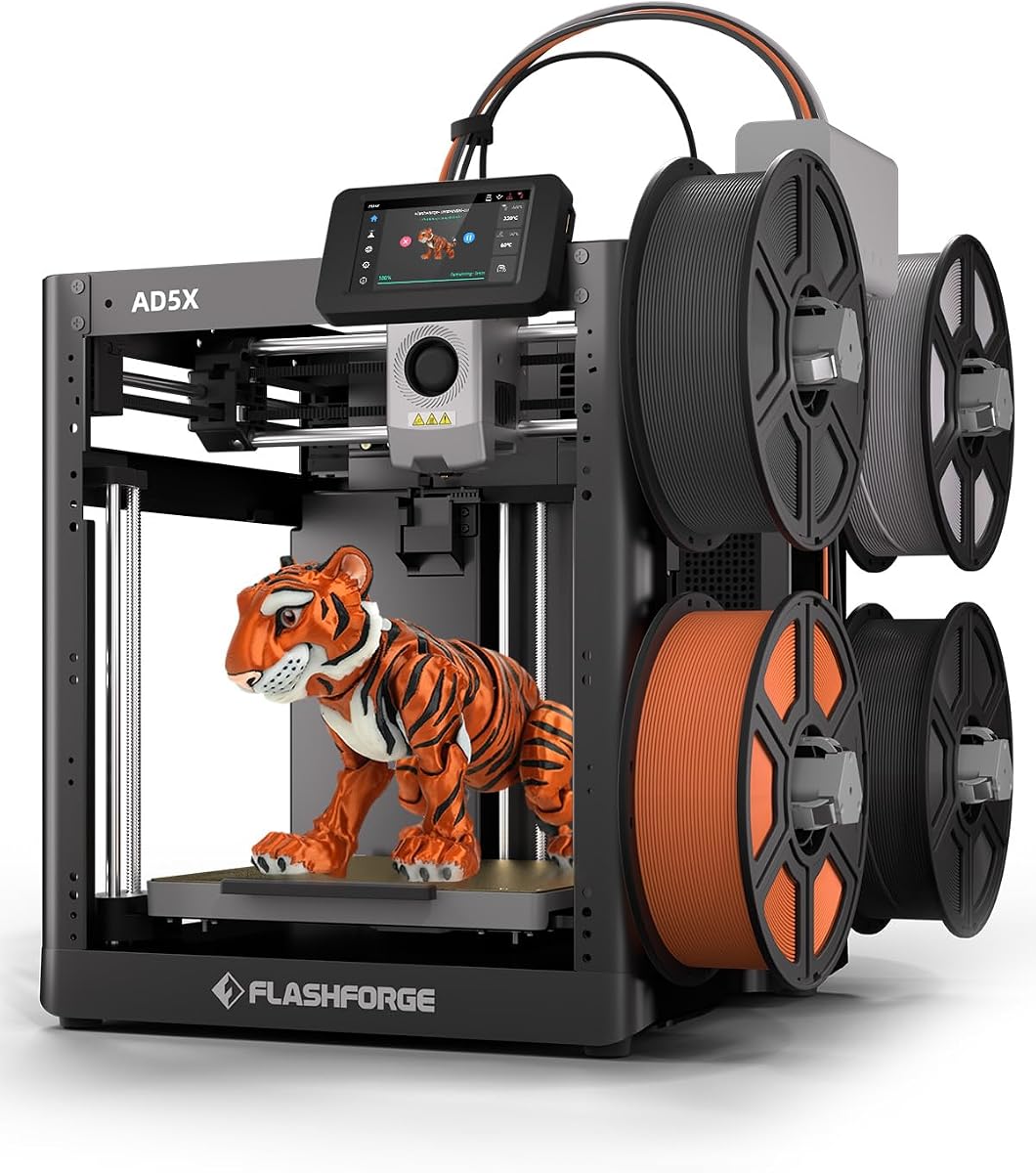
The AD5X offers a versatile combination of speed and multi-color capability, making it a flexible choice for beginners who want to explore different materials. Its CoreXY structure and auto leveling features ensure reliable and efficient performance.
We may earn a commission when you buy through this link, at no additional cost to you.
With support for up to 4 colors simultaneously, the AD5X enables vibrant prints that stand out. The 300°C direct drive extruder and various nozzle options allow for creative control, while the resume printing function prevents waste during power interruptions.
Users may find the software and setup slightly complex compared to simpler models, requiring some time to master. Additionally, the price is higher than basic single-color printers, but the features provide good value for those interested in advanced printing.
This printer is suitable for beginners who want a machine that can grow with their skills. It offers a balance of performance, versatility, and reliability that supports both simple and complex printing tasks.
The ability to swap nozzles from 0.25mm to 0.8mm gives you control over detail and speed depending on your project needs.
The Flash Maker mobile app allows you to manage and monitor prints from your phone, adding convenience for busy users.
We may earn a commission when you buy through this link, at no additional cost to you.
Choosing the right 3D printer involves understanding key factors that affect your experience and project results.
For beginners, ease of use is critical. Look for printers with automatic bed leveling, one-click calibration, and user-friendly interfaces. These features minimize the need for manual adjustments and troubleshooting.
A printer that is simple to set up and operate ensures that you spend more time creating and less time fixing errors.
Print speed affects how quickly you can complete projects. High-speed printers can reduce wait times significantly, making it easier to experiment with designs.
However, balance speed with quality. A machine that prints too fast without stability may result in lower accuracy or rough surfaces.
The build volume determines the maximum size of objects you can print. Consider what you plan to make and choose a printer with sufficient space.
Larger build volumes offer more flexibility but may take up more space and require more material for prints.
Most beginners start with PLA, which is easy to print. However, if you want to explore engineering materials, check if the printer supports PETG, ABS, or TPU.
Printers with higher nozzle temperatures and enclosed chambers handle advanced materials better and prevent warping.
Printers can be noisy, especially at high speeds. If you plan to print in shared spaces, look for models with noise-canceling technology or quiet motors.
A quieter printer enhances comfort and makes it easier to integrate into home or office environments.
Modern printers offer connectivity options like Wi-Fi or mobile apps. These features allow you to monitor prints remotely and manage files without being near the machine.
Good connectivity enhances convenience and helps you catch issues before a print fails.
Prices vary widely based on features. Determine your budget early and prioritize must-have features to find a printer that offers good value.
Remember that cheaper models may cost more in time if they require frequent manual adjustments or repairs.
Strong community support and warranty options are valuable for beginners. A large user community means more online resources and troubleshooting guides.
Choose a brand with responsive support to ensure you get help quickly when needed.
Start by reading the manual carefully and calibrating the printer according to the manufacturer's instructions. This ensures that your machine is set up correctly and ready for first prints.
Keep your printer clean by regularly checking the nozzle and removing any accumulated debris. Use appropriate cleaning tools and avoid harsh chemicals that could damage the components.
Store your filament in a dry, cool place to prevent moisture absorption. Humidity can degrade print quality, so consider using sealed containers or dryers for longer-term storage.
The Bambu Lab A1 is considered one of the easiest printers for beginners due to its full-auto calibration and user-friendly features. It minimizes the need for manual adjustments and ensures successful prints from the start.
Most beginners can start printing basic objects within a few hours of setup. Mastery takes time, but modern printers make it easy to create simple models quickly with minimal training.
Not necessarily. Beginners usually start with PLA, which does not require an enclosed chamber. However, if you plan to use ABS or ASA, an enclosed printer helps prevent warping and improves consistency.
The Creality Ender 3 V3 SE offers excellent value for beginners. It includes essential features like auto leveling and a direct extruder at a very affordable price point.
Most beginner printers fit on a standard desk or table, requiring about 1 to 2 square feet of space. Consider ventilation and clearance for cables when placing the printer.
Yes, if you want vibrant and creative prints without manual switching. Multi-color printers are great for kids and hobbyists who enjoy complex designs with multiple colors.
We recommend the Bambu Lab A1 as the top pick for most beginners due to its balance of ease of use and performance. For those on a budget, the Creality Ender 3 V3 SE offers excellent value.
Prioritize features that match your goals, such as print speed, material support, and ease of setup. A printer that grows with your skills will provide better long-term satisfaction.
Remember to check current prices and availability before purchasing. Offers and discounts change frequently, so comparing options ensures you get the best deal for your needs.