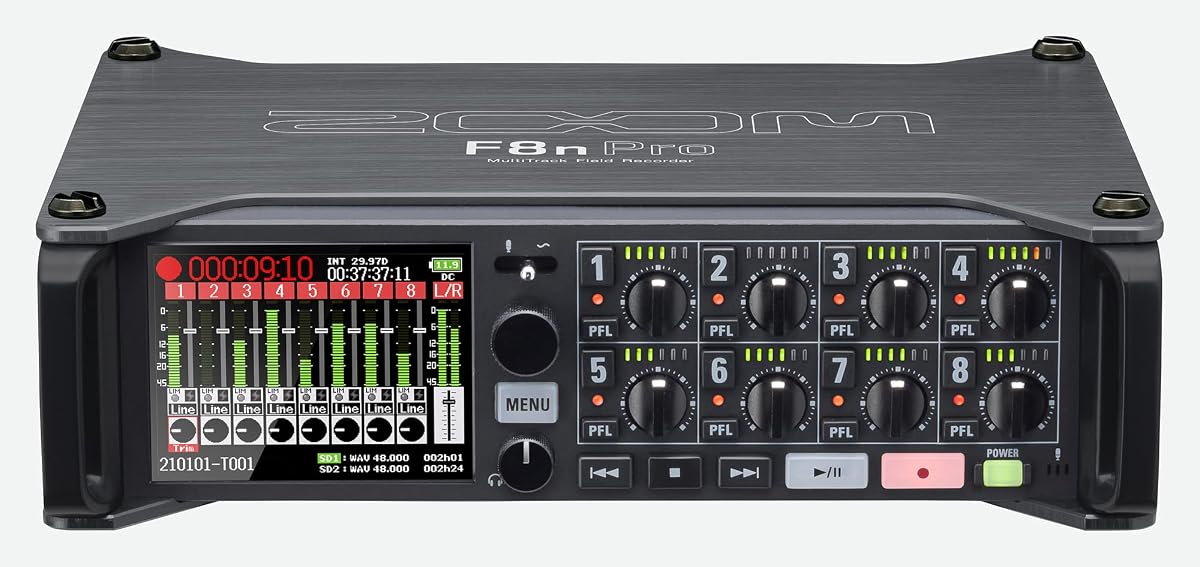
Zoom F8n Pro Field Recorder for Filmmakers with 8 Inputs & 10 Tracks
4.6Editor score
8-channel 10-track recording
Dual SD slots with redundancy
Industry-leading timecode accuracy
8-in 4-out USB interface
This guide compares the top audio field recorders for film, evaluating features like 32-bit float recording, timecode sync, and input channels to help you
Professional audio capture is critical for any film production. Field recorders allow you to isolate sound, manage levels, and ensure clarity. Whether you are on a busy set or shooting solo, the right device makes all the difference in your final mix.
We analyzed ten top models based on input flexibility, recording quality, and portability. Each unit was evaluated for its ability to handle dynamic ranges, sync with video, and operate reliably in varied environments. This list covers options from entry-level to professional gear.
Each pick below highlights key strengths and ideal use cases for filmmakers. We focus on real-world performance features like 32-bit float and timecode support. Note that product availability and pricing can change, so verify current details before purchasing your next recorder.
4.6Editor score

4.7Editor score

4.5Editor score
This side-by-side comparison outlines the core specifications and capabilities of each field recorder. Use this table to quickly identify input counts, bit depth, and unique features that align with your specific production needs and budget constraints.



The Zoom F6 is a powerhouse for professional audio capture. With a 4.7 rating, it stands out for its ability to handle extreme sound levels without clipping. It combines portability with deep feature sets that serious filmmakers demand.
We may earn a commission when you buy through this link, at no additional cost to you.
Its 32-bit float recording ensures you never lose dialogue even if levels spike unexpectedly. Six XLR inputs allow for multiple mic setups, while timecode I/O keeps audio locked to video. The rugged design ensures reliability on location shoots.
While the price is steep, the flexibility it offers justifies the cost for production teams. You may find the menus complex at first, but this allows for granular control. The trade-off is acceptable given the professional output quality.
Buyers needing reliable timecode and high input counts should choose this unit. It is perfect for small crews requiring broadcast-level specs in a portable frame. This recorder sets the standard for modern field audio.
32-bit float recording captures whispers and screams equally without distortion. This removes the need to constantly monitor gain during unpredictable shoots.
Frame-accurate sync simplifies post-production significantly. This avoids the hassle of aligning audio tracks manually in editing software.
We may earn a commission when you buy through this link, at no additional cost to you.
The Zoom F8n Pro offers maximum channel capacity for complex scenes. It holds a 4.6 rating for its robust build and advanced audio features. This device is designed for environments where audio safety is non-negotiable.
We may earn a commission when you buy through this link, at no additional cost to you.
Its dual SD slots allow redundant recording, saving you from data loss. The 0.2ppm timecode accuracy is unmatched in the market, ensuring perfect sync with cameras. Eight inputs let you capture every angle without extra hardware.
This unit is bulky and expensive, making it less ideal for solo shooters. However, for professional sets needing reliability, these drawbacks are manageable. The redundant backup gives peace of mind during critical takes.
Investors in high-end production workflows will find this essential. It serves as both a recorder and interface, maximizing utility. This is the top choice when you cannot afford any audio errors.
Recording to two cards simultaneously eliminates card failure risks. This is critical when re-shoots are impossible due to location limits.
Industry-leading accuracy ensures audio matches picture perfectly. This saves hours of manual syncing in post-production workflows.
We may earn a commission when you buy through this link, at no additional cost to you.
The Zoom H1 XLR brings professional features to a budget price. Rated 4.5, it offers 32-bit recording and XLR inputs in a small package. It is ideal for entry-level filmmakers needing better audio than a camera provides.
We may earn a commission when you buy through this link, at no additional cost to you.
It accepts external microphones easily, allowing for versatile setups. The OLED display helps you monitor levels accurately, reducing errors. You can store massive amounts of audio on compatible SDXC cards up to 1TB.
It lacks timecode for advanced sync, which limits complex workflows. The two-input limit restricts multi-mic setups. However, for single or dual channel interviews, it is a fantastic value that performs well above its weight.
Those starting out or needing a backup unit should buy this. It provides pro-quality sound without breaking the bank. This is the best entry point for serious field audio work.
You get 32-bit float recording at a low cost. This feature was previously reserved for high-end professional gear only.
Simple operation allows quick setup on location. New users can start recording immediately without reading manuals.
We may earn a commission when you buy through this link, at no additional cost to you.
The Zoom F3 is designed for real-world recording conditions. With a 4.6 rating, it ensures clean audio through ultra-low-noise preamps. Its small size makes it perfect for run-and-gun filmmaking where space is tight.
We may earn a commission when you buy through this link, at no additional cost to you.
Dual locking XLR inputs keep connections secure during movement. This is crucial when the recorder is mounted on a rig or hidden. Flexible power options allow you to keep recording without interruption over long days.
It lacks timecode and advanced features like the F6. However, for straightforward audio capture, it offers excellent quality. The price point makes it accessible for independent filmmakers needing reliable gear.
Buyers prioritizing size and noise performance should choose this unit. It fits easily into minimal kits while delivering professional results. This is a smart choice for solo creators on a budget.
Locking inputs prevent accidental disconnection during shoots. This avoids the frustration of lost audio due to loose cables.
Ultra-low-noise preamps ensure clean dialogue capture. Even quiet rooms sound professional with minimal background noise.
We may earn a commission when you buy through this link, at no additional cost to you.
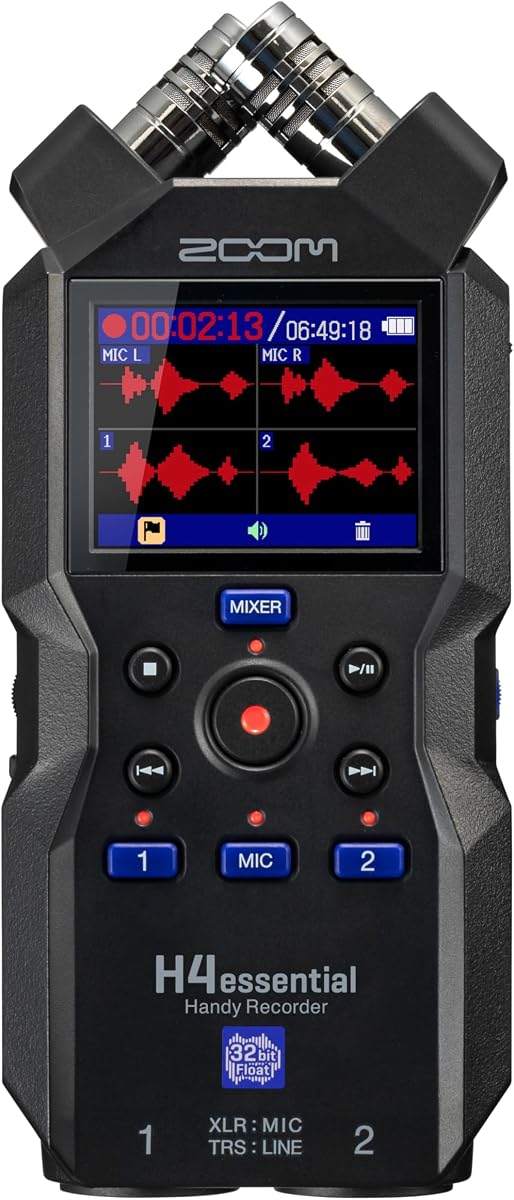
The Zoom H4 Essential captures more of the moment with confidence. Rated 4.4, it allows recording music, interviews, and video audio seamlessly. Built-in mics offer immediate setup, while external inputs provide flexibility for serious projects.
We may earn a commission when you buy through this link, at no additional cost to you.
Spoken menu guidance makes it accessible for visually impaired users. You can save backups to SD cards while streaming via USB-C. This dual capability streamlines workflow when connecting to phones or computers during recording.
It is slightly heavier than the H1 and lacks timecode. For complex sync workflows, this might be a limitation. However, its user-friendly design and backup options make it a strong contender for multi-purpose use.
Creators needing a versatile tool for audio and video should try this. It balances ease of use with professional features effectively. This unit is excellent for podcasters who also shoot video.
Spoken guidance ensures everyone can navigate settings easily. This inclusivity is rare in technical audio equipment.
Direct USB-C streaming supports live content creation. You can record locally while broadcasting simultaneously.
We may earn a commission when you buy through this link, at no additional cost to you.
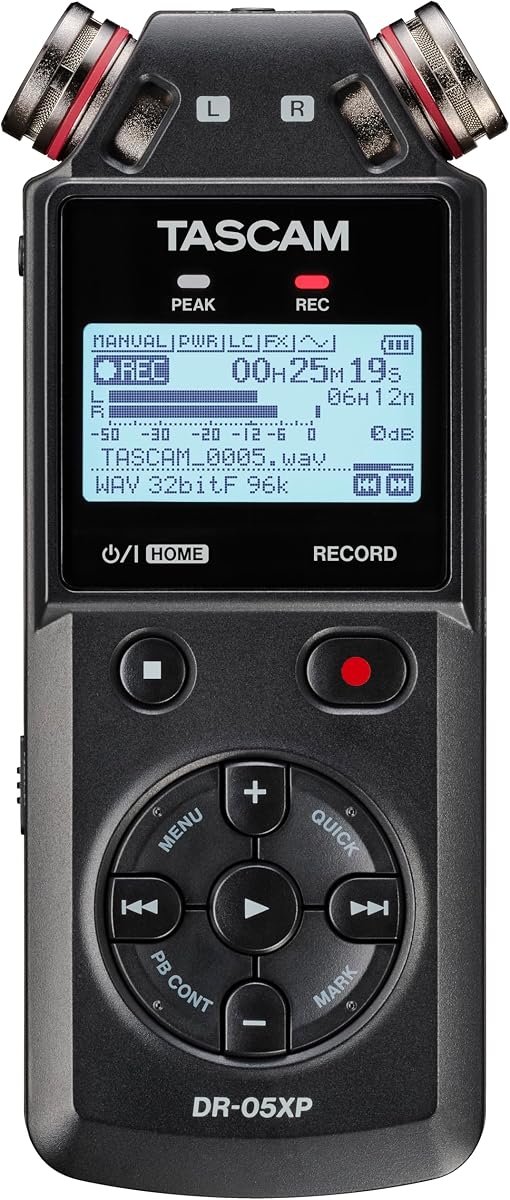
The TASCAM DR-05XP offers portable recording for many uses. Rated 4.2, it supports 32-bit float recording to prevent clipping. Its built-in mics handle loud environments well, making it a solid choice for interviews.
We may earn a commission when you buy through this link, at no additional cost to you.
You can use it as a USB-C interface for computer recording. This adds value for those needing an all-in-one tool. Up to 17.5 hours of operation ensures it lasts through long days without frequent battery changes.
It lacks XLR inputs, limiting microphone choices. It is best suited for stereo recording without external gear. For budget-conscious users needing a quick tool, this is a strong option.
Travelers and students should consider this unit. It is affordable and capable of delivering pro-quality results. This is a great secondary device for on-the-go recording needs.
Handheld design fits in pockets easily. You can capture ideas instantly without setup.
Long runtime supports full days of recording. This reduces the need to carry spare power packs.
We may earn a commission when you buy through this link, at no additional cost to you.
The Zoom H5 uses interchangeable capsules for ultimate flexibility. With a 4.7 rating, it adapts to different recording needs. The XYH-5 capsule offers high capacity for stereo, while other options expand its utility.
We may earn a commission when you buy through this link, at no additional cost to you.
It supports phantom power for condenser mics and a safety net feature. This ensures you never lose a critical take due to clipping. The USB interface works with PCs and iPads, supporting loop back for streaming.
It is an older model with a 32GB SD limit. This limits long-form recording compared to modern SDXC support. However, the capsule system makes it unique and highly versatile for various audio tasks.
Audio engineers needing adaptable microphones should choose this unit. It remains a reliable workhorse despite its age. This recorder is perfect for those wanting hardware flexibility.
Swappable capsules mimic camera lens flexibility. You can change mics without buying new recorders.
Background recording protects your main audio from clipping. This adds a layer of security to every session.
We may earn a commission when you buy through this link, at no additional cost to you.
The TASCAM DR-10L Pro offers wearable audio for filmmakers. Rated 4.4, it includes a matched lavalier mic for clear personal audio. It supports 32-bit float to capture whispers and screams without distortion.
We may earn a commission when you buy through this link, at no additional cost to you.
LTC Jam Sync keeps audio synced across multiple devices. The DR-10L Pro CONNECT App allows control of up to five units. Storage supports cards up to 512GB, offering endless capacity for long shoots.
Small controls can be hard to operate in the dark. App dependency for some features adds a layer of complexity. However, its stealthy design makes it ideal for discreet personal recording.
Filmmakers needing a hidden mic setup should consider this. It delivers professional results in a tiny package. This is a great companion for multi-cam setups.
Wearable design captures audio close to source. This reduces ambient noise significantly.
Control five units simultaneously via app. This simplifies multi-angle recording management.
We may earn a commission when you buy through this link, at no additional cost to you.
The Zoom H1 Essential helps creators improve sound easily. Rated 4.0, it captures clear stereo audio for videos and tutorials. It is ready when inspiration hits, making it a great tool for spontaneous recording.
We may earn a commission when you buy through this link, at no additional cost to you.
It connects via USB-C for streaming and calls. The built-in microphones handle real-world sound like nature and room tone. It allows you to record conversations with natural stereo sound for interviews.
It lacks XLR inputs, limiting external mic use. The rating is lower than higher-end models. However, for beginners or casual vloggers, it offers a massive upgrade over phone audio.
Starters looking to improve audio quality should buy this. It is easy to use and delivers polished results quickly. This is the perfect first step into field recording.
Simplified interface removes technical barriers. You can focus on content instead of settings.
Use as a mic for calls or recording. This flexibility makes it great for daily tasks.
We may earn a commission when you buy through this link, at no additional cost to you.
The Zoom F2 is the smallest wearable 32-bit float recorder. Rated 4.0, it captures clip-free audio without needing gain adjustment. This makes it perfect for interviews where you want to focus on content.
We may earn a commission when you buy through this link, at no additional cost to you.
It includes a lavalier mic with a screw-lock connector. You can record up to 15 hours on two AAA batteries. The REC Hold switch prevents accidental stops during critical shoots, ensuring safety.
Controls are minimal and require careful handling. It relies on AAA batteries which need monitoring. However, its discreet size allows for hidden audio capture that other recorders cannot match.
Vloggers and journalists should use this for discreet capture. It delivers pro-quality audio in a tiny package. This is the ultimate tool for unobtrusive field recording.
Small size allows placing audio discreetly. This helps avoid distracting subjects during interviews.
Up to 15 hours on two AAA batteries. This reduces battery weight significantly.
We may earn a commission when you buy through this link, at no additional cost to you.
Selecting the right field recorder requires understanding your specific production needs. Key factors include input count, bit depth, and sync capabilities. This guide helps you weigh these options to find the perfect match.
The number of XLR inputs determines how many microphones you can connect simultaneously. For multi-mic setups or interviews, 3 or more inputs are ideal. Ensure inputs support phantom power if using condenser mics.
Choose a model with enough inputs for your typical shoot. This prevents the need for extra mixers in the field.
32-bit float recording eliminates clipping by allowing audio levels to be adjusted after recording. This is crucial for unpredictable environments where levels vary wildly. It ensures you never lose dialogue regardless of input gain.
Look for this feature to save time on audio restoration. It is now standard on most professional recorders.
Timecode I/O synchronizes audio with video frames perfectly. This is vital for professional workflows where manual sync is impossible. Check if the recorder has TCXO for high accuracy.
Prioritize models with timecode if you shoot multi-camera scenes. It streamlines the entire post-production process.
Field recorders should be portable enough for solo shooters but sturdy enough for professional use. Consider weight and dimensions when packing for travel. Some models are designed specifically for run-and-gun filming.
Select a size that fits your rig or bag. Heavy units may be impractical for handheld shoots.
High-resolution audio files can be large, so storage limits matter. Look for SDXC support up to 1TB for extended sessions. Some models offer dual slots for redundancy against card failure.
Ensure the card support matches your recording length. SDXC cards are standard for modern high-capacity needs.
Long shoots require recorders that last all day. AAA or AA batteries are standard, but USB-C power options add flexibility. Up to 17.5 hours on some models ensures uninterrupted recording.
Choose a device with efficient power management. Backup power is always recommended for critical shoots.
Menus should be intuitive to adjust levels quickly. OLED displays help visualize audio waveforms. Some units offer spoken guidance for better accessibility during operation.
Evaluate how easy the menu is to navigate in dark settings. Simplicity often leads to better workflow on set.
Field recorders range from under $100 to over $700. Entry-level options like the H1 XLR work well for beginners, while pros need the F8n Pro for features. Define your budget to find the best balance.
Invest in quality features that match your needs. Over-buying can waste resources on unused capabilities.
Before recording, always check your storage cards and battery levels. Ensure the timecode is set if using multi-camera setups. Test all connections for XLR cables to avoid signal loss during shoots.
Adjust gain levels carefully or use 32-bit float settings to prevent clipping. Monitor audio via headphones to catch unwanted noise. Keep the device dry and away from extreme temperatures to maintain hardware longevity.
After use, transfer files securely to a backup drive. Clean the microphone grilles and ports with a soft brush. Store the recorder in a padded case to protect it from impacts and dust.
32-bit float recording captures audio with a massive dynamic range, preventing clipping even if levels spike unexpectedly. This technology allows you to adjust gain after recording, ensuring clean audio regardless of initial settings. It is a standard feature for modern professional recorders.
Timecode synchronizes audio with video frames, ensuring they play back together perfectly. This eliminates the need for manual syncing in post-production. It is essential for complex shoots where multiple cameras and recorders are used.
Not all recorders have XLR inputs. Basic models often rely on built-in stereo microphones. To use external mics, ensure the device has XLR/TRS combo inputs and phantom power support for condenser mics.
Recording time varies by model and power source. Some units last up to 17.5 hours on AA batteries, while others may be shorter. Using USB-C power can extend this time indefinitely if a power bank is available.
Most recorders do not include SD cards. You must purchase compatible SDXC or SDHC cards separately. Always check the maximum supported capacity to avoid compatibility issues with high-resolution recording.
A lavalier recorder is a compact wearable unit that captures audio from a small clip-on microphone. It is ideal for interviews and discreet recording. Some models like the TASCAM DR-10L Pro include the mic in the box.
Yes, many models like the Zoom F8n Pro or F6 can function as USB audio interfaces. This allows you to record directly to a computer for streaming or editing. It adds flexibility for hybrid recording setups.
While boom poles provide optimal sound capture, they are not strictly required. A handheld recorder can work for many applications. If using a boom, ensure your recorder has enough inputs to handle the microphone.
The Zoom F6 and F8n Pro lead the list with their advanced features and timecode capabilities. For budget-conscious buyers, the H1 XLR offers a solid entry point into professional field audio.
Prioritize inputs and bit depth when making your decision. Ensure the device fits your workflow whether you are solo or on a large crew. These tools will significantly elevate your audio production quality.
Prices and availability may fluctuate, so check current listings before purchasing. These recorders are designed to endure and perform well in demanding conditions. Choose the one that best fits your creative and technical needs.