
ESP32-S3-Nano Microcontroller
5.0Editor score
Integrated 16MB Flash memory
Arduino IoT Cloud compatible
Seamless Arduino and Python switch
This guide compares the best Arduino Nano ESP32 boards for IoT and embedded projects, evaluating performance, connectivity, and features for makers.
The Arduino Nano ESP32 represents a significant leap in microcontroller capabilities, blending powerful processing with seamless wireless connectivity. This compact board is designed for developers who need robust performance in a small form factor. Whether you are building smart home devices or industrial sensors, choosing the right variant is crucial for project success.
We have evaluated ten top-rated boards based on processor speed, wireless range, memory capacity, and ease of use. Our analysis focuses on real-world application support including MicroPython compatibility and HID profiles. Each entry in this list offers unique strengths tailored to different development needs and budget constraints for makers.
Every product review highlights specific advantages and potential limitations to help you make an informed decision quickly. We prioritize boards that offer reliable connectivity and strong community support for long-term viability. Please note that availability and specific terms may change, so verify current details before purchasing your next development board.
5.0Editor score

4.6Editor score

4.8Editor score
The following table provides a side-by-side comparison of all ten selected boards. It highlights key specifications such as processor type, memory size, and wireless capabilities to help you identify the best fit for your specific embedded project requirements quickly and efficiently.


The Arduino Nano ESP32 stands out as a top-tier choice for modern embedded development. It boasts a 4.6-star rating and delivers high performance with its dual-core ESP32-S3 processor. This board is ideal for users who need robust computational power in a compact form factor.
We may earn a commission when you buy through this link, at no additional cost to you.
Its wireless capabilities are impressive, supporting both Wi-Fi and Bluetooth 5.0 for seamless connectivity. The inclusion of HID support makes it unique, allowing it to act as a keyboard or mouse. This feature opens up creative possibilities for custom input devices and automation projects.
While it performs exceptionally well, some users might find the price slightly higher than generic ESP32 clones. However, the official support and quality assurance justify the cost for professional applications. The learning curve for MicroPython is manageable for those familiar with Python basics.
This board is perfect for developers building IoT devices or smart home systems that require reliable connectivity. We recommend it for projects needing advanced wireless features or custom peripheral interactions. It balances power and usability better than many competitors in this category.
The board supports seamless communication with networks and cloud platforms via Wi-Fi and Bluetooth 5.0.
Developers can use MicroPython for rapid prototyping and easier code management on this board.
We may earn a commission when you buy through this link, at no additional cost to you.
This development board offers incredible value with a perfect 5.0-star rating from users. It features an ESP32-S3R8 chip that provides substantial memory and processing power. For budget-conscious makers, it delivers almost all the features of premium boards without the high cost.
We may earn a commission when you buy through this link, at no additional cost to you.
The integration of 16MB Flash memory allows for complex projects without external storage needs. It supports Arduino IoT Cloud, enabling remote monitoring and control effortlessly. Users can switch between Arduino and MicroPython programming seamlessly, offering great flexibility for different skill levels.
While it lacks the official branding of the Arduino Nano, its functionality is robust for most applications. Some batches might have minor build inconsistencies, but these rarely affect performance. It is a fantastic entry point for those wanting to explore ESP32 capabilities without overspending.
We suggest this board for hobbyists and students starting with wireless projects. It is particularly useful for prototypes where cost efficiency is a priority. The ability to integrate with the cloud makes it suitable for early-stage smart device development.
Supports Arduino IoT Cloud for easy monitoring and control of your projects from anywhere.
Features 16MB Flash memory to handle larger codebases and data storage needs.
We may earn a commission when you buy through this link, at no additional cost to you.
This board represents the high end of the Nano ESP32 category with advanced features. It runs on a RISC-V dual-core processor and includes extensive connectivity options like MIPI interfaces. With a 4.8-star rating, it is favored by professionals needing high-speed data processing.
We may earn a commission when you buy through this link, at no additional cost to you.
The inclusion of image and voice processing interfaces makes it suitable for AI and vision projects. Security features like Secure Boot and Flash Encryption protect data privacy effectively. It supports various peripherals including Ethernet and SD card slots for robust industrial applications.
The complexity of the board might be overwhelming for absolute beginners in embedded systems. It requires more specialized knowledge to utilize the advanced interfaces fully. However, for experienced developers, the performance and connectivity options are unmatched in this size class.
We recommend this board for industrial IoT or smart display projects requiring high bandwidth. It is ideal when security and image processing are critical requirements. Its robust architecture ensures reliability in demanding environments where standard boards fall short.
Provides image and voice processing interfaces including JPEG Codec and H264 encoder.
Includes Secure Boot and cryptographic accelerators to ensure data safety and integrity.
We may earn a commission when you buy through this link, at no additional cost to you.
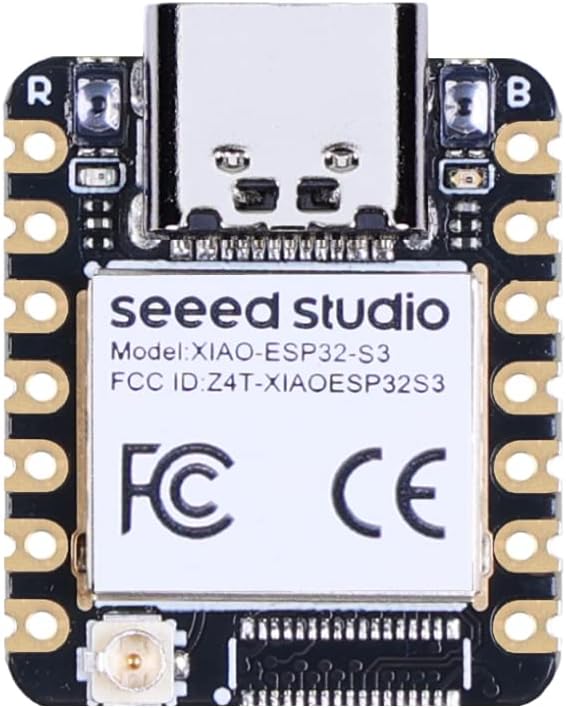
This board is designed specifically for space-constrained projects like wearables. It features a thumb-sized form factor that fits easily into tight enclosures. With a 4.7-star rating, it is praised for its efficiency and robust wireless performance despite its small size.
We may earn a commission when you buy through this link, at no additional cost to you.
The integrated lithium battery charge management simplifies portable project designs. It supports deep sleep modes with power consumption as low as 14 microamperes. This makes it perfect for battery-operated devices that need to run for long periods without recharge.
While the small size is great for portability, soldering to it can be tricky for beginners. The limited physical pins might restrict complex wiring setups. However, its performance and power efficiency are top-notch for the intended use cases.
We suggest this board for smartwatches or health monitoring devices. It is also suitable for robotics where weight is a factor. The strong RF performance ensures reliable connectivity even in challenging environments.
Offers four power consumption models including deep sleep mode for extended battery life.
The classic XIAO form factor measures 21 x 17.5mm for space-limited projects.
We may earn a commission when you buy through this link, at no additional cost to you.
This package offers three development boards, making it ideal for small teams or bulk prototyping. The ESP32-S3FH4R2 module provides reliable wireless connectivity and processing power. Users appreciate the ability to solder the module directly onto carrier boards for custom designs.
We may earn a commission when you buy through this link, at no additional cost to you.
The independent power supply setting allows for flexible low-power configurations in different scenarios. Castellated module edges enable compact integration into custom PCBs. It is a strong choice for developers looking to mass-produce small IoT devices efficiently.
Soldering the module directly requires some precision and skill which might be a hurdle. Documentation is basic so community forums are often needed for help. However, the cost per unit is very competitive for production runs.
We recommend this board for custom carrier board designs or small production batches. It is best suited for developers who have soldering experience and need flexibility. The value of getting three units makes it a smart pick for experimentation.
The castellated module design allows soldering directly to carrier boards for custom layouts.
Supports flexible clock and module power supply settings to reduce consumption.
We may earn a commission when you buy through this link, at no additional cost to you.
This kit is designed for newcomers to IoT and electronics. It includes a powerful ESP-32 board along with over 35 electronic components. The rating of 4.3 reflects its value as an educational tool for students and hobbyists.
We may earn a commission when you buy through this link, at no additional cost to you.
The 30+ projects with complete code help users learn the fundamentals quickly. You can build weather stations or smart controllers without prior experience. The tutorials cover circuits and coding, ensuring a smooth learning curve for new users.
While it is perfect for learning, it is bulkier than a Nano board. Many components in the box might remain unused for advanced users. However, the cost is justified by the sheer volume of parts and learning materials provided.
We suggest this kit for educators or families wanting to learn together. It provides everything needed to start building real-world devices immediately. The focus on learning makes it a top choice for first-time buyers.
Includes a detailed tutorial guide with over 35 projects and circuit diagrams.
Contains sensors, displays, motors, and input devices for diverse project types.
We may earn a commission when you buy through this link, at no additional cost to you.
This board focuses on secure connectivity for smart applications. It features a dedicated Secure Element for hardware-level encryption ensuring data privacy. With a 4.5-star rating, it is trusted for projects where data security is paramount.
We may earn a commission when you buy through this link, at no additional cost to you.
The u-blox NINA-W102 module provides reliable Wi-Fi and Bluetooth Low Energy. It is fully supported by the Arduino IDE making development straightforward. The pre-soldered headers simplify the connection to breadboards and external components.
It lacks the raw processing power of newer ESP32 chips and Python support. However, its stability and security features make it ideal for commercial IoT prototypes. The community support ensures long-term access to libraries and guides.
We recommend this board for applications requiring secure cloud communication. It is suitable for smart home controllers where safety is critical. The balance of ease of use and security makes it a solid choice for professionals.
The u-blox ATECC608A Secure Element provides hardware-level encryption for data.
Equipped with a robust module that connects seamlessly to networks.
We may earn a commission when you buy through this link, at no additional cost to you.
This board utilizes the classic ESP32 architecture which is well-documented and tested. It supports 2.4GHz Wi-Fi and Bluetooth 4.2 for standard wireless projects. A 3-pack option provides excellent value for teams or bulk projects needing multiple units.
We may earn a commission when you buy through this link, at no additional cost to you.
The Freertos protocol support ensures stable multitasking performance in complex applications. It offers ultra-low power consumption modes for battery-operated devices. The wide community support means finding code examples is extremely easy.
The older Bluetooth version might be a limitation for some modern apps. Many variants still use Micro-USB rather than USB-C. Despite this, it remains a reliable workhorse for general-purpose IoT applications.
We suggest this board for standard IoT projects requiring proven stability. It is perfect for users who want to stick to familiar technology. The value pack makes it a smart choice for expanding a lab setup.
Uses the classic ESP32 design that is well-supported and stable.
Sold as a three-pack providing multiple units for diverse prototyping needs.
We may earn a commission when you buy through this link, at no additional cost to you.
These boards update the classic ESP32 with a modern USB-C port for connectivity. The three-pack allows you to have multiple boards ready for deployment. With a 4.7-star rating, users appreciate the balance of price and functionality.
We may earn a commission when you buy through this link, at no additional cost to you.
Over-the-Air updates allow you to update firmware without physical reconnection. This is vital for deployed devices that need frequent changes. The dual-core processor handles sensor processing and communication efficiently.
The Bluetooth 4.2 version is less advanced than newer BLE 5 standards. However, for most Wi-Fi based projects it is sufficient. The USB-C convenience is a significant upgrade over older Micro-USB boards.
We recommend this set for makers needing multiple units with modern ports. It is great for projects requiring remote updates after deployment. The value and connectivity make it a strong contender for hobbyists.
Supports OTA updates so you can upgrade deployed boards without physical access.
Features a USB-C port for faster and more reliable power and programming.
We may earn a commission when you buy through this link, at no additional cost to you.
This board combines a powerful Renesas microcontroller with ESP32-S3 connectivity. It features an integrated LED matrix for instant visual feedback without external parts. A 4.7-star rating highlights its advanced capabilities for complex systems.
We may earn a commission when you buy through this link, at no additional cost to you.
The inclusion of CAN and Qwiic connectors supports industrial and sensor applications. The high-precision DAC allows for accurate analog signal generation. It is designed for projects needing robust processing alongside wireless communication.
It is larger than the Nano format so space might be a constraint. The advanced features might be overkill for simple hobby projects. However, its versatility makes it a unique tool for professional applications.
We suggest this board for industrial automation or advanced robotics. The built-in display and connectors simplify wiring and design. It is an excellent choice for users needing a full-featured platform.
Includes a built-in 12×8 LED matrix for displaying status or messages.
Features CAN and Qwiic connectors for robust communication with industrial sensors.
We may earn a commission when you buy through this link, at no additional cost to you.
Choosing the right Arduino Nano ESP32 board requires balancing power, connectivity, and project needs. This guide outlines the key factors to consider before making your purchase decision.
Look for boards with dual-core processors running at 240 MHz to handle complex tasks like data processing and AI. Higher performance ensures smooth operation in resource-intensive applications.
Prioritize models with sufficient RAM and Flash memory to store your code and data efficiently.
Ensure the board supports Wi-Fi and Bluetooth 5.0 for modern device communication standards. Strong RF performance is vital for remote projects needing stable connections.
Check for antenna options like U.FL connectors if range is a priority for your application.
For battery-operated devices, select boards with deep sleep modes and efficient power management. Low current draw extends battery life significantly in portable projects.
Consider boards with built-in battery charging for easier portable power handling.
Check compatibility with MicroPython if you prefer Python over C++ for faster development. Ease of coding impacts how quickly you can build prototypes.
Ensure the board supports Arduino IDE compatibility for broad library access.
Modern USB-C ports are preferable for faster programming and power delivery. Ensure the board has enough GPIO pins for your sensors and peripherals.
Look for specialized interfaces like Qwiic or CAN if you need industrial connectivity.
Secure Boot and hardware encryption are essential for applications handling sensitive data. Avoid boards without encryption if deploying public devices.
Verify the board has built-in security elements to prevent unauthorized access.
Nano-sized boards are ideal for wearables or space-constrained designs. Ensure the footprint fits your enclosure requirements.
Consider castellated modules if you plan to solder onto custom carrier boards.
Choose boards with official support or large communities for easier troubleshooting. Documentation quality affects how quickly you can learn new features.
Look for models with active online forums and library compatibility.
Start by installing the latest Arduino IDE and necessary drivers to ensure your computer recognizes the board. Use the USB-C port for stable power and uploading code to the device.
Handle the pins carefully to avoid bending or damage during wiring. Use breadboards or carrier boards to protect the headers during prototyping.
Store your board in a static-free bag when not in use to prevent electrical damage. Regularly update your firmware to maintain security and performance standards.
Yes most boards in this guide support MicroPython for easier coding. It allows developers to use Python for embedded projects rather than C++. Check compatibility before purchasing to ensure it suits your workflow.
The ESP32-S3 focuses on AI and Wi-Fi capabilities while the ESP32-P4 adds RISC-V processing and camera interfaces. The S3 is better for general IoT while P4 suits image processing. Choose based on your specific application needs.
Yes almost all boards listed are compatible with the official Arduino IDE. You may need to install specific board packages to access all features. This allows access to a vast library of community code.
Many boards support Over-the-Air updates allowing remote firmware changes. Configure OTA settings in your project code to enable this feature. It is useful for deployed devices that are hard to reach.
The Seeed Studio XIAO ESP32S3 is excellent for battery use due to deep sleep modes. It has built-in power management for long runtime. This saves energy and extends battery life significantly.
Yes the Arduino Nano ESP32 and ESP32-S3-Nano support HID profiles. This allows the board to act as a keyboard or mouse. It is useful for custom input devices and automation tools.
We have reviewed the top ten boards ranging from budget friendly to high performance. Each offers unique strengths suitable for different IoT and embedded project requirements.
Consider your specific needs like power consumption or security features when selecting a model. A board that fits your workflow will save time and effort during development.
Please verify current availability and pricing before making your purchase decision. Technology evolves quickly so always check for the latest firmware support.