
Anycubic Kobra X
4.2Editor score
Native 4-color printing
600 mm/s max speed
LeviQ 3.0 leveling
Finding the right 3D printer for Dnd miniatures requires balancing detail resolution with speed and ease of use. Whether you prefer resin for fine features or FDM for durability, the right machine transforms your tabletop gaming experience.
This guide compares ten leading models tested for precision, reliability, and multi-color capabilities. We evaluated resolution, build volume, and user experience to help you choose the perfect printer for your miniature collection.
Each pick highlights standout features, pros, and cons to simplify your decision. Prices fluctuate often so check current listings before purchasing to ensure you get the best value for your gaming setup.
4.2Editor score

4.4Editor score

4.5Editor score
As an Amazon Associate we earn from qualifying purchases.
This side-by-side comparison helps you evaluate key specs across all ten printers to find the ideal match for your miniatures printing needs and budget constraints.






The Bambu Lab A1 ranks as the top pick for its balance of speed and ease. It delivers high precision for miniatures and supports multi-color printing seamlessly with optional AMS.
We may earn a commission when you buy through this link, at no additional cost to you.
Its standout features include full auto calibration and active flow rate compensation. This ensures your miniature details remain crisp without manual tweaking after every print.
Trade-offs include needing to buy AMS lite separately for multi-color and lack of enclosure. These are acceptable for beginners needing speed over advanced material support.
Ideal for gamers wanting reliable multi-color miniatures without tinker stress. We recommend it for hobbyists prioritizing performance and ease of use.
Add vibrant highlights to faces or armor with multi-color prints using AMS lite for unmatched visual impact on your tabletop.
Auto leveling and Z-offset eliminate first layer issues, ensuring every miniature bases print perfectly flat and ready for painting.
We may earn a commission when you buy through this link, at no additional cost to you.
The Bambu Lab P2S is a premium choice for serious miniatures creators needing speed and multi-color fidelity. It handles complex projects with advanced features like AI monitoring.
We may earn a commission when you buy through this link, at no additional cost to you.
Its strengths include the AMS 2 Pro for seamless multi-material printing and high-speed precision up to 600 mm/s. This reduces wait times for large campaign batches.
The high cost and AMS requirement may deter budget buyers. However, professionals valuing reliability and speed find it worth the investment.
Perfect for studios producing detailed painted miniatures. It excels for advanced users wanting robust, production-level FDM performance.
Use water-soluble supports for intricate overhangs on dynamic poses with multi-material compatibility for cleaner results.
AI failure detection alerts you to print issues instantly, saving time and filament on costly multi-hour miniature batches.
We may earn a commission when you buy through this link, at no additional cost to you.
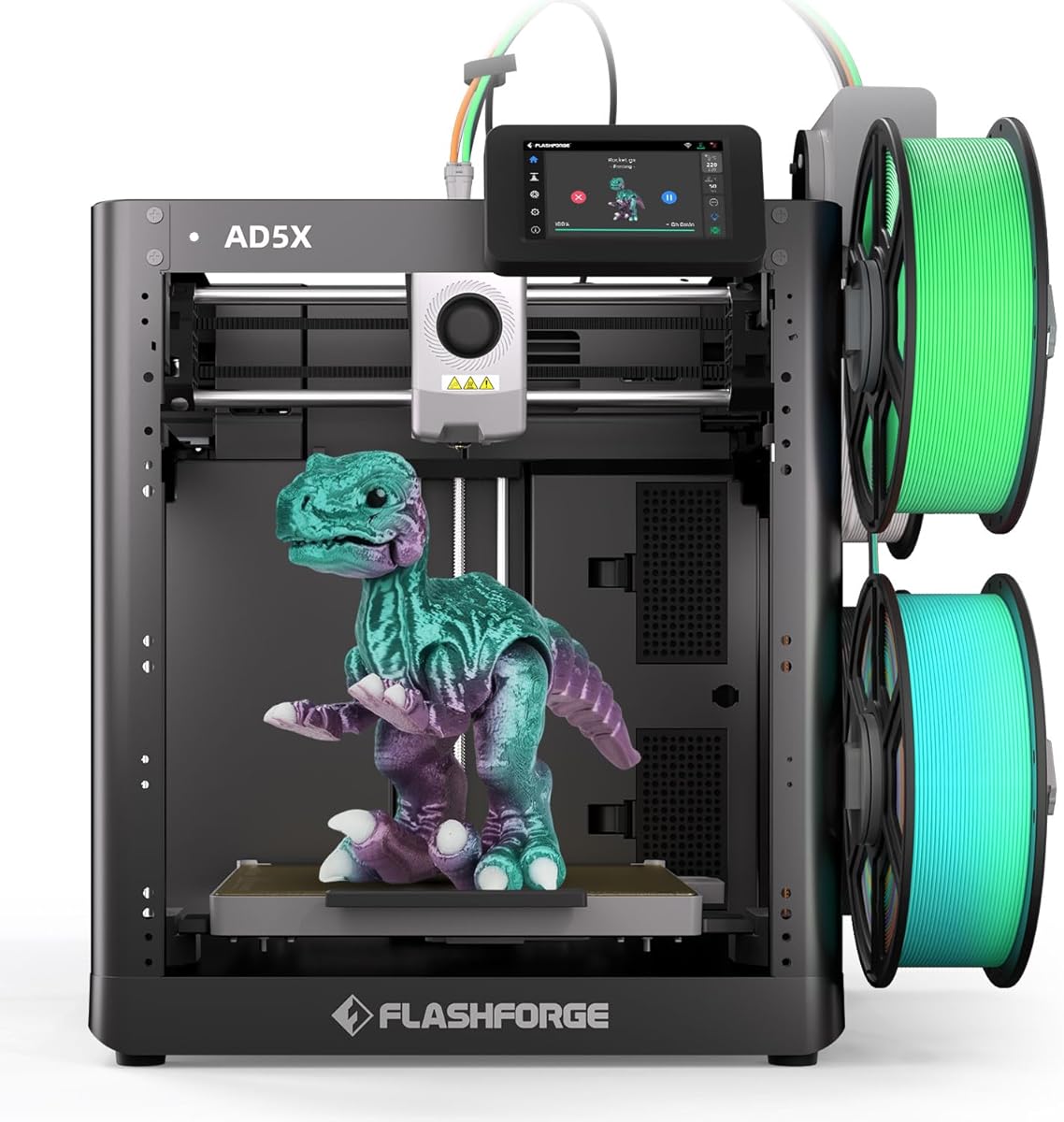
The FLASHFORGE AD5X offers compelling multi-color capabilities at a competitive price. Its 4-color IFS system enables vibrant miniatures without expensive add-ons.
We may earn a commission when you buy through this link, at no additional cost to you.
Key strengths are the high-speed CoreXY structure and broad material support up to 300°C. It handles flexible filaments and standard PLA well for versatile projects.
Some users report vibration during fast prints. Fine-tuning settings can mitigate this, making it suitable for hobbyists seeking speed and color.
Best for budget-conscious gamers wanting multi-color FDM output. We suggest it for those experimenting with colorful miniatures at high speed.
Print detailed miniatures with natural color transitions using the IFS system that manages multiple spools automatically.
The 300°C nozzle supports advanced filaments, expanding creative options for durable miniatures with unique textures and finishes.
We may earn a commission when you buy through this link, at no additional cost to you.
Resin printers like the phrozen Sonic Mini 8K S excel at ultra-fine detail for tabletop miniatures. Its 8K LCD ensures every texture is crisp.
We may earn a commission when you buy through this link, at no additional cost to you.
Strengths include the 22 micron XY resolution and user-friendly interface for beginners. It delivers museum-quality prints ideal for high-end gaming figures.
Resin requires careful handling and curing. The extra steps and material costs may deter casual users, but the detail is unmatched.
Best for hobbyists prioritizing fine detail over speed. We recommend it for painters wanting realistic textures on heroes and monsters.
Every detail from facial expressions to fabric folds is sharp thanks to the high-resolution 8K mono LCD technology.
The small footprint fits on any desk, making it perfect for home studios or small gaming collections.
We may earn a commission when you buy through this link, at no additional cost to you.
The P1S offers robust enclosure benefits for better print quality on miniatures. It combines speed and ease for reliable results.
We may earn a commission when you buy through this link, at no additional cost to you.
Key strengths include the fully enclosed body and automatic bed leveling. This ensures consistent prints with minimal user intervention or calibration.
AMS compatibility requires extra purchase. The focus on standard filaments limits advanced material use but suits most gamers.
Ideal for home offices needing a reliable and fast workhorse. It suits hobbyists wanting consistent FDM results without fuss.
The enclosure maintains consistent temperature, reducing warping on larger miniature bases for flat and stable results.
Ready to print in 15 minutes so you can start your first miniature batch with minimal assembly time.
We may earn a commission when you buy through this link, at no additional cost to you.
The Adventurer 5M Pro brings premium features to FDM printing. Its auto-leveling and high speed simplify the workflow for miniatures.
We may earn a commission when you buy through this link, at no additional cost to you.
Strengths include vibration compensation for smooth finishes and a quiet enclosure. These ensure clean prints in shared spaces like homes.
Cost may exceed budget needs. The software can be finicky but overall it delivers reliable performance for most users.
Best for users wanting automation and quiet operation. We suggest it for those valuing ease and comfort in printing environments.
Advanced algorithms reduce ghosting and ringing, ensuring clean edges on detailed miniature armor or scales.
Operates under 50dB allowing uninterrupted work sessions while prints run in the background.
We may earn a commission when you buy through this link, at no additional cost to you.
The AD5X variant focuses on productivity with multi-material capabilities. It offers robust features for users scaling their printing output.
We may earn a commission when you buy through this link, at no additional cost to you.
Strengths include full auto calibration and vibration suppression for consistent results across many miniature parts. IFS handles multiple materials.
Calibration may need tweaking for optimal prints. DIY elements require patience but offer flexibility for customization.
Perfect for makers needing efficiency and versatility. We recommend it for those wanting advanced features at a mid-range cost.
Full auto leveling ensures the first layer adheres evenly every time, reducing failed prints for batch production.
Print parts using different materials like PLA for bodies and TPU for flexible accessories in one print run.
We may earn a commission when you buy through this link, at no additional cost to you.
The A1 Mini brings reliable Bambu tech to a compact form. It suits smaller spaces without sacrificing essential precision.
We may earn a commission when you buy through this link, at no additional cost to you.
Strengths include auto calibration and active flow rate compensation. These ensure consistent detail on small tabletop miniatures.
Limited volume may slow large campaign production. The need for AMS lite adds cost but keeps base affordable.
Ideal for beginners with desk space limits. It excels for hobbyists needing reliable detail in a small package.
Its compact modular layout saves space, allowing printing on crowded desks or shelves.
Active motor noise cancellation keeps levels at 48 dB, perfect for shared workspaces.
We may earn a commission when you buy through this link, at no additional cost to you.
The Snapmaker U1 redefines multi-color printing with 4 toolheads. It minimizes waste and maximizes speed for advanced miniatures.
We may earn a commission when you buy through this link, at no additional cost to you.
Its strengths include true multi-material support and a 5-second tool changer. This reduces waste by 5X compared to traditional FDM.
High cost may limit buyers. The complexity is balanced by a library and smart features for professionals.
Best for advanced users needing mixed material prints. We recommend it for studios wanting efficient multi-material workflows.
Combine rigid and flexible parts in one print for durable miniatures or accessories.
Auto tool swaps reduce downtime, keeping your workflow smooth and productive.
We may earn a commission when you buy through this link, at no additional cost to you.
The Kobra X delivers native color printing at an accessible price. It simplifies FDM for colorful tabletop miniatures.
We may earn a commission when you buy through this link, at no additional cost to you.
Strengths include the built-in 4-color capability and LeviQ 3.0 leveling. The large library helps new users start immediately.
Filament not included adds to initial costs. Minor software bugs exist but are being addressed by the developer.
Best for budget buyers wanting color ready out of box. It suits hobbyists needing quick starts with vibrant results.
No purging needed for color changes, reducing material waste and print time significantly.
Access thousands of models directly via app to jumpstart your next project.
We may earn a commission when you buy through this link, at no additional cost to you.
Choosing the right printer depends on your budget, desired detail, and color needs. These factors will help you decide between resin and FDM.
Resin printers offer superior detail for miniatures while FDM printers provide durability and easier material handling. Resin excels in texture fidelity but requires curing.
Decide if you prioritize fine details or ease of use before selecting resin or FDM technology.
Look for XY resolutions around 20-30 microns for detailed miniatures. Higher resolution ensures smooth textures and clean edges on complex figures.
Prioritize higher XY resolution for better miniature fidelity.
Ensure the build volume accommodates your largest miniatures or multiple prints. Larger volumes reduce print time for batch production of entire campaigns.
Match the build volume to your batch size needs.
If you want vibrant miniatures, choose printers with built-in multi-color systems or compatible AMS modules. These features reduce manual swaps and add visual flair.
Select native multi-color or AMS-compatible FDM printers for vibrant miniatures.
Higher speeds like 500-600 mm/s reduce wait time for large batches. Consider speed alongside detail to balance production needs and time.
Prioritize speed for faster campaign output.
Check supported filaments like PLA, PETG, or TPU for flexible parts. Resin printers require specific resins for proper curing and detail.
Ensure compatibility with your preferred miniature materials.
Look for auto-calibration, touchscreen interfaces, and beginner-friendly setup. These features reduce frustration and allow more time on creative tasks.
Choose models with automation to simplify workflow.
Balance initial cost with ongoing expenses like resin or filament and maintenance. Some models offer better value if you need specific features like color.
Evaluate total costs including consumables and accessories.
Start by leveling the bed or running auto-calibration before every print to ensure proper first layer adhesion. Use appropriate support structures for complex miniatures.
Store filaments and resins in dry cool conditions to prevent moisture damage. Clean build plates regularly with alcohol for smooth removal.
Keep firmware updated and check nozzles or LCDs for wear. Proper maintenance extends printer life and ensures consistent miniature quality.
Resin printers like the phrozen Sonic Mini 8K S offer the highest detail for miniatures due to 22 micron resolution. FDM printers can also produce miniatures but may lack fine texture fidelity unless using high-resolution settings.
Yes, FDM printers with multi-color systems like the Anycubic Kobra X or Bambu Lab A1 with AMS allow multi-color prints. These reduce manual swaps and improve color transitions on figures.
Resin printers need curing units and protective gear like gloves and ventilation due to chemicals. They also require cleaning and curing stations for finished miniatures.
PLA is ideal for miniatures due to ease of printing and low warping. PETG and TPU offer durability for flexible parts like accessories or bases.
Modern printers can print miniatures in 15 minutes or less depending on size and detail. Speed and quality balance is key for batch production.
Auto-calibration saves time and ensures consistent first layers, reducing failed prints. It is especially helpful for beginners and busy production environments.
Many models like the Bambu Lab A1 Mini are beginner friendly with auto-leveling and intuitive interfaces. FDM options are generally easier than resin for newcomers.
Regular nozzle cleaning, bed leveling checks, and firmware updates keep printers running smoothly. Resin printers require screen and vat maintenance too.
The top picks offer a range from beginner-friendly auto-calibrators to premium multi-color FDM and high-detail resin solutions. Select based on your balance of color, detail, and budget.
Prioritize features like auto-leveling and multi-color compatibility to save time and enhance creativity. Consider your workspace size and material preferences too.
Prices change frequently, so verify current deals before buying. With the right choice, your tabletop gaming miniatures will come to life like never before.