
VIVOSUN AeroDrain D12
4.3Editor score
12L daily moisture removal
Vivosun app integration
Caster wheels for mobility
Discover the top 10 dehumidifier for grow tents options for October 2026. We compare capacity, noise, and smart features to help you choose the ideal unit.
Maintaining optimal humidity is critical for plant health in enclosed grow spaces. A reliable dehumidifier for grow tents prevents mold, manages transpiration, and ensures consistent vapor pressure deficits throughout your cultivation cycle.
We evaluated ten leading models based on moisture removal capacity, noise levels, smart connectivity, and compatibility with tent environments. Our analysis prioritizes units that offer precision control and efficient operation without disrupting sensitive plant growth stages.
Each selection highlights specific strengths for different tent sizes and budgets. Please note that availability and pricing fluctuate frequently, so verify current details before purchasing to ensure you get the best value for your setup.
4.3Editor score

3.8Editor score

3.9Editor score
This side-by-side comparison highlights key specifications across all ten selected units to help you quickly identify which model fits your specific tent size and cultivation needs.


The AC IN HYDRONE 5 stands out as a specialized tool for growers needing precise environmental management. Its unique PWM-controlled motor allows for ten distinct drying levels, offering granular control over humidity that standard units cannot match. This makes it ideal for sensitive plants that require exact VPD targets throughout their life cycles.
We may earn a commission when you buy through this link, at no additional cost to you.
Its design focuses heavily on integration and efficiency. The exhaust port enables ducting dry air directly into your tent, while an optional intake port supports a closed-loop system that maximizes energy efficiency. Compatibility with smart controllers allows for WiFi app access and automated humidity adjustments based on real-time data charts and alerts.
While powerful, this unit requires some setup knowledge. It performs exceptionally in both hot and extremely cold environments, but users must ensure compatibility with smart controllers to unlock advanced features like AI unified climates. It may be overkill for small, simple setups but is unmatched for professional or serious hobbyist growers.
For cultivators prioritizing data-driven climate control, this is the top recommendation. It offers the highest level of automation and precision available in its class. Investing in this unit ensures you can maintain optimal vapor pressure deficits regardless of external weather conditions or tent size constraints.
The proprietary PWM-controlled rotary motor provides instant on-off response across 10 settings, allowing growers to fine-tune moisture removal without swinging too hard or too soft.
Compatible with outlet controllers, it supports WiFi apps and automated VPD adjustments, turning your grow space into a fully integrated climate system.
We may earn a commission when you buy through this link, at no additional cost to you.
The VIVOSUN AeroDrain D12 is a powerful smart dehumidifier designed to handle humidity in grow tents up to 5×5 feet. With a high-efficiency compressor removing up to 12 liters of moisture daily, it ensures consistent conditions for plant growth. Its standout feature is seamless integration with the VIVOSUN Smart Grow System, allowing automated synchronization with other grow devices.
We may earn a commission when you buy through this link, at no additional cost to you.
Smart control is central to this unit's value proposition. It connects to a dedicated app for remote monitoring and adjustments, providing convenience for those managing multiple environments. User-friendly features like tool-free installation, built-in handles, and caster wheels make it easy to position and move as your tent layout changes or maintenance needs arise.
Reliability is enhanced by safety features such as automatic shutoff when the tank is full and automatic restart after power outages. While its performance is robust, it is most effective within the VIVOSUN ecosystem. Users outside this system may not fully leverage the advanced automation capabilities designed for synchronized growth environments.
This model is perfect for growers who already use VIVOSUN lights or fans and want centralized control. It offers a blend of high capacity and smart features that simplify routine maintenance. For those seeking a hassle-free, automated approach to humidity management, this is a premium choice worth considering.
Remote monitoring via the VIVOSUN app allows you to check humidity levels and adjust settings from anywhere, ensuring your grow room stays optimal even when you are away.
Features like auto-restart after power failures and full-tank shutoff prevent damage and ensure continuous operation without constant human supervision.
We may earn a commission when you buy through this link, at no additional cost to you.
The MARS HYDRO 38 Pints unit is specifically optimized for grow tents with a unique air duct design. This feature allows the dehumidifier to sit outside the tent, channeling moisture out without introducing excess heat that could disrupt plant growth. It is perfectly suited for 3×3, 2×4, and 4×4 ft tents, making it a versatile choice for standard grow setups.
We may earn a commission when you buy through this link, at no additional cost to you.
It offers smart humidity control with a high-efficiency compressor capable of removing up to 38 pints of moisture daily. Users can set desired humidity levels between 30% and 90%, allowing the auto mode to switch on and off as needed. This hands-free comfort ensures optimal moisture balance while maintaining energy efficiency and saving on electricity costs.
Maintenance is straightforward thanks to a removable and washable dust filter that requires no replacement. The unit automatically stops and alerts with an indicator light when the water tank is full. However, its size and requirement for external placement mean it needs more space than mini units, and regular filter cleaning is essential for peak performance.
For growers needing high capacity without breaking the budget, this is an excellent option. It balances performance with practical design features tailored to tent environments. If you want to keep your tent cool and dry without complex setups, this model provides reliable, automated humidity management.
By ducting air outside the tent, this unit prevents the internal temperature from rising, which is crucial for preventing heat stress during sensitive grow phases.
The wide range of settable humidity levels ensures you can adapt to different plant stages, from seedling to harvest, without manual intervention.
We may earn a commission when you buy through this link, at no additional cost to you.
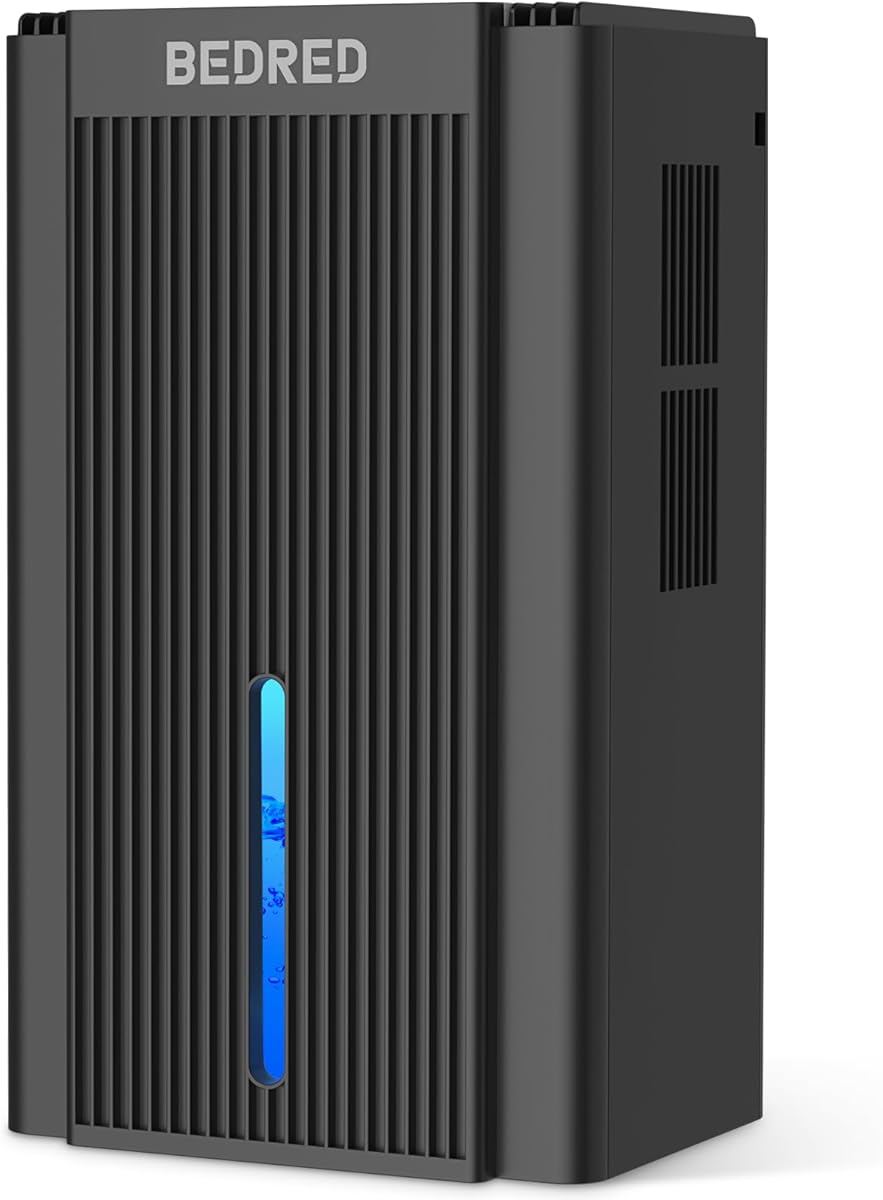
The BEDRED Dehumidifier is primarily designed for home use but can serve small, low-output grow tents where silence is critical. Using semiconductor technology, it operates quietly with a sleep mode that dims lights and reduces noise to a whisper. Its compact design allows it to blend into living spaces without drawing attention, which may be preferred by discreet growers.
We may earn a commission when you buy through this link, at no additional cost to you.
It features intelligent auto-shutoff that powers down when the tank is full, ensuring safety and efficiency. The 7-color ambient light adds a customizable touch to the environment, though this may not be relevant for plant growth. While effective for general humidity control, its semiconductor method is less powerful than compressor-based units for high-demand scenarios.
The trade-off here is capacity for comfort and style. It is not recommended for larger tents or heavy humidity loads due to its limited water removal rate. However, for small, enclosed cabinets or micro-grows where noise levels matter most, it offers a reliable and safe solution that maintains peace and quiet.
If your priority is a quiet, unobtrusive unit for a small space, this model delivers. It provides basic protection against moisture damage without the bulk of industrial machines. Just ensure your humidity needs align with its semiconductor limitations before committing to this choice for agricultural purposes.
Sleep mode automatically turns off lights and lowers noise, ensuring undisturbed rest even when the unit runs continuously in your bedroom or grow area.
Set and forget operation with auto shutoff prevents overflow accidents, giving you peace of mind even when you are not around to monitor the tank.
We may earn a commission when you buy through this link, at no additional cost to you.
This compact dehumidifier is explicitly marketed for electric boxes, storage cabinets, and grow tents. It utilizes an external professional-grade humidity sensor to accurately measure air conditions and control operation. This design allows it to integrate seamlessly into tight spaces like grow tents or enclosed chambers where standard units would not fit.
We may earn a commission when you buy through this link, at no additional cost to you.
It offers both automatic and manual modes, stopping automatically when humidity falls below a preset minimum level. Condensation is efficiently drained through a flexible hose, reducing the need to empty tanks manually. The installation process is simple, requiring only the included power cord and manual to be set up quickly in minutes.
While versatile for its size, performance may vary compared to larger units. It is best suited for protecting equipment or small plants from moisture damage rather than managing large agricultural cycles. The low cost makes it accessible, but users should expect basic functionality rather than advanced climate control features.
For protecting sensitive electronics or small seedlings in confined areas, this unit is practical. It provides active moisture removal without the bulk of traditional dehumidifiers. If you need a cost-effective solution for small, isolated spaces, this model offers essential protection without over-engineering.
The external humidity sensor ensures accurate readings inside the cabinet or tent, preventing false triggers and ensuring the unit only runs when necessary.
The included flexible hose allows you to direct water away from the unit easily, preventing spills and reducing maintenance frequency for long setups.
We may earn a commission when you buy through this link, at no additional cost to you.
This unit is designed for general home use, managing humidity in moderate-to-high environments like bathrooms and closets. It operates with ultra-quiet sleep mode under 30 dB, making it suitable for spaces where noise would be disruptive. Its ability to cover up to 1000 sq ft provides robust capacity that could manage larger grow areas if needed.
We may earn a commission when you buy through this link, at no additional cost to you.
Reliability is ensured by automatic shut-off when the water tank is full, preventing spills and ensuring safe daily use. The compact design includes a built-in handle for easy placement in various spots. Integrated 7-color LED lighting adds a visual element, though this is purely aesthetic and serves no functional purpose for plant growth.
The trade-off is that it lacks specific grow-tent optimization features like air ducting or smart app integration. It is a solid, general-purpose machine that performs well in enclosed spaces. For growers needing a simple, quiet solution without advanced controls, it is a dependable choice that prioritizes safety and ease.
If you want a quiet, versatile unit that can handle various environments including grow tents, this is a strong contender. Its high capacity and low noise make it effective for maintaining comfort and moisture balance. Always ensure you can manage the tank capacity if using it for longer periods without access.
Operating under 30 dB, this unit is ideal for light sleepers or areas where noise can interfere with rest or concentration during night cycles.
Automatic shut-off prevents overflows when the tank is full, ensuring you can leave the unit unattended without risk of water damage or spills.
We may earn a commission when you buy through this link, at no additional cost to you.
The Mini Dehumidifier is explicitly designed for confined spaces including grow tents, electric boxes, and closets. It operates efficiently on AC/DC 85-265V power supplies, making it versatile for different electrical systems globally. This voltage flexibility ensures it can be used in various locations without needing specific adapters or transformers for power supply.
We may earn a commission when you buy through this link, at no additional cost to you.
It features a built-in temperature control switch to maintain optimal humidity levels automatically. The auto shut-off function enhances safety and energy efficiency when the desired humidity level is reached. Its compact size allows for easy placement in tiny spaces where larger units simply cannot fit or function effectively.
Performance is limited to small areas and light moisture loads. It is not intended for large grow tents or heavy humidity reduction tasks. However, for protecting specific components or small seedlings in tight spots, it offers a cost-effective and efficient solution that prevents moisture damage without taking up significant space.
Choose this unit if you have very limited space and need basic moisture protection. Its universal voltage and compact design make it practical for travel or multi-region use. Just manage expectations regarding capacity, as it serves best as a supplement or small-space specialist.
Supporting a wide range of AC/DC voltages means you can use this unit internationally or in different vehicle setups without worrying about power compatibility.
Auto shut-off ensures the unit only runs when needed, minimizing electricity use and wear on components while maintaining a safe humidity level.
We may earn a commission when you buy through this link, at no additional cost to you.
This compact dehumidifier is designed for small rooms like bedrooms and closets. It operates quietly with three working modes including sleep mode for uninterrupted rest. The 44oz tank requires frequent emptying but fits easily into tight spaces. Its defrost function ensures continuous operation even during colder seasons, making it a practical choice for year-round humidity management.
We may earn a commission when you buy through this link, at no additional cost to you.
Features like 10 color mood lights and adjustable timers allow users to customize their environment. It collects up to 11.8oz of water daily, which is sufficient for small spaces but may struggle with larger tents. The low energy consumption makes it economical to run continuously without significant cost increases on electricity bills.
While stylish, it is primarily a home appliance. Growers should consider the limited water removal rate compared to specialized units. If you need a quiet, portable solution for very small grow areas or personal spaces, it is a strong option that prioritizes comfort and style over raw performance.
This model is ideal for light users who want a blend of function and aesthetics. Its small footprint and multiple color options allow it to blend well with room decor. Ensure your moisture needs are low before selecting this unit for agricultural purposes to avoid frustration with frequent maintenance.
The intelligent auto defrost function prevents frost buildup during cold weather, ensuring the unit can keep running efficiently even in lower temperatures.
Timer settings allow you to run the unit for specific durations, adapting to your schedule and reducing energy usage when full continuous operation is not needed.
We may earn a commission when you buy through this link, at no additional cost to you.
Designed for lasting home use, this small dehumidifier maintains balanced humidity in spaces up to 260 sq ft. It features a large 44 OZ tank to minimize emptying frequency. The auto-defrost system activates in lower temperatures, ensuring efficient operation during winter. Its compact size fits easily in any room, making it versatile for dorms, offices, and small apartments.
We may earn a commission when you buy through this link, at no additional cost to you.
Five timer settings offer flexible operation including continuous run and automatic shut-off after 24 to 96 hours. Sleep mode ensures quiet operation below 28 dB for peaceful rest. With FCC, CE, UKCA, and RoHS approvals, it meets rigorous international safety standards, providing peace of mind for family and home environments.
While useful for small rooms, its capacity is limited for larger grow tents. It is best suited for protecting sensitive items in small enclosures or personal living spaces. The customizable lighting adds visual appeal, though it serves no functional purpose for plants. Always monitor the tank to ensure uninterrupted performance.
If you need a reliable, certified unit for small areas, this model delivers safety and ease. Its combination of defrost protection and noise control makes it suitable for various environments. For grow tents, it serves best as a supplementary unit for small setups or specialized drying areas.
With international approvals like FCC and CE, this unit meets high safety standards, ensuring reliable operation and minimal risk in home or travel settings.
Below 28 dB operation in sleep mode ensures the unit does not disturb rest, making it ideal for bedrooms or quiet grow spaces.
We may earn a commission when you buy through this link, at no additional cost to you.
The Pro Breeze Electric Mini is a compact solution using Thermo-Electric Cooling Technology. It removes up to 18 oz of water per day with a 52 oz water tank capacity. This unit covers up to 3000 cubic feet, leaving ample space for appliances to function. It operates without a compressor, providing whisper quiet operation ideal for bedrooms or offices.
We may earn a commission when you buy through this link, at no additional cost to you.
With a running cost of just $0.12 per day, it is energy efficient and economical. However, it only works effectively in temperatures between 59-95°F and will not function below 41°F. Auto shutoff and LED indicators prevent overflow and ensure safety. It is a practical solution for small, warm spaces where noise is a concern.
Its low daily capacity means it may not handle high humidity or large tents effectively. The temperature sensitivity restricts its use in cold environments. If you need a quiet, budget-friendly option for small areas, it is a good choice. Always ensure ambient conditions are within operating limits before purchase.
For small, warm spaces where budget and noise are priorities, this unit delivers. Its low energy cost and compact design make it accessible for many users. Just manage expectations regarding capacity to ensure it meets your specific moisture management requirements effectively.
A daily running cost of $0.12 makes this one of the most economical units to operate continuously without worrying about high electricity bills.
Operating without a compressor means it runs whisper quiet, perfect for living spaces where noise would be disruptive during work or rest.
We may earn a commission when you buy through this link, at no additional cost to you.
Choosing the right dehumidifier requires balancing capacity, noise, and specific grow requirements. Consider these factors to find a model that maintains optimal plant health.
Moisture removal capacity defines how much water a unit can extract from the air per day. For grow tents, ensure the rating matches your tent size and expected humidity levels. Higher capacity models work better for large tents or high-humidity environments, while smaller units suffice for micro-grows.
Noise levels impact the comfort of your living space and plant stress. Units with sleep mode or compressorless tech operate quietly. If your grow tent is near living areas, choose a model that runs below 30 dB to avoid disruption and maintain a calm environment for cultivation.
Smart features like app connectivity and auto-mode allow hands-free humidity control. Look for models that support specific protocols if you use integrated smart grow systems. Automation ensures consistent vapor pressure deficits, reducing manual checks and increasing efficiency during long growth cycles.
Some units are designed to sit outside the tent and duct dry air inside to prevent heat buildup. Check if the model supports closed-loop setups or has external ducting ports. Proper integration ensures that the dehumidifier does not add unwanted heat to your controlled grow environment.
Water tank size determines how often you must empty the unit. Larger tanks reduce maintenance frequency, while flexible hose drainage allows continuous operation without manual emptying. Choose a model with enough capacity for your schedule or one that supports continuous drain lines for convenience.
Energy consumption affects running costs over time. Compressor units are powerful but draw more power than semiconductor models. Calculate estimated daily costs based on usage hours to find a model that balances performance with efficiency. Energy-efficient units save money without compromising humidity control.
Dehumidifiers perform best within specific temperature ranges. Some models work poorly below 50°F. If you grow in cooler climates or cold rooms, ensure the unit supports lower temperatures or includes defrost protection to maintain consistent humidity levels throughout the year.
Portability is important if you move your grow setup frequently. Look for built-in handles or caster wheels for easy movement. Tool-free installation saves setup time and reduces the need for extra hardware. Ensure the unit fits your space and can be secured properly to avoid accidents.
Position the unit correctly according to the manufacturer's instructions to ensure efficient airflow. If ducting is supported, connect the hose securely to prevent air leaks that reduce performance.
Monitor the water tank regularly and empty it when full. For units with continuous drainage, check hoses frequently to ensure they do not kink or clog during operation.
Clean filters and sensors at least once a month using a soft cloth or mild detergent. Regular maintenance ensures optimal performance and extends the lifespan of your dehumidifier.
For a 4×4 tent, look for a unit with at least 30 pints daily capacity. Ensure it supports external ducting to prevent heat buildup inside the tent for optimal plant health and efficient moisture control.
Yes, but ensure it has enough capacity and supports continuous drainage. Home units may not be optimized for tent environments, so check for heat output and airflow compatibility to avoid stressing your plants.
Turn off and unplug the unit. Remove the filter and wash it under running water. Allow it to dry completely before reinstalling to maintain airflow efficiency and prevent mold growth.
Absolutely. It reduces relative humidity below 60%, inhibiting mold and mildew growth. Consistent humidity control ensures healthier plants and reduces risk of crop loss due to fungal infections.
Seedlings typically require 65% to 75% humidity. Choose a dehumidifier with precise control settings to maintain this range without dropping too low and stressing young plants during early growth stages.
It depends on humidity levels. If your tent maintains stable humidity, run it intermittently. Continuous operation is safer for high humidity periods but increases energy costs and wear on components over time.
The AC IN HYDRONE 5 leads for precision control while the VIVOSUN AeroDrain D12 offers seamless smart ecosystem integration. For budget-conscious growers, the MARS HYDRO 38 Pints balances cost and performance effectively.
Prioritize models with appropriate capacity and noise levels for your specific environment. Automation and external ducting features provide significant advantages for maintaining optimal plant health consistently.
Always verify current availability and features before purchasing to ensure you select the unit that best meets your cultivation needs.