
Thames & Kosmos My Robotic Pet
4.1Editor score
Screen-free coding cards
Color and infrared sensors
Three unique play modes
This guide compares the top ten coding toys for kids including screen-free and app-enabled robots to help parents choose the best educational STEM gift for
Coding toys are transforming how children learn technology by turning abstract concepts into tangible play. These interactive tools teach sequencing, logic, and problem-solving skills without requiring a traditional computer screen. They provide a hands-on introduction to engineering principles that prepare young minds for a digital future.
We evaluated ten leading coding toys based on educational value, ease of use, and engagement levels. Each product was selected for its ability to teach fundamental programming concepts like loops and variables through play. Our analysis covers options for various ages and skill levels to ensure you find the perfect fit.
Each pick highlights unique features that set it apart in the crowded educational tech market. From simple button presses to advanced block-based coding, there is something for every child. Please note that product prices and availability can change frequently so check current listings before purchasing.
4.1Editor score
4.6Editor score

4.6Editor score
The following table offers a side-by-side comparison of all ten featured coding toys. It highlights key specifications such as age range, coding method, and included accessories to help you make an informed decision quickly.


The Thames & Kosmos My Robotic Pet is an excellent entry-level coding toy that brings the fun of reptiles into the world of STEM. With a rating of 4.1 stars it stands out for its unique approach to teaching coding without screens. The kit allows children to build and program a robotic chameleon that responds to gestures and colors.
We may earn a commission when you buy through this link, at no additional cost to you.
This product excels in providing a tactile learning experience through its use of physical colored action cards. Children can program the robot to move and react in different ways using a color sensor and infrared sensor. The three play modes include Coding Mode for sequencing Wild Mode for camouflage reactions and Pet Mode for touch-based interactions. The comprehensive guide also connects the toy to real-world engineering principles.
While the experience is highly engaging some families may find the assembly process requires patience and adult involvement. The kit recommends ages 8 and up with help from an adult which means younger children might need significant support during setup. Additionally users should be aware that batteries are not included in the package so you will need to purchase them separately before use.
Parents looking for a budget-friendly screen-free coding option should strongly consider this robotic reptile. It is perfect for children who enjoy animals and hands-on building projects over digital screens. The educational value combined with the playful design makes it a standout choice for introducing coding concepts in a fun and accessible way.
The use of physical action cards means kids can focus on logic without the distraction of tablets or phones.
The manual explicitly teaches how nature inspires engineering solutions providing a broader scientific context for play.
We may earn a commission when you buy through this link, at no additional cost to you.
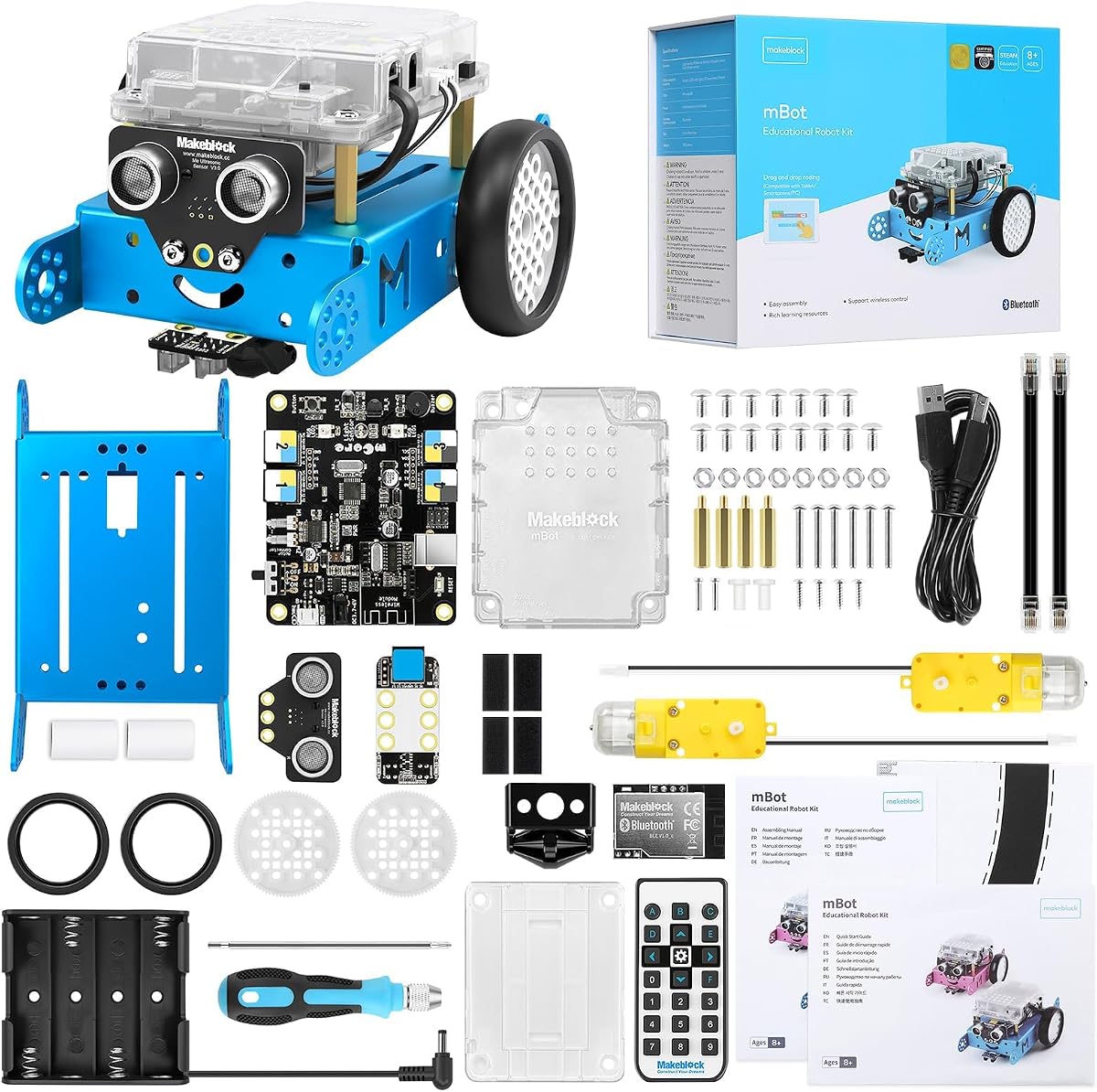
The Makeblock mBot is a robust robotics kit designed to bridge the gap between simple toys and serious engineering. With a high rating of 4.6 stars it is favored for its durability and flexibility in programming. This kit introduces kids to electronics and computer programming through an interactive and fun building process.
We may earn a commission when you buy through this link, at no additional cost to you.
One of the strongest features is the ease of building which can be completed in about fifteen minutes. The robot supports programming from Scratch to Arduino allowing it to grow with the child's skills. It also functions as a remote control car with line-following and obstacle-avoidance capabilities. The open-source system allows connection to over one hundred electronic modules expanding its possibilities significantly.
However users should note that batteries for both the remote controller and the robot itself are not included. This means there is an additional cost and preparation step before the child can start playing. Furthermore while the app offers rich tutorials some might prefer a purely screen-free experience initially. The reliance on batteries and software connectivity may be a drawback for some parents.
This mBot is an ideal gift for children who are ready to step up from simple button coding to more complex concepts. It offers a real engineering experience with metal parts and open-ended expansion options. Families willing to invest in the extra batteries will find a versatile tool that can serve as a long-term educational platform.
The kit helps kids learn programming step by step via interactive software and learning resources including coding cards.
Compatibility with over 500 parts and LEGO blocks ensures the toy remains engaging as skills advance.
We may earn a commission when you buy through this link, at no additional cost to you.
The Sphero Mini packs a lot of fun into a tiny programmable robot that is the size of a ping pong ball. Rated 4.6 stars it is perfect for beginners who want to explore coding and robotics in a compact form. The robot comes equipped with a gyroscope and accelerometer allowing for a variety of interactive games and learning experiences.
We may earn a commission when you buy through this link, at no additional cost to you.
Coding is handled through the free Sphero Edu app which supports drag-and-drop blocks and even JavaScript for more advanced users. Beyond coding the robot can be used as a game controller for arcade-style games in the Sphero Play app. It includes three traffic cones and six bowling pins to set up obstacle courses immediately. Drive modes like joystick and slingshot make it accessible for all skill levels.
The main trade-off is that this robot relies heavily on a connected device which means screen time is unavoidable. Additionally the battery life is limited to about one hour of play time which might require frequent recharging during long play sessions. Parents looking for screen-free alternatives might find this aspect limiting compared to physical card-based robots.
For families comfortable with app-based learning this robot offers a dynamic way to learn coding concepts while playing games. It is excellent for children who enjoy motion and gaming alongside their educational pursuits. The small size makes it easy to store and take anywhere which is a bonus for families with limited space.
Kids can switch between coding challenges and playing arcade games keeping the engagement high throughout the session.
The ping-pong ball size allows for easy transport and use in small spaces like bedrooms or classrooms.
We may earn a commission when you buy through this link, at no additional cost to you.
The Learning Resources Code & Go Robot Mouse is designed with early learners in mind to introduce coding concepts to children as young as four. With a solid rating of 4.5 stars it simplifies programming into a fun and approachable activity. Kids use buttons on the robot to teach it to navigate mazes without needing a screen or app.
We may earn a commission when you buy through this link, at no additional cost to you.
This set supports sequencing and problem-solving skills through playful trial and error. It includes a Colby robot mouse sixteen maze grids and twenty-two walls to build a twenty by twenty board. The double-sided coding cards help children understand directional commands and logic. It is also designed for classroom STEM centers making it versatile for group activities or individual play at home.
One limitation is that the robot is specifically designed for maze navigation which limits the variety of play modes compared to more complex robots. Also like many toys in this category batteries are not included so you will need to provide three AAA batteries to get started. These are minor issues given how well it teaches foundational logic skills.
Parents of preschoolers and kindergarteners will find this mouse an invaluable tool for building critical thinking skills. It removes the technical barrier of screens and focuses purely on the logic of coding sequences. The physical nature of the activity makes it a great choice for children who benefit from tactile learning methods.
The simple button interface helps young children grasp the cause and effect relationship of coding without overwhelm.
Repeatable activities and durable pieces make this ideal for rotation stations and small-group educational work.
We may earn a commission when you buy through this link, at no additional cost to you.
The TEACH TECH Mech-5 is a one-of-a-kind mechanical coding robot designed to inspire young engineers to learn about mechanical engineering. With a rating of 4.5 stars it stands out for its complex building process and unique capabilities like kicking lifting and drawing. It is geared toward future engineers ages ten and up who are ready for a challenging project.
We may earn a commission when you buy through this link, at no additional cost to you.
This robot uses a snapping coding interface where buttons are attached to a coding wheel to program missions. The assembly process is an in-depth STEM project rather than a pre-assembled toy requiring multiple hours of build time. This hands-on approach ensures that children understand how the internal components work to create movement. It turns the act of building into a lesson in mechanics.
The significant build time can be a barrier for children looking for instant gratification. It requires patience and focus to ensure proper assembly which might be frustrating for some. However for those willing to put in the effort the result is a highly functional robot that demonstrates real engineering principles in action.
Families interested in deep STEM immersion will appreciate the authentic engineering experience this kit provides. It is perfect for children who enjoy building and mechanics over simple digital interactions. The unique actions like kicking and drawing add a creative flair that keeps the play engaging once the build is complete.
The kit integrates the building process with coding so kids see how the physical structure enables the program.
Tasks like kicking a ball give concrete goals that help kids understand the purpose of their code.
We may earn a commission when you buy through this link, at no additional cost to you.
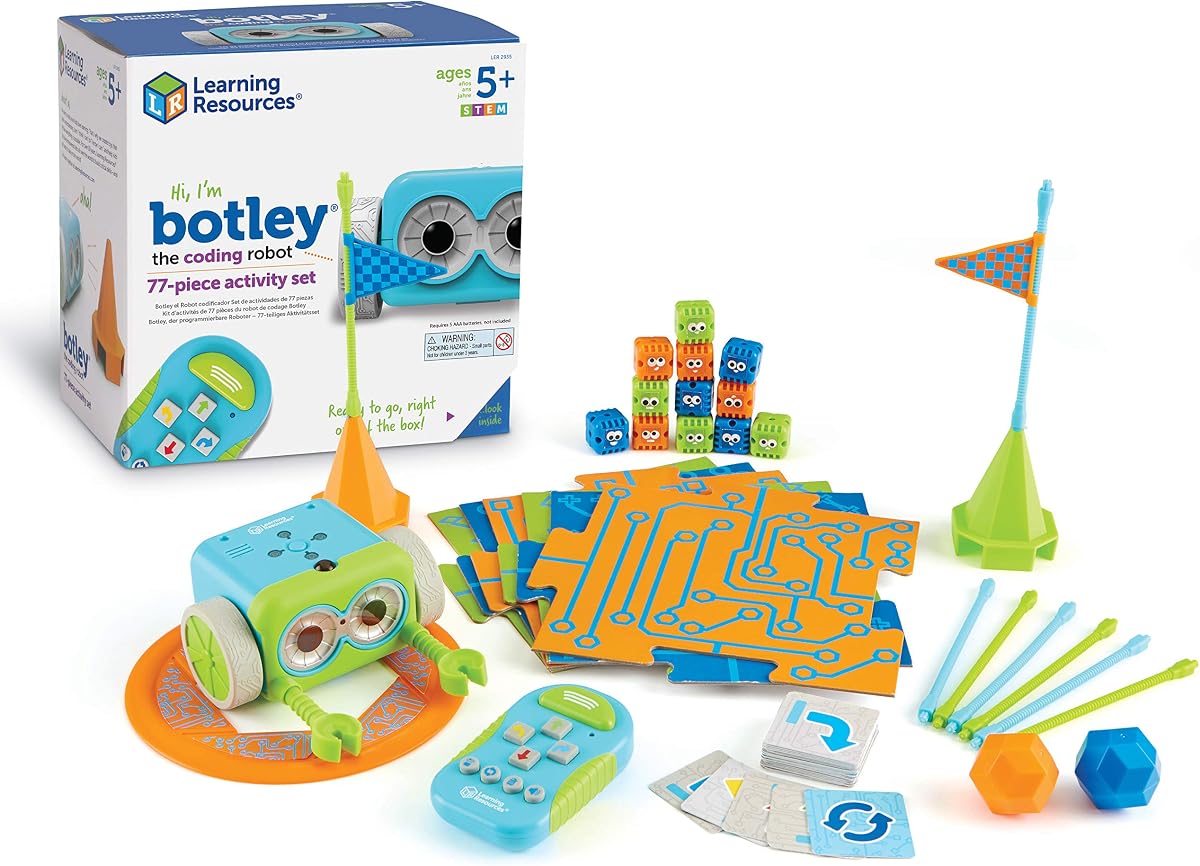
Learning Resources Botley is a top-rated screen-free coding robot that helps children learn early STEM skills while playing. With a rating of 4.6 stars it is celebrated for its ability to teach critical thinking without the need for phones or tablets. The set includes seventy-seven pieces making it a complete package for coding adventures.
We may earn a commission when you buy through this link, at no additional cost to you.
Botley comes ready to code right out of the box with a remote programmer that sends commands. It features object detection allowing it to avoid obstacles and follow black-line paths. The robot also supports looping commands which introduces complex coding concepts in a simple way. The detachable arms and tiles allow for creative construction and storytelling during play.
The main requirement is having five AAA batteries on hand before starting as they are not included. The remote programmer can sometimes be a bit tricky for very young children to operate independently requiring some guidance. However the lack of screens and the robust set of accessories make it a superior choice for educational play.
This set is ideal for parents who want to introduce coding logic without adding more screen time to their child's day. The ability to detect objects and follow loops provides a rich environment for problem-solving. It is a comprehensive and reliable option that grows with the child's abilities.
Botley can detect objects and avoid them adding a layer of interactivity that feels like intelligence.
The detachable arms and building tiles encourage kids to invent narratives around the robot's journey.
We may earn a commission when you buy through this link, at no additional cost to you.
The Ozobot Evo Coding Robot Kit is a versatile educational tool that introduces children to coding through both online and screen-free methods. With a rating of 4.6 stars it is designed to accommodate a wide range of ages and skill levels. The kit includes the Evo robot and color code markers which allow for creative play on paper.
We may earn a commission when you buy through this link, at no additional cost to you.
One standout feature is the five skill levels in Ozobot Blockly that range from beginner to master coding. This ensures the kit remains useful as the child's abilities develop over time. The access to over seven hundred free lessons makes it an extensive resource for educators and parents. The durable design and zip case make it practical for classroom or home storage.
The price point is higher than many other toys on this list which might be a consideration for some families. Additionally to use the screen-free mode you need to buy the color markers which are included but must be managed carefully. Despite the cost the educational value and versatility make it a strong investment.
Families looking for a long-term coding solution will find that this kit grows with their child effectively. It offers a comprehensive approach to STEM that covers art and logic through color coding. It is also an excellent choice for schools or groups that need a reliable and well-supported educational tool.
Kids can draw codes on paper or use apps fitting different learning styles and environments.
The access to hundreds of lessons means there is always a new challenge ready for the student.
We may earn a commission when you buy through this link, at no additional cost to you.
Botley 2.0 builds on the popularity of the original by adding object-sensing reactions and new challenges for young coders. With a rating of 4.5 stars it is a refined version that offers deeper engagement through multi-step coding paths. The robot lights up and makes sounds to enhance the sensory experience during play.
We may earn a commission when you buy through this link, at no additional cost to you.
This version supports 45-degree turns and object detection which allows for more complex route designs. The set includes seventy-eight pieces including stackable obstacle pieces that let kids build custom mazes. It encourages refinement of strategies as children tackle more complex problem-solving challenges. The remote programmer makes it easy to introduce early coding ideas through cause and effect.
The main downside is that it requires batteries which are not included in the package. Some parents might feel the improvements over the original version are incremental given the price point. However the new object-sensing features provide a fresh layer of interactivity that keeps the robot interesting.
This set is perfect for children who have outgrown basic sequencing and are ready for more complex logic. It offers a balanced mix of fun and education that keeps kids engaged for long periods. The open-ended design ensures that the play remains creative and not limited to just one way of using it.
Lights and sounds give immediate feedback which helps kids understand if their code worked correctly.
The ability to make precise turns allows for detailed maze designs and intricate coding tasks.
We may earn a commission when you buy through this link, at no additional cost to you.
The Wonder Workshop Dash Robot is a premium option that offers a rich interactive experience right out of the box. With a rating of 4.6 stars it is highly regarded for its ability to dance sing and respond to voice commands. It is designed for kids aged six and older and offers a significant STEM advantage for learning.
We may earn a commission when you buy through this link, at no additional cost to you.
Dash supports five different apps across iOS and Android which provide a wide range of coding tools. Users can learn sequencing loops and variables through hands-on play and challenges. The battery life is impressive offering up to five hours of active play which is great for long sessions. It is used in thousands of schools globally so the educational path is well tested.
The higher price point is the main barrier for many families but the quality and support justify the cost. The lack of a camera is a minor trade-off but it helps keep the focus on safe coding play. While it requires an app the experience is polished and user-friendly for children.
This robot is best suited for families who want a high-quality device that can grow with the child. It offers endless fun and a robust platform for learning coding concepts deeply. If you are looking for a long-term investment in your child's education this is a top choice.
Dash comes pre-assembled so children can start coding immediately without waiting for setup.
Multiple apps ensure that there is always a new challenge or tool available for learning.
We may earn a commission when you buy through this link, at no additional cost to you.
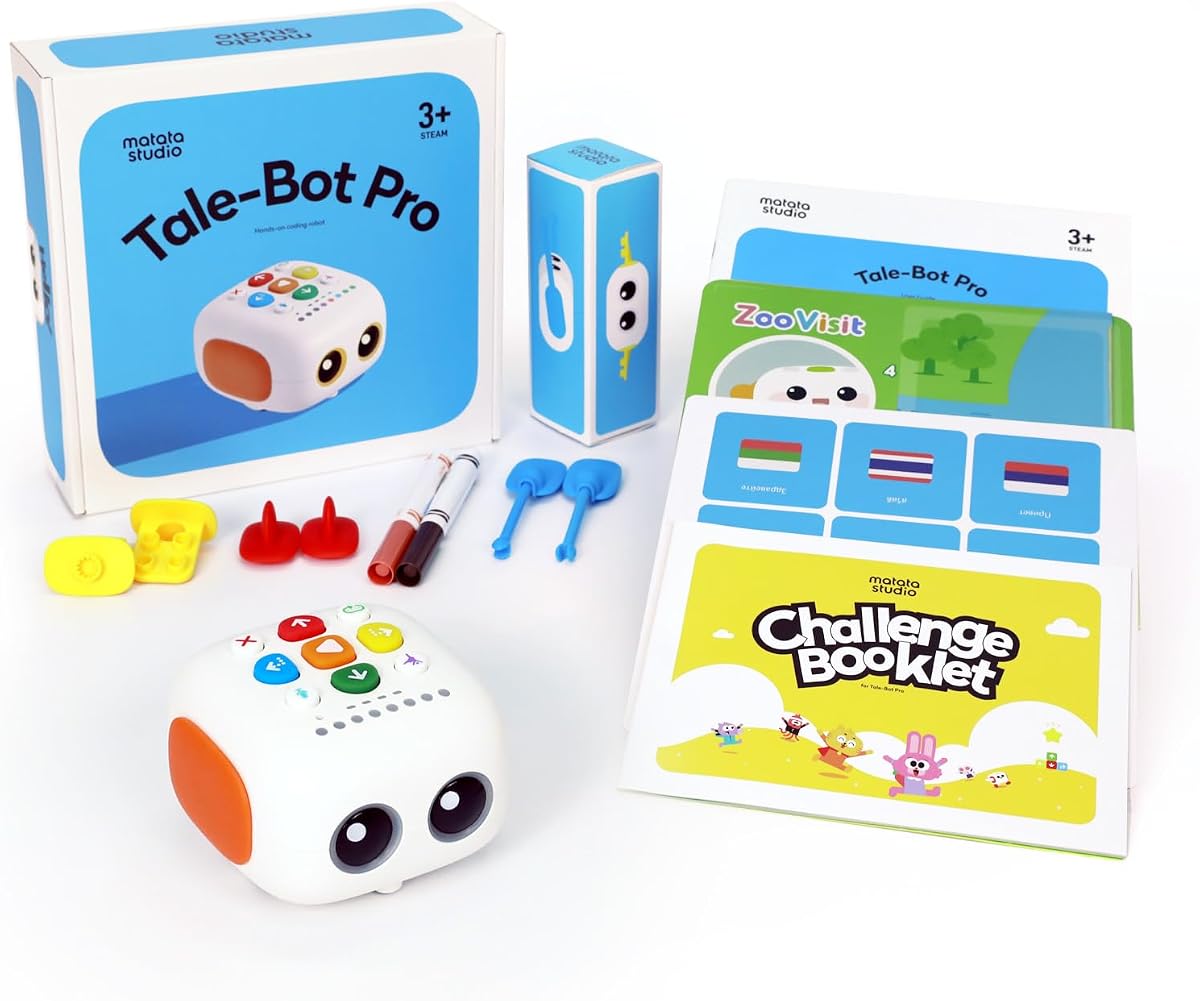
TaleBot Pro is designed specifically for toddlers aged three to five to introduce coding concepts through storytelling. With a rating of 4.7 stars it is a standout choice for very young children who are not ready for complex interfaces. The robot uses voice feedback and commands to create an instructive and creative learning environment.
We may earn a commission when you buy through this link, at no additional cost to you.
This toy allows kids to record their own voice commands and tales which they can play back through the robot. It includes an interactive map and challenges that help kids learn sequences and loops. The robot is compatible with Lego blocks to allow for building more shapes and imaginative play. It supports ten languages making it versatile for diverse families.
The coding concepts are basic such as commands and sequences which limits its utility for older children. However for its target age group it provides a perfect introduction to logic and sequencing without screens. The touch-based controls make it accessible for children who need tactile feedback like those with autism.
Parents of toddlers will find this robot an excellent way to engage their child in early logic learning. It fosters creativity and language skills alongside basic programming concepts. The simplicity and voice features make it a safe and educational tool for the youngest learners.
The recording function allows kids to create their own stories making the experience deeply personal.
Simple buttons and voice feedback remove barriers for children with different learning needs.
We may earn a commission when you buy through this link, at no additional cost to you.
Choosing the right coding toy depends on your child's age and interests as well as the level of guidance you want to provide.
Different coding toys are designed for different developmental stages. Younger children benefit from simple button presses and physical cards while older kids can handle apps and abstract logic. Always check the recommended age range to ensure the toy is challenging but not frustrating.
Select a toy that matches your child's current skills to avoid frustration or boredom.
Some families prefer screen-free options to limit device usage. These toys use physical cards or buttons to teach logic. App-based robots offer more advanced coding features but require a tablet or smartphone for programming.
Decide whether you want to minimize screen time or embrace digital tools for learning.
Coding toys range from simple sequencing to complex programming languages like JavaScript. Start with basic loops and commands if your child is new to coding. As they grow look for options that support block-based coding or text-based languages.
Choose a toy that can grow with your child to provide long-term educational value.
Robots used in active play should be sturdy enough to withstand bumps and falls. Metal kits or robust plastic designs often last longer than fragile parts. Consider how rough the play might be when selecting a model.
Invest in a durable build if you plan to use the toy frequently in classrooms or group play.
Many coding toys come with lesson plans or challenges that guide the learning process. Some offer access to hundreds of online lessons while others rely on a physical manual. These resources can save you time in planning activities.
Look for options that provide structured lessons to get the most out of the toy.
Many robots require batteries that are not included which adds to the initial cost. Some use rechargeable batteries while others require AA or AAA cells. Check what is needed before you buy to avoid surprise expenses.
Ensure you have the right batteries ready to start playing right out of the box.
Toys that support expansion or creativity like Lego compatibility allow for longer engagement. Open-source systems let you add modules or change the robot's functions over time. This flexibility keeps the interest high as skills develop.
Choose toys that allow for customization to sustain interest over the long term.
Prices vary widely based on features and complexity. A lower price does not always mean less value especially for screen-free options. Balance your budget with the educational potential and longevity of the toy.
Consider the long-term use of the toy when evaluating its price point.
Always start by reading the manual carefully to understand the assembly and basic commands. Some kits require tools like screwdrivers so make sure you have everything ready before you begin. Taking time to build properly ensures the robot functions correctly.
Keep the toys organized by storing all cards and pieces in the provided case or a dedicated bin. Losing small parts like coding cards can disrupt play so organization is key to a smooth experience. Use a dry cloth to clean the sensors and surfaces after play.
Store the robots in a cool dry place away from direct sunlight to protect the electronics. If you use batteries be sure to remove them if the robot will not be used for a long time. This prevents leaks and keeps the device in good working order.
Yes most coding toys are designed for beginners. They use intuitive interfaces like buttons or visual blocks that make learning easy. The tutorials provided help guide new users through the basics step by step.
Some coding robots use physical cards or buttons and do not need a screen. Others rely on an app for programming. Check the product details to see if it is screen-free before you buy.
Yes many robots support collaborative play which is great for classrooms or siblings. You can set up shared challenges that allow kids to work together. This fosters teamwork and social skills alongside technical learning.
Coding toys teach logical thinking sequencing and problem-solving skills. They also help with planning and creativity as children design their own projects. These skills are valuable for both academic and everyday life.
Most coding toys are tested for safety but always check the age recommendations. Some kits include small parts that may be a choking hazard for toddlers. Supervised play ensures safety during building and coding.
Battery life varies by model and usage patterns. Some offer hours of play on a single charge while others may need frequent battery swaps. Check the specifications for battery details to plan your play sessions.
The ten coding toys reviewed here offer a wide range of options for every age and interest level. From the budget-friendly Thames & Kosmos to the premium Dash robot there is a perfect fit for every family. Each option teaches valuable STEM skills through engaging and hands-on play.
When choosing a toy consider your child's age and whether you prefer screen-free or app-based learning. Focus on options that provide enough challenges to keep your child interested as they grow. The best toy is the one that sparks curiosity and encourages repeated use.
Prices for these products can change frequently so always check current listings before purchasing. Investing in a quality coding toy can provide years of educational entertainment. Use this guide to find the right match for your family's needs today.