
Intel Celeron G5900
4.5Editor score
2 Cores 2 Threads
LGA1200 Socket
Intel Optane Support
This guide compares the best cheap CPU options for budget builds, covering performance, cores, threads, and platform compatibility to help you save money.
Finding a cheap CPU does not mean sacrificing performance for your daily tasks or gaming needs. Modern processors offer incredible value even at lower price points. This guide explores the best affordable options available today.
We compared these processors based on core counts, thread counts, clock speeds, and platform support. Each pick was selected for its ability to deliver solid performance without breaking the bank for budget-conscious builders.
Each entry shows key specifications and real-world usage scenarios. Prices change frequently so verify current costs before purchasing. These selections represent the best value propositions in the current market landscape.
4.5Editor score
4.7Editor score

4.8Editor score
The following table provides a side-by-side comparison of all ten products. This view highlights key specifications to help you quickly identify the processor that fits your specific budget and performance requirements.




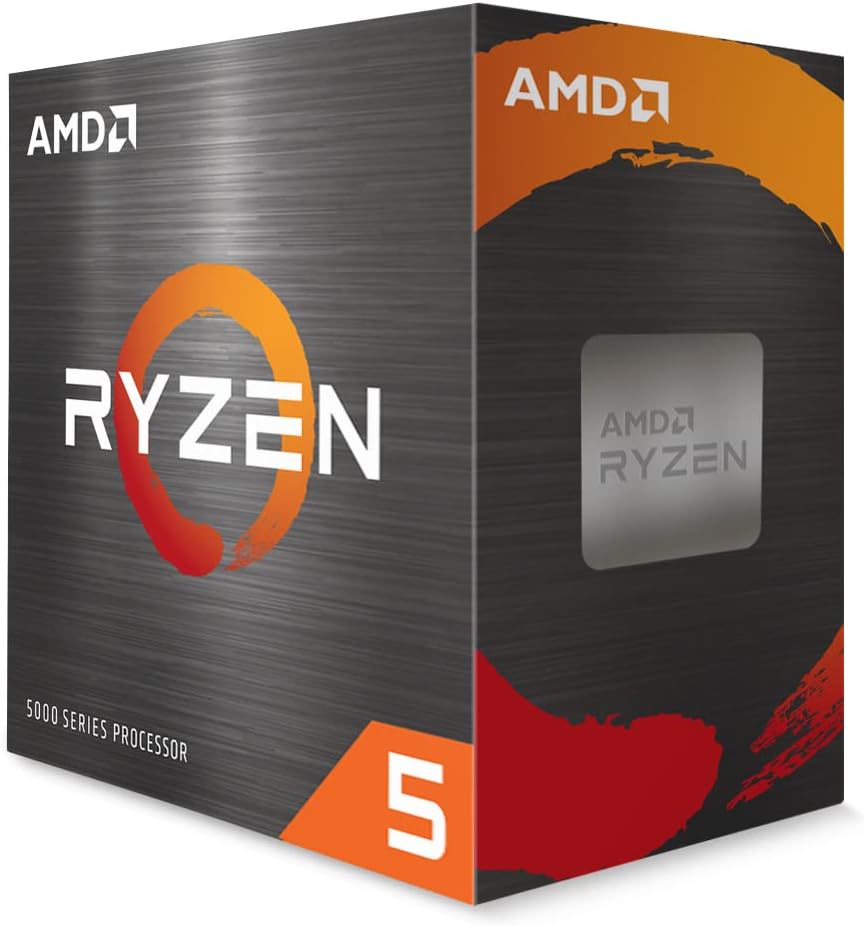
The AMD Ryzen 5 5500 offers exceptional performance for its price point. With six cores and twelve threads, it handles multitasking and modern gaming with ease. Its rating reflects strong user satisfaction across various use cases.
We may earn a commission when you buy through this link, at no additional cost to you.
This processor delivers fast frame rates in popular games when paired with a discrete graphics card. The unlocked multiplier allows enthusiasts to push performance further through overclocking. The bundled cooler keeps temperatures in check under normal loads.
While it lacks integrated graphics, this trade-off is acceptable for gamers who already plan to add a dedicated GPU. The AM4 platform ensures compatibility with a wide range of motherboards and memory kits available today.
Anyone building a budget gaming PC should consider this processor. It balances price and performance better than most competitors in this category. We recommend it as the top choice for value-focused builders.
Users report smooth gameplay in demanding titles at 1080p resolution.
The unlocked architecture allows for safe frequency increases to boost performance.
We may earn a commission when you buy through this link, at no additional cost to you.
The Intel Celeron G5900 stands out as an ultra-affordable option for basic computing. It features two cores and two threads which suit everyday tasks like web browsing and document editing. Its low cost makes it ideal for entry-level builds.
We may earn a commission when you buy through this link, at no additional cost to you.
This processor works with Intel 400 series chipset motherboards offering a stable platform for simple needs. The integration of Optane Memory support can enhance storage speed on compatible systems. It draws minimal power which keeps electricity costs down.
The lack of additional threads limits its ability to handle heavy multitasking or modern games. Users expecting high performance should look elsewhere. However for strict budget constraints it delivers essential functionality effectively.
Buyers needing a secondary PC or office machine will find this suitable. It provides reliable performance for light workloads without unnecessary expense. We suggest it for non-gaming scenarios where cost is the primary concern.
Perfect for home offices where speed is secondary to affordability and reliability.
Supports Intel 400 series chipsets ensuring broad motherboard selection for builders.
We may earn a commission when you buy through this link, at no additional cost to you.
The AMD Ryzen 5 9600X represents the high end of this selection with cutting-edge features. It uses the new Zen 5 architecture to deliver pure gaming performance and smooth frame rates. Its rating indicates excellent user feedback and build quality.
We may earn a commission when you buy through this link, at no additional cost to you.
This processor supports DDR5 memory which provides faster data transfer rates for modern workloads. The unlocked design allows for overclocking to squeeze out extra performance. AM5 socket compatibility ensures a long upgrade path for future components.
The lack of a bundled cooler may increase initial costs for buyers who need thermal solutions. The higher price reflects its premium positioning compared to older or entry-level models. It suits those prioritizing peak performance over absolute lowest cost.
Gamers and professionals seeking future-proof hardware should consider this model. Its architecture and features justify the investment for demanding applications. We recommend it for users who want the best available within this category.
Zen 5 design brings improved efficiency and speed over previous generation chips.
AM5 socket allows for easy CPU swaps without needing a new motherboard.
We may earn a commission when you buy through this link, at no additional cost to you.
The Intel Pentium Gold G5600F offers a unique balance of speed and simplicity. It features two cores running at a high clock speed which aids single-threaded tasks. User ratings are exceptionally high reflecting satisfaction with its reliability.
We may earn a commission when you buy through this link, at no additional cost to you.
With a 4 MB cache this processor handles data access efficiently for basic workloads. It uses the FC-LGA14C package which fits specific motherboard types. The design focuses on delivering essential performance without unnecessary features.
Lacking integrated graphics means a discrete GPU is required for any visual output. This limits its use in budget builds that cannot afford a separate graphics card. However for dedicated workstations it remains a competent choice.
Buyers seeking a specialized processor for specific legacy or low-power systems might prefer this. Its high clock rate ensures responsiveness in lightweight applications. We view it as a niche option within the broader market.
High frequency ensures snappy performance for simple daily computing tasks.
Compact packaging reduces physical footprint on compatible motherboard layouts.
We may earn a commission when you buy through this link, at no additional cost to you.
The AMD Athlon 200GE is known for its integrated Radeon Vega graphics which enable basic gaming without a GPU. It provides two cores and four threads for decent multitasking capability. Its rating suggests it meets expectations for casual users.
We may earn a commission when you buy through this link, at no additional cost to you.
This processor runs with a near-silent cooler which reduces noise in home environments. The AM4 platform allows for future upgrades to Ryzen processors if needed. It supports DDR4 memory speeds suitable for most budget systems.
While it handles light gaming well, it struggles with modern titles at higher settings. The clock speed is lower than competing options which may impact raw performance. Users should expect modest performance levels for daily tasks.
Anyone needing an all-in-one solution for a media PC or office setup will find this useful. It saves money by eliminating the need for a separate graphics card. We recommend it for very tight budgets with basic needs.
Vega 3 graphics allow light gaming like indie titles without dedicated hardware.
Socket AM4 compatibility lets users swap to more powerful Ryzen CPUs later.
We may earn a commission when you buy through this link, at no additional cost to you.
The Intel Celeron G3930 is a seventh-generation processor designed for standard desktop use. It works with LGA1151 sockets which are common in many older motherboards. User ratings indicate it provides stable performance for simple computing needs.
We may earn a commission when you buy through this link, at no additional cost to you.
Intel HD Graphics 610 is included to display video output without a discrete GPU. The chip consumes little power which helps keep system temperatures low. It serves well for web browsing and document processing tasks.
As an older generation chip it may not match newer processors in speed or features. Lack of Optane support limits storage optimization potential. Buyers should check motherboard compatibility carefully before purchase.
This unit fits well in budget builds relying on existing hardware. It offers a cost-effective upgrade path for those with compatible boards. We suggest it for users seeking reliability over raw speed.
LGA1151 support ensures it works with many existing desktop motherboard platforms.
Integrated HD graphics provide sufficient output for standard office displays.
We may earn a commission when you buy through this link, at no additional cost to you.
The Intel Core i5-6500 offers a cost-effective entry into quad-core performance. This renewed unit provides significant savings compared to new stock. Users report reasonable reliability for everyday computing tasks despite the used status.
We may earn a commission when you buy through this link, at no additional cost to you.
Support for both DDR4 and DDR3L memory increases flexibility when choosing RAM. It connects via LGA1151 which is widely supported. The display resolution support is sufficient for standard monitors and TVs.
Buying renewed items carries some risk regarding condition or lifespan. It is important to check the seller's warranty policy before purchasing. Performance is adequate for general use but not for heavy loads.
Budget builders looking for four cores without high cost may find this attractive. It handles multitasking better than dual-core options. We recommend caution and verification before adding to your cart.
Compatibility with multiple RAM types allows for cost-effective system building.
Supports high resolutions up to 4K for detailed visual output.
We may earn a commission when you buy through this link, at no additional cost to you.
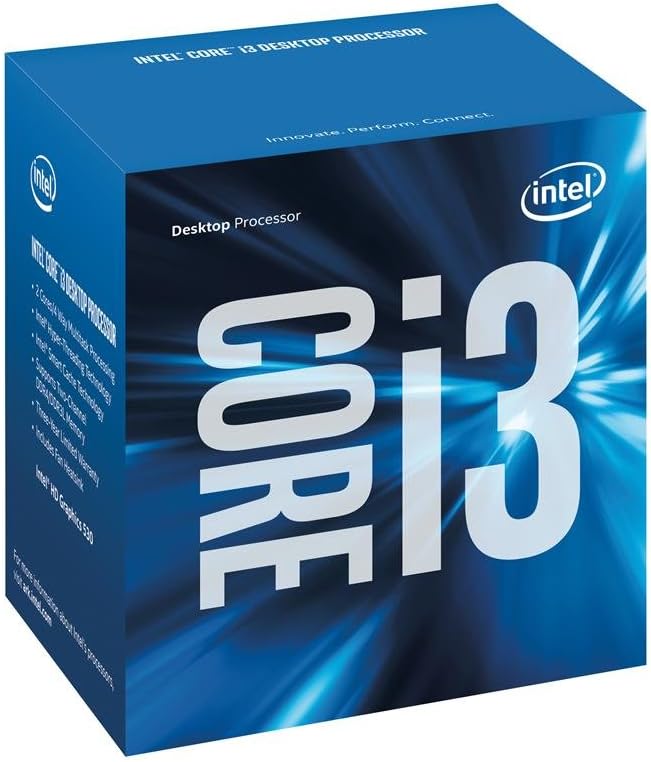
The Intel Core i3-6100 delivers efficient performance for entry-level systems. It utilizes Hyper-Threading to provide four threads from two physical cores. User ratings reflect good stability for light workloads and general browsing.
We may earn a commission when you buy through this link, at no additional cost to you.
Features like Intel Secure Key add an extra layer of hardware security for sensitive data. The processor operates at a steady 3.7 GHz without needing boost technology. This simplicity reduces power consumption and heat generation.
Lack of Turbo Boost means it cannot temporarily increase clock speeds during demand. Older generation limits support for modern memory speeds. Buyers should verify motherboard compatibility before purchase.
This model suits small form factor builds where size and power matter. It provides enough power for office apps and media consumption. We consider it a solid choice for specific low-power requirements.
Intel Secure Key hardware ensures safe operation for protected applications.
Stable clock speeds prevent heat spikes in compact system enclosures.
We may earn a commission when you buy through this link, at no additional cost to you.
The Intel Core i7-7700 provides eight threads which is valuable for multitasking. It reaches turbo frequencies up to 4.2 GHz for responsive performance. Renewed units offer this performance at a lower price point than new chips.
We may earn a commission when you buy through this link, at no additional cost to you.
Integrated UHD Graphics 630 handles basic visual tasks without a dedicated card. It supports Optane Memory to accelerate storage speeds. Users appreciate its compatibility with DDR4 and DDR3L memory types.
Renewed products may lack full manufacturer warranty coverage. It draws more power than efficient modern options which can increase heat. Ensure proper cooling is in place before installation.
Buyers needing more threads for budget builds will find this beneficial. It handles background tasks better than dual-core alternatives. We advise checking seller warranties before finalizing your purchase.
Eight threads allow smooth multitasking across multiple open applications.
UHD 630 graphics provide reliable output for standard display needs.
We may earn a commission when you buy through this link, at no additional cost to you.
The Intel Core i7-8700 brings six cores and twelve threads to budget builds. This allows for efficient handling of demanding tasks. Renewed versions provide a cost-effective way to access this high core count.
We may earn a commission when you buy through this link, at no additional cost to you.
Its 12 MB cache aids in data retrieval speed. It connects via LGA1151 and supports 300 Series chipsets. The maximum turbo frequency ensures responsiveness in single-threaded workloads.
Renewed status means physical condition may vary. It lacks a stock cooler which adds to assembly requirements. Users should check compatibility with their existing motherboard and cooler.
Those needing more cores for productivity at a low cost should consider this. It handles virtualization and encoding better than fewer-core CPUs. We suggest verifying hardware specs before ordering.
Six physical cores provide parallel processing power for heavy workloads.
Larger cache reduces latency during intensive data processing tasks.
We may earn a commission when you buy through this link, at no additional cost to you.
Selecting the right processor requires balancing core counts, clock speeds, and platform compatibility with your budget. Understanding these factors helps you avoid costly mistakes when building or upgrading a PC.
More cores and threads allow better multitasking and performance in modern applications. Six or more cores are recommended for gaming and content creation to ensure smooth operation.
Look for at least four cores for future-proofing basic systems.
The socket type determines which motherboards the CPU works with. AM4, LGA1200, and LGA1151 are common options that affect memory and upgrade paths.
Match the socket to your motherboard before purchasing.
Some CPUs include built-in graphics which save money on a separate GPU. However, many budget models require a discrete card for any video output.
Check if the model supports integrated graphics if you need a display.
Higher clock speeds improve single-threaded performance which matters in games. Look for boost clocks above 4GHz for better responsiveness.
Prioritize higher GHz numbers if gaming is your main goal.
Support for DDR4 or DDR5 affects overall system speed and bandwidth. DDR5 is newer and faster but often more expensive.
Select a CPU that supports the memory you already own or plan to buy.
High-performance CPUs generate more heat and may need better cooling. Some models include stock coolers while others require separate purchases.
Check if a cooler is included to avoid extra costs.
Platforms like AM5 offer longer upgrade paths for future CPU swaps. Older sockets may limit your ability to upgrade without buying a new motherboard.
Consider future upgrades when choosing a platform.
Lower TDP means less electricity usage and easier cooling. Efficient chips are ideal for small builds or passive setups.
Opt for lower power if energy costs are a concern.
Install the processor carefully in the socket ensuring the pins are aligned correctly to avoid damage. Apply thermal paste before attaching the cooler to ensure efficient heat transfer.
Monitor temperatures using software tools to ensure the CPU stays within safe limits. If performance drops or thermal throttling occurs, clean dust from fans and reapply paste.
Keep drivers and firmware updated for best compatibility with motherboard features. Avoid overclocking beyond recommended limits if you value stability over maximum speed.
Yes, many budget CPUs offer enough performance for entry-level gaming if paired with a dedicated graphics card. Models like the Ryzen 5 5500 provide strong frame rates at affordable prices. Just ensure you have enough cores for the games you play.
Not all processors include coolers so always check the product details before buying. Most AMD options come with a stock cooler but Intel high-performance models often require separate purchases. Verify the box contents if you plan to build immediately.
AM4 is an older socket supporting DDR4 memory while AM5 supports newer DDR5 and PCIe 5.0. AM5 offers better future-proofing but comes with higher motherboard costs. Choose based on your current memory and upgrade plans.
Renewed units can be reliable if you buy from trusted sellers with warranties. They offer significant savings but may show signs of wear. Check return policies before placing your order to protect your investment.
Some platforms like AM4 allow swapping CPUs on the same board but BIOS updates may be needed. Newer sockets offer better upgrade paths but at higher initial cost. Always research compatibility before committing to a platform.
For most modern systems 16GB is recommended to handle multitasking smoothly. DDR5 kits are faster but DDR4 remains sufficient for budget builds. Ensure the CPU supports the RAM speed you select.
This guide highlights the best value options available for budget builders. The AMD Ryzen 5 5500 and Intel Celeron G5900 lead in their respective categories of performance and affordability.
Prioritize core count and platform compatibility to ensure your system lasts longer. Consider future upgrades when selecting sockets and memory types.
Always verify current prices and product details before purchasing as costs change frequently. These selections provide a strong foundation for any budget-conscious PC build.